GM Resources
-
Build a Story
This section is primarily tips for a potential GM. It isn’t required. But will help get you started on your first adventure in Eos.
“The player characters are the main characters of the story. The rules of the game only exist to accommodate their story. Dying might be part of their story”.
Time is Dynamic
Sometimes a character’s story is told moment to moment, hour to hour, & day to day. Sometimes, there may be a lull for weeks, months or even years. While combat with this system is “moment to moment” for each round spent. The time spent harvesting, crafting, & learning outside combat should usually be determined by the group running those characters.
It’s not unheard of for a group to settle down in a town for the winter. Building relationships with the townsfolk & hoarding supplies for their next adventure once spring comes. It’s also possible that story won’t wait for them to seek it out & will seek them out instead.
When time passes, the characters don’t press pause. They’re still working, playing, & practicing their arts. That’s why the passive skill points exist. As a character matures, they grow. They get better at their crafts — even if it’s just passing interests that are not part of their daily work. The players can just summarize the work their doing. The relevant “autopilot” tasks don’t require role-playing. Time just goes by. If events are planned within that time, pause the timer, role-play the event. Then let the party decide if they continue passing time or if they want to change their plans. Be flexible with time jumping forward… especially the boring parts.
The GM’s job is to narrate & be the hearts, minds & souls of all the NPC’s, monsters & creatures of the world. Character development doesn’t just occur from rising skill points alone. Their true personality becomes more clear as they face challenges with their party. They may be small. Like opening up a shop in town. They may be challenging weather that requires someone to stand up, put their boots on, & walk into the snow — Because someone has to get those supplies back to town before people starve to death. Or… There may be an unavoidable conflict from a greedy baron trying to obtain more power… or a den of Kobalds that have been raiding the local farms… or a new mob boss in town. Make sure your players have things to interact with. Even if they would prefer to ignore them, the option is there for them to decide.
Random Encounters
If your group is traveling through a zone that doesn’t have predetermined threats, rolling for a random encounter may spice things up a bit. Having them select a difficulty range could give you an idea of how much trouble they’re ready to get into. Have them each roll 1d20 & select any number rolled from among them. 1-5 could be a low encounter, 5-10 moderate challenge, 10-15 very challenging, & 15-20 could be a massive encounter. You’re the GM. You can adjust these numbers or set your own to better suit your needs.
A massive encounter would not just be a single combat scenario. It would be like spotting an old cavern in some ruins, “off in the distance”, far away from the main road. This encounter could require days spent scouting & learning the area, with sporadic attacks from the local inhabitants. A smart group will come up with plans to defend each other when resting. I guess… a smarter group might just keep walking down the road. But the group that succeeds would be rewarded with knowledge, loot, & experience.
Generally experience is rewarded for participation. Show up, get a stipend. But if a player wants to push the limits of their character, seeking out more experience through battle or wit is the accelerated path. Greater experience rewards exist. The greater the risk, the greater the reward. What exact amount that is — should be determined by the GM. Too fast or too slow can stifle character development. Sometimes struggling a little bit adds more character… to a character… so to speak.
Overarching Plot
The default game world uses disruption in the timeline. An NPC from ancient times who mastered time magic spends his life jumping from timeline to timeline. His goal is not apparent, but he’s clearly trying to make a different future. He pulls characters forward in time, wiping their memories. They are all a blank slate. A new person… A new character. Often with nothing but a few items in their possession. The first people they engage with are their new party. With only a faded memory of their last scene before the jump, they have more questions than answers. Maybe these strangers will help figure out “what’s going on here?”.
The plot beyond that is the world the GM prepared for them. The story of the characters & their interactions with that world around them. Were they meant to slay that baron? Or was it the discovery they made of a lost artifact while grave robbing at the catacombs? The mysterious time-traveling NPC’s motive becomes a whisper… as they learn, adapt & grow to the world that they’ve been moved to. They create their new life. There they create their own story.
That Power Non-Player Character(PNPC) with magic, magic, & even more magic, has a few notable things about him. He is a mage. To those who can see it, he glows like the sun. His age isn’t the same every time. He might have waited 10 of his years before he decided the next person to add to his pile of “your group”. He is Human. He already knows your actions before you do them — Because he’s seen them all. Every timeline. Every you. One thing each character is sure of is; whatever he got them to agree to before they were transported through time… well. They agreed to it. What was it? And he disappears as quickly as he appears. He is, honestly, a plot device.
As a PNPC plot device, he can be summoned by the GM to drop replacement characters near the party. This is useful when there is no other explanation of how a new character would organically be wandering around in the middle of nowhere. Those touched by the PNPC’s magic automatically have a commonality. They are an exclusive group. They’re probably the only ones alive at that time. That commonality can act strongly to bind them together as a party. His part of the story beyond bringing your characters together… is something for the longest lived races to hypothesize. No one else will live long enough to see the fruit of his labor.
If a character is created with higher levels than usual for character creation, they are usually built with a backstory from whatever area your group is currently in. Perhaps they grew up there, or perhaps they recently traveled there. Remember when you replace player characters that it should make sense… Also realize that new character build with a backstory would need a reason to go along with the group if they already have a life, & plans, & goals. It’s not always up to the GM to work out the details. Sometimes a new character built this way might just go on their merry way & part with the group the same day they meet them. Good story telling should reflect realism.
-
Creating A Monster
Generally when creating something your group to engage with, they will be fighting NPCs that follow similar rules to normal character creation. Many will be under geared or will have their stats & skills distributed in a more balanced way. Some may not have any combat skills whatsoever. Playable races & other intelligent races are the dangerous foes. Bullet pointing them can end with an unprepared party getting absolutely destroyed. Just be aware of the fact that people can be the most dangerous & unpredictable foes a party will likely encounter throughout their adventures as you toss your group into the fray.
Adjust The Dials
When engaging in combat with new parties or parties that have had new characters created to replace old ones — there is no straight forward formula. The way a party learned to engage combat with each other can be thrown out of tune when a new character is added. It’s not a power level thing. Not even a combat level thing. Players will expect others to play into their strengths & aid them by filling in any weaknesses they have in combat. The new character may not fit that role the same way, throwing off the dynamic of the party until they can establish their party’s new combat tactics.
Best practice is to slowly introduce a party into combat. Give them an easy challenge with more straightforward tactics initially. Allow the party to learn the dynamics of the system, habits of other players, & characteristics of the characters they are with. As they learn & grow; add enemies that use more tactics, more weapon switches, more stat variations that lean into their individual builds. Not quite a bullet point, but fairly close to it. Perhaps you can have an NPC with bullet pointed stats & skills as a boss fight for them, with fodder around the boss to keep the combat engaging. But try not to put anything in front of them that doesn’t give the party any chance at winning.
Find the sweet spot. Adjust it to a level that engages the players. Mix it up when needed. Turn it up & down so they have a mix of easy & challenging battles. If a character dies & gets replaced with another, turn the dial down a couple notches & find a new sweet spot for the group.
Monster Races
When creating a custom monster race, the normal stat limits sometimes won’t make sense. Almost all monster races have zero in their Mind stat. This means they cannot learn any skills. So for some of these monsters to be truly terrifying they either need raw numbers, special abilities, natural weapons or armor, or stats that go higher than what is normally allowed for character creation.
Each monster would still be built using the 4 main stats. However there is no rule for how many points they get distributed to them. The creature size modifiers can effect HP & damage bonuses. Pay close attention to their total “Hit Bonuses”, “Damage Bonuses”, Armor, & HP as you create them. Once the creature size & stats are spread, most of those details auto fill. Building this way allows you to grant combat levels to them to adjust the dial without recreating a new version of it each time. Simply padding HP with combat levels can make a moderate threat into something problematic very quickly.
Your monster’s “days of food” that it needs to survive can determine if they are in competition for hunting & trapping in the zones that they roam in. If resources are already tight, adding a monster into a area can force the players into “fight or flight”. Even if the monster is not directly attacking them.
If your group fights them, make sure there are rewards. Perhaps the hide might be exceptional. Perhaps parts might be traded for trophies. Perhaps some parts might be usable as replacements for armor, weapons, or cloth. Such as Land Drake scales that can replace a Tier 8 metal ingot for armor, giving it a distinct visual quality that says, “we kill the monsters that you have nightmares about”. Natural material replacements for ingots cannot be broken down into ingots. Make sure the player marks clearly when special materials are used in construction of items. And don’t forget that for risky battles they most definitely will earn experience.
Adding an Aggro mechanic is not necessary, but it can help the players learn to anticipate actions when they engage with that type of monster again in the future. This adds the feeling of knowledge & experience to the players themselves. It can make it so that, while first battle against it might had been clunky or chaotic, future battles against the same monster would feel coordinated & refined in comparison. Eventually the players will develop tactics that are especially effective against it, which is a good feeling. It should impress NPCs whom have knowledge of the dangers those monsters impose.
Example Aggro mechanics might be things like: “lowest total armor”, “lowest body stat”, “smallest creature size”, “least visible weapons”, “closest enemy”, “most visible weapons”, “whomever dealt the last blow”, “whomever dealt the most total damage”, etc. It only needs to be something that would be measurable by the monster itself — usually something visual. These mechanics aren’t usually applied to playable races. For playable races, each individual is individual.
Adding details like social behaviors, preferred terrains, or aggression can help story telling & immersion. Adding descriptions to appearance is a must. Adding a fleeing mechanic for many monsters will make sense. Such as, “it runs away after it loses half it’s HP”. But also, some monsters could be mindless enough to fight to their last … I guess zombies don’t breathe. But you get the point.
Monster Races
-
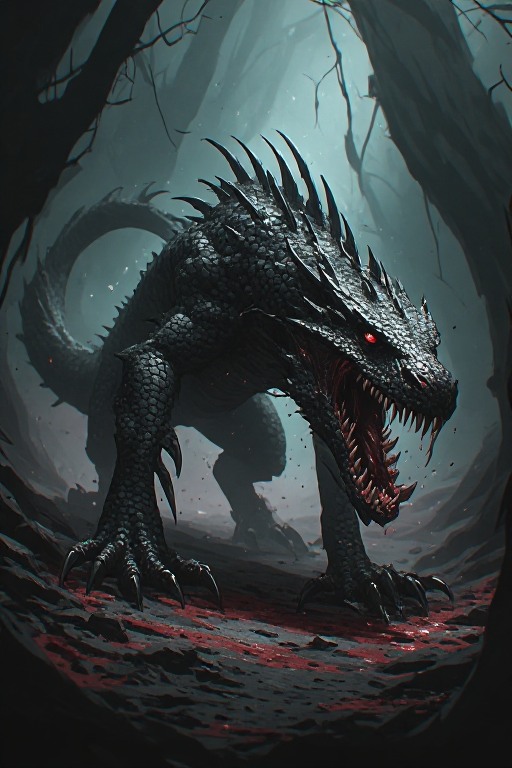
Adult Land Drake
Very High Threat
Size: 2×5
Move: 12
Height Range: 5-6ft
Bonus HP & Melee: +30
Natural Armor: 8
Size Category: Extra-Large
Food/day: 10
Weight Range: 600-700lbs
All Weapon Range: +2
Life Expectancy: —
Stats & Hit Points
Combat Level: 10
Body: 10
Reflex: 15
Armor: 8
Shield: +0 Front Armor
HP: 150
Mind: —
Presence: 15
Aggro: “Least Armor, animal preferred.”
Total Front Armor: 8
Land Drakes can use traditional unarmed strikes with their claws as dual weapons. However, they have a preference to just use their grapple attack as their main attack as a single unarmed strike (using 1d20 for the ability instead of 2d20 to just deal damage). They also have a preference for stealth attacks instead of fighting for their meals head on, often breaking from engagements gone wrong to later circle back from a more advantageous position.
Bonuses In Combat
(stats & skills combined)
Unarmed: +15
Stealth Bonus: +15
Damage Bonus(Unarmed): +40
Traps Bonus: +15
Special
- Tier: 8 Natural Armor
- Ability: “Grappling Bite”1: Contested Unarmed attack with grapple & stun effects that can drag target with Move: 6.
Description & Habits
Adult Land Drakes are stealthy & solitary creatures. They stalk around a territory of 10 or more “zones” (10+ square miles). This is primarily because they consume so much more food as adults & need to reserve whole zones with easy hunting to survive winters.
Note: Apex predators like the Adult Land Drake rotate several zones. They will hunt using their Presence bonus. Each zone takes 1 year to regenerate their hunting target number by 1. This means they can hunt each zone once per month on a cycle permanently if there is no competition & they control enough zones. They can also hunt the small animals by rolling against the trapping target number. The small animals regenerate their numbers once per month. If the target numbers for a zone becomes too great, they will expand out to another zone with lower target numbers along it’s boarders. If it discovers anything in it’s territory that it perceives can disturb their territory by effecting those target numbers, they will defend those zones by removing the threat.
- “Grappling Bite” replaces a normal Contested-Action. It cannot be used with dual wielding mechanics. It can be used while attacking or defending. If successful, it will deal damage as a normal “Unarmed” attack. Then the creature will latch onto their target, causing the target will forfeit all remaining actions they had for that round. If the target is smaller in total tile size than the creature using “Grappling Bite”; that target can be dragged at on the creature’s next move action at half their normal Move speed. The holding effect of Grappling Bite remains until the start of the effected creature’s next turn in combat. ↩︎
-
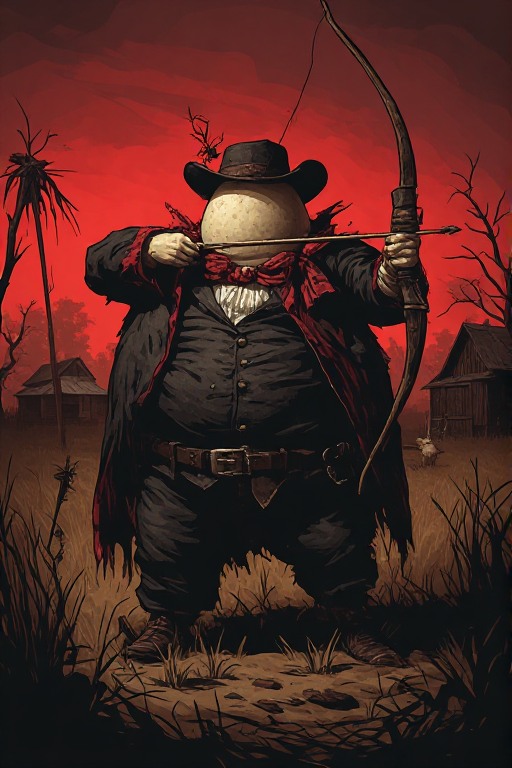
Adult Tweggy
Moderate Threat
Size: 1/2
Move: 4
Height Range: 4-5ft
Bonus HP & Melee: -5
Natural Armor: +8
Size Category: Small
Food/day: 1/2
Weight Range: 50-60lbs
All Weapon Range: +0
Life Expectancy: 10
Stats & Hit Points
Combat Level: 7
Body: 8
Reflex: 4
Armor: 8
Shield: +2 Front Armor
HP: 71
Mind: 2
Presence: 4
Aggro: “Most Worn Weapons”
Total Front Armor: 10
Adult Tweggies can create & use all the gear from their youth. But they prefer to create & use their Tier 8 Bows. If called into battle they will commonly carry 1 strong bow & have 1 spear on each hip. On their back they keep a quiver (T2 [Item] Backpack) that holds 5 arrows. They often will also have at least one hip quiver (T2 [Item] Pouch) that holds 3 arrows.
Bonuses In Combat
(stats & skills combined)
Bow(T8 Bow): +9
1-Handed Melee(T1 Spear): +6
Thrown(T1 Spear): +6
Unarmed: +6
Stealth Bonus: +8
Damage Bonus(T8 Bow): +8
Damage Bonus(T1 Spear): +4
Damage Bonus(T1 Spear): +4
Damage Bonus(Unarmed): +3
Traps Bonus: +6
Special
- Tier: 8 Natural Armor
- Low intelligence
Skills
Bow: 5
1-Handed Melee: 2
Unarmed: 2
Bushcraft: 2
Farming: 2
Stealth: 4
Off-Hand Melee: 2
Bowyer: 8
Hunting: 4
Tailor: 2
Thrown: 2
Traps: 2
Woodworks: 5
Logging: 2
Cooking: 2
Description & Habits
Adult Tweggies appear to be giant eggs with arms & legs. The legs resemble those of a chicken. They are around 3.5 feet in height & weigh around 35lbs. They have no apparent eyes, ears, mouth or nose. When observed, they act in a manner that suggests they can communicate with each other. They appear to have vision in what is believed to be their front side based on limb articulations. And, they do respond to strong smells.
Adult Tweggies tend to be much more conservative. They prefer to loosely stick to communities as farmers. Often helping to support others that were in their gang when in their youth — whom are often in neighboring farms. Sometimes they may be called to aid their children if they get themselves into too much trouble. But they otherwise keep to themselves.
-
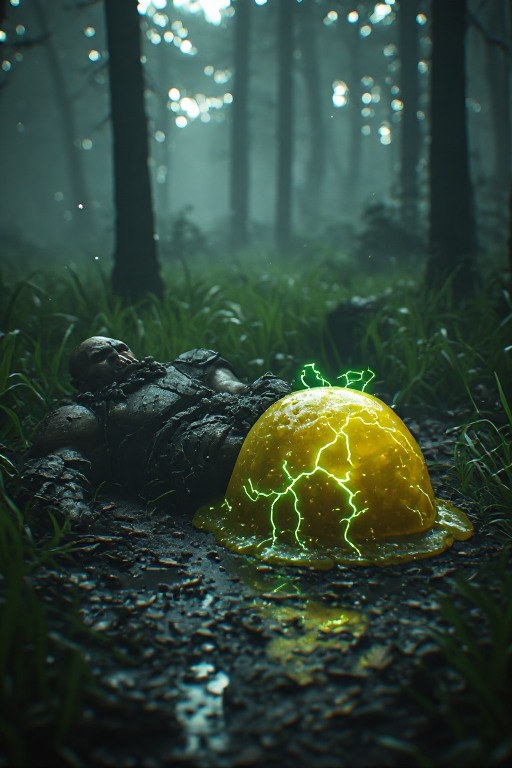
Baby Yellow Slime
Moderate Threat
Size: 1/2
Move: 10
Height Range: 1-2ft
Bonus HP & Melee: -5
Natural Armor: +30
Size Category: Small
Food/day: —
Weight Range: 30-40lbs
All Weapon Range: +0
Life Expectancy: —
Stats & Hit Points
Combat Level: 0
Body: 0
Reflex: —
Armor: 30
Shield: +0 Front Armor
HP: 15
Mind: —
Presence: —
Aggro: “Closest Enemy”
Total Front Armor: 30
They do not assess threats before striking, but they will flee if their HP is reduced below 1/2 of it’s normal total HP. They do not need to attack or defend themselves in a traditional way. They simply occupy the same tile as their target & stun them endlessly while they slowly absorb the life out of them. Unless the Yellow Slime’s target has allies, can climb nearby terrain in time, or have immunity to the bolt spell — their fate is sealed.
Bonuses In Combat
(stats & skills combined)
N/A
Description & Habits
The Baby Yellow Slime is the weakest variant in the Yellow Slime family. It has a shape of a gumdrop candy. It is semitranslucent & similar in appearance to lemon-flavored gelatin.
All Yellow Slime creatures are solitary. They are instinctual in nature. They simply roam around, looking for food. They will hunt anything that moves, regardless it’s size. Bunnies, deer, buffalo, even drakes might be their next food source. Once an area becomes hard to hunt, they move on to the next zone. Since they get no bonus to hunting, that is usually once the zone has reached 21 for the hunting target number.
As Yellow Slime creatures age, they grow in size. The process is slow. But eventually they can get nearly 12 feet across at their base (4×4 tiles), & similar in height. Unlike other creatures, a Yellow Slime can occupy the same tile as their target regardless of their size. Sometimes suffocating them accidentally as they feed on their life essence.
- Bolt – range: 1 – effect: Applies the shock Shock* status effect to target until the target’s next turn in combat. *Shock completely revokes any dice that would normally be used for their next received Contested-Action against them. If they had any uncontested-actions held in reserve, they are forfeited. They still get to add their associated stat & skill vs actions against them. They still get armor bonuses if they are successfully hit. ↩︎
- HP Drain – range: 0 – effect: Absorbs HP from target healing self. HP Drain ignores armor. ↩︎
-
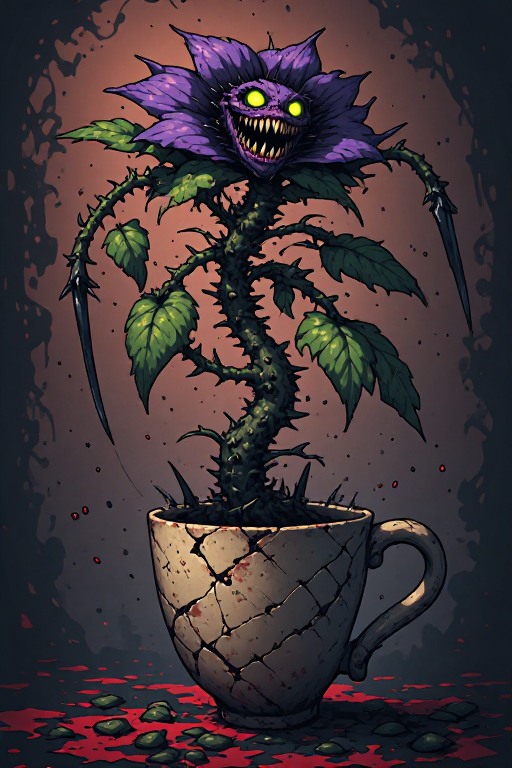
Cup O’ Flower
Low Threat
Size: 1×1
Move: 3
Height Range: 8-14ft
Bonus HP & Melee: +0
Natural Armor: +0
Size Category: Medium
Food/day: —
Weight Range: 200-300lbs
All Weapon Range: +1
Life Expectancy: —
Stats & Hit Points
Combat Level: 5
Body: 10
Reflex: 15
Armor: 0
Shield: +0 Front Armor
HP: 70
Mind: —
Presence: 5
Aggro: “Last to deal damage to it.”
Total Front Armor: 0
These slow moving abominations can attack/defend using natural weapons that are simultaneously treated as 2h-melee & “Unarmed”. Using “2H-Unarmed” for the skill for the rolls. The most common tactic for a Cup O’ Flower is to attack with 2-Handed Melee from outside the reach of it’s target.
Bonuses In Combat
(stats & skills combined)
2H-Unarmed: +15
Attack Stealth Bonus: +0
Damage Bonus(2H-Unarmed): +10
Traps Bonus: +0
Special
- +1 tile extended reach for unarmed attacks.
- Extremely low food requirement.
Description & Habits
It’s a giant flower growing out of a pot that is shaped like a cup. It coils it’s body to hop itself forward for movement. Cup O’ Flowers are noisy & often quite smelly. This makes them terrible at sneaking up on groups of people, even while they’re sleeping. Cup O’ Flowers are also hilariously slow. This makes them easy to defeat by just staying out of their reach.
The food they are after is anything rotting or rotten. They don’t hunt, but they do scavenge any dead carcasses or rotting food they find. They add the nutrient to their plant pots & let it decompose. The rest of their energy inputs are from photosynthesis. So they are usually found either scooping dead stuff into their pots, or just standing around in open areas of forests soaking up sunlight.
They are assumed to be a magical construct. They are sometimes found fighting along side Tweggies and Floof Powders.
-
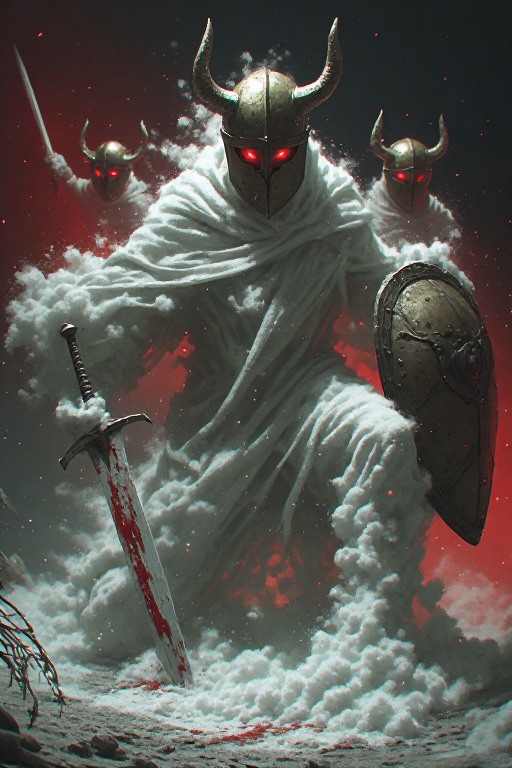
Floof Powder
Low Threat
Size: 1×1
Move: 8
Height Range: 6-7ft
Bonus HP & Melee: +0
Natural Armor: +0
Size Category: Medium
Food/day: —
Weight Range: 20-30lbs
All Weapon Range: +0
Life Expectancy: —
Stats & Hit Points
Combat Level: 1
Body: 5
Reflex: 0
Armor: 2
Shield: +5 Front Armor
HP: 25
Mind: —
Presence: 15
Aggro: “Highest Armor.”
Total Front Armor: 7
Floofs are typically armed & armored. They will only ever attempt stealth attacks against opponents. Their fast speed & high Presence stat allow them to get into position quickly on the battlefield. They don’t set traps, but they easily avoid them.
Bonuses In Combat
(stats & skills combined)
1-Handed Melee(T4 Melee): +0
Unarmed: +0
Stealth Bonus: +15
Damage Bonus(T4 Melee): +9
Damage Bonus(Unarmed): +5
Traps Bonus: +15
Special
- Can travel through tiles occupied by other creatures.
- Cannot be intercepted while moving.
Description & Habits
A Floof Powder looks like it is completely made of dust. When they move, they shrink down into a low rolling pile. Their gear is mixed into the pile as it rolls along. They will reform to make attacks or to defend themselves from attacks.
It is unknown if they eat, sleep, or have any habits. They are assumed to be a magical construct. They are sometimes found fighting along side Tweggies and Cup O’ Flowers.
-
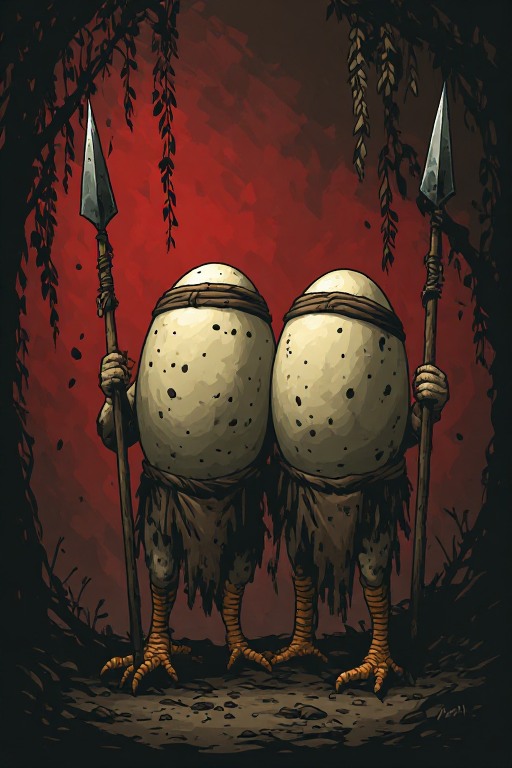
Juvenile Tweggy
Very Low Threat
Size: 1/2
Move: 4
Height Range: 3-4ft
Bonus HP & Melee: -5
Natural Armor: +5
Size Category: Small
Food/day: 1/2
Weight Range: 30-40lbs
All Weapon Range: +0
Life Expectancy: 10
Stats & Hit Points
Combat Level: 1
Body: 5
Reflex: 2
Armor: 5
Shield: +2 Front Armor
HP: 20
Mind: 2
Presence: 5
Aggro: “Last to deal damage to it.”
Total Front Armor: 7
Juvenile Tweggies can create & use Tier 1 Spears with the Bushcraft skill. They can also create & use Tier 2 Wooden Shields with the Woodworks skill. Some may use shields in combat. Some may use Dual Wielding mechanics instead. Each can throw spears. They hunt with 1 spear in hand & 1 spear on each hip. On their back is either 2 spears or 1 shield.
Bonuses In Combat
(stats & skills combined)
1-Handed Melee(T1 Spear): +4
Thrown(T1 Spear): +4
Unarmed: +4
Stealth Bonus: +4
Damage Bonus(T1 Spear): +1
Damage Bonus(T1 Spear): +1
Damage Bonus(Unarmed): +0
Traps Bonus: +4
Special
- Tier: 5 Natural Armor
- Low intelligence
Skills
1-Handed Melee: 2
Unarmed: 2
Bushcraft: 2
Off-Hand Melee: 2
Stealth: 2
Hunting: 4
Thrown: 2
Traps: 2
Woodworks: 2
Description & Habits
Juvenile Tweggies appear to be giant eggs with arms & legs. The legs resemble those of a chicken. They are around 3 feet in height & weigh around 30lbs. They have no apparent eyes, ears, mouth or nose. When observed, they act in a manner that suggests they can communicate with each other. They appear to have vision in what is believed to be their front side based on limb articulations. And, they do respond to strong smells.
Juvenile Tweggies hunt in packs. They behave more like a gang of misfits than a monster race. They will only flee if their whole group can get away safely, or if they are the last one fighting. They primarily practice ambush techniques when engaging. With Several springing out from hiding spots once one of them is spotted from failing a Stealth check. They will avoid attacking groups unless the Tweggies greatly outnumber them.
-
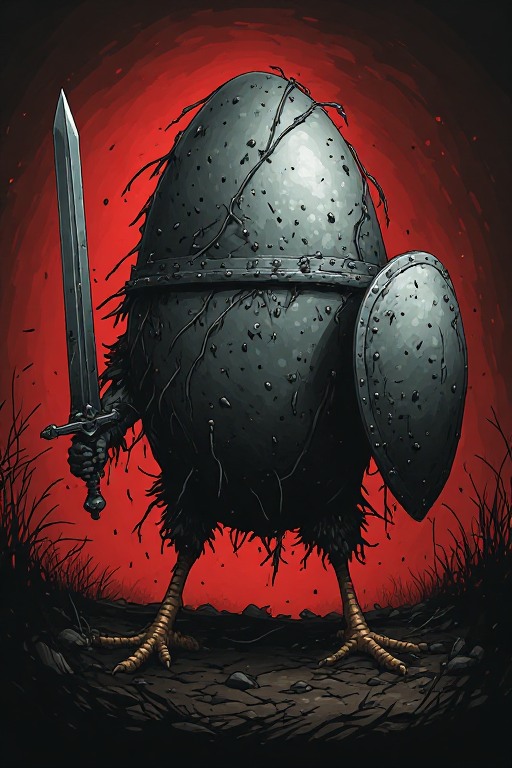
Tweggy Champion
High Threat
Size: 1×1
Move: 5
Height Range: 5-6ft
Bonus HP & Melee: +0
Natural Armor: +8
Size Category: Medium
Food/day: 1
Weight Range: 100-200lbs
All Weapon Range: +0
Life Expectancy: 10
Stats & Hit Points
Combat Level: 11
Body: 10
Reflex: 5
Armor: 18
Shield: +10 Front Armor
HP: 130
Mind: 2
Presence: 5
Aggro: “whomever dealt most damage to the Champion.”
Total Front Armor: 28
Tweggy Champions typically enter a fight with only a Tier 10 weapon & a Tier 10 shield, equipped & ready to rumble. They have their body encased in Tier 10 armor. They are not to be tangled with.
Bonuses In Combat
(stats & skills combined)
1-Handed Melee(T10 Melee): +15
Unarmed: +15
Stealth Bonus: +5
Damage Bonus(T10 Melee): +20
Damage Bonus(Unarmed): +10
Traps Bonus: +5
Special
- Tier: 8 Natural Armor
- Low intelligence
Skills
1-Handed Melee: 10
Off-Hand Melee: 8
Unarmed: 10
Description & Habits
Tweggy Champions appear to be giant eggs with arms & legs. The legs resemble those of a chicken. They are around 5.5 feet in height & weigh around 150lbs. They have no apparent eyes, ears, mouth or nose. When observed, they act in a manner that suggests they can communicate with each other. They appear to have vision in what is believed to be their front side based on limb articulations. They do respond to strong smells, & appear to understand verbal commands from their owner.
Some jerk armed & armored a Tweggy. Then trained it in an arena or something. Danger!
-
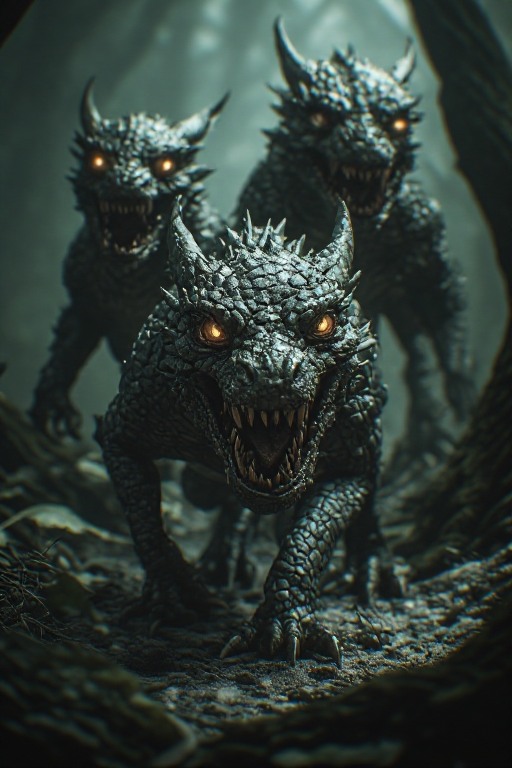
Young Land Drake
High Threat
Size: 1×3
Move: 10
Height Range: 3-4ft
Bonus HP & Melee: +9
Natural Armor: +5
Size Category: Large
Food/day: 3
Weight Range: 300-400lbs
All Weapon Range: +1
Life Expectancy: —
Stats & Hit Points
Combat Level: 1
Body: 10
Reflex: 10
Armor: 5
Shield: +0 Front Armor
HP: 39
Mind: —
Presence: 10
Aggro: “Least Armor, animal preferred.”
Total Front Armor: 5
Land Drakes can use traditional unarmed strikes with their claws as dual weapons. However, they have a preference to just use their grapple attack as their main attack as a single unarmed strike (using 1d20 for the ability instead of 2d20 to just deal damage). They also have a preference for stealth attacks instead of fighting for their meals head on, often breaking from engagements gone wrong to later circle back from a more advantageous position. It is also common for small groups of Young Land Drakes to have one drag off their target while the others distract or defend.
Bonuses In Combat
(stats & skills combined)
Unarmed: +10
Stealth Bonus: +10
Damage Bonus(Unarmed): +19
Traps Bonus: +10
Special
- Tier: 5 Natural Armor
- Ability: “Grappling Bite”1: Contested Unarmed attack with grapple & stun effects that can drag target with Move: 5.
Description & Habits
Young Land Drakes spend their early years banded together with their clutch. Generally there are 2-3 per group, but as many as 5 or 6 has been rumored. Their territory usually spans 10 or more “zones” (10+ square miles) for any group. Once they become adults, they separate due to resource competition (food). This is primarily because they consume so much more food as adults & need to reserve whole zones with easy hunting to survive winters. Each Adult Land Drake will control a territory about the same size as a whole group of Young Land Drakes.
Note: Apex predators like the Young Land Drake rotate several zones. They will hunt using their Presence bonus. Each zone takes 1 year to regenerate their hunting target number by 1. This means they can hunt each zone once per month on a cycle permanently if there is no competition & they control enough zones. They can also hunt the small animals by rolling against the trapping target number. The small animals regenerate their numbers once per month. If the target numbers for a zone becomes too great, they will expand out to another zone with lower target numbers along it’s boarders. If it discovers anything in it’s territory that it perceives can disturb their territory by effecting those target numbers, they will defend those zones by removing the threat.
- “Grappling Bite” replaces a normal Contested-Action. It cannot be used with dual wielding mechanics. It can be used while attacking or defending. If successful, it will deal damage as a normal “Unarmed” attack. Then the creature will latch onto their target, causing the target will forfeit all remaining actions they had for that round. If the target is smaller in total tile size than the creature using “Grappling Bite”; that target can be dragged at on the creature’s next move action at half their normal Move speed. The holding effect of Grappling Bite remains until the start of the effected creature’s next turn in combat. ↩︎
Magic Theory
-
Magic Basics
- Magic uses the Aura stat – which dictates the magnitude of the spell.
- Magic uses the Mind stat – which dictates the MP available to cast spells.
- Magic needs scholar skill at 5+ – as a prerequisite skill.
- Magic needs a skill point in a chosen magic class – There are several magic classes to pick from.
- Each magic class has its own set of thematic spells – Fire classically deals with “all things hot”.
- For each point you have in that skill, you gain 1 new spell – From the spells available.
- Each spell may be from your class, or from the Generic spell list – Generic spells can be taken by any class as a substitute for a standard class spell.
- Each Generic spell you take has it’s name plus “(magic class)” & has a unique thematic effect that is related to that class – Like an their eyes appearing to reflect fire as they cast.
- You are locked in a class until it reaches level 10 – Pick one that you’re willing to invest in.
- At levels 11 & 12 in your magic skill, for each class, you get to create a new thematic spell that is unique to your character – The GM must approve these.
- Magic spells cost MP to cast – Unless they are listed as “passive”.
- Spells with larger effects cost more MP – Most spells cost a base MP that is added to the value of your Aura stat.
- Spells may be throttled when cast by substituting any Aura stat value your character has or less – You don’t need to burn the house down to light a pipe.
- Any spells that are cast with effects lower than 1 aura may be negotiated with your GM or cast at a MP cost equal to an assigned aura of 1 – Your GM might allow you to downcast your flamethrower into a lighter flame for as little as 2 MP (if they do, take notes!)
- All spells can be canceled by their caster at any time.
- If the caster is knocked unconscious or dies: the spell is canceled.
- MP refreshes daily – The exact time is unknown, changes each night, & is usually somewhere in “the middle of the night”.
-
Spell Creation
To create a spell a few of the moving parts must be in place. There are 4-5 basic things that each spell requires.
- Spell Name – It’s probably best practice to have the name reflect it’s effect.
- Cost – The cost is usually a base cost, plus additional cost for the bonus effects granted by higher Aura stat values. Some spells have small enough effects that they are only a base cost, or are only the Aura value assigned as it’s cast. A few spells are passive & require no MP.
- Range – The range can be anything from: “self” (meaning it applies to the caster), “Special”, the “Aura value” assigned to the spell as it is cast, a set distance like “20 tiles”, or even “line of sight”. Regardless, it should be defined.
- Effect – Each spell should have a description of what it does. Most spells will scale their effects based on the Aura value it is cast at. This is where the magic happens. Effects can turn the tide of battle. Damage as a free action can flip the script completely. My rule for creating spells is making it so choosing one is a difficult decision. If there is a spell that is obviously worthless when compared to the others available, why create it?
- Additional notes or examples to help further define details. This is where you tidy up any loose ends, place restrictions to reduce abuse, etc. It’s better to leave most of these details separate from the main effect. If someone likes the main effect, they’ll take the time to learn the details. But if they’re mixed in, it’s just a text wall.
Let’s roll through some examples. You should get the idea by the time we’re done. Magic is busted, overpowered, & terrifying. We will be using Fire Magic in our examples.
Magic [Fire]
– (assigned class)(All things hot)
– (theme of class)- Burn!
– (Simple spell name.) - cost: 10+ [Aura]
– (This spell can be cast 1-2 times each day with a starting character & snowballs from there.) - range: [Aura value]
– (If the caster has a higher Aura stat, they can cast it further. If they choose to throttle the spell, the cost will lower. But so will the range.) - effect: This spell cast at any level will apply the *burn status effect: dealing 1 damage to any flammable (commonly cloth or wood) object per round, reducing its Tier by 1 until it is repaired. When Burn! causes one flammable target to smolder, burn, or catch aflame; it remains for [Aura value] rounds & deals [Aura value] damage each round to any person wearing, carrying or holding the object. This damage ignores armor when cast on objects that are worn, carried or equipped.
– (A gear destruction spell that deals damage to the wearer is what they would call, “rude”.) - Notes: If the object is reduced to T0, it is destroyed. The *burn effect will end prematurely if the object is destroyed & the spell will stop dealing damage to the wearer of the destroyed remnants. Burn! cannot be cast on a material that would not easily burn in a fire. If Burn! is cast on a wood weapon or shield, it will apply the effect to them. However, it will only deal damage to the wearer for as long as they have it on their person. If they drop the object, the *burn effect remains for its duration, but no additional damage is applied to the person who previously held it. Additionally, this spell may also be used to light candles, cigarettes, lamps, dry tinder, etc. – this is a form of down-casting, where the spells effect is not in contact with a person & wouldn’t deal damage directly to them.
– (This spell description if very lengthy. It lays out exactly what it does & how it does it. This particular spell has both combat & non-combat utility. Note that this spell has “[Aura value]” attached to it’s duration and damage. This means higher Aura stats will directly boost all of the effects greatly.)
Now let us look at a much more powerful spell in the Fire magic class.
- Nobel’s Prize
– (A witty spell name with some historical reference.) - cost: 20+ [Aura] + [Aura] +[Aura] +[Aura]
– (Huge spell cost to reflect the actual impact the spell has on the battlefield. While the spell can be cast at game-start, the MP cost is great enough that it cannot be cast with full fiery fury. They would have to wait for several combat levels to cast it more than once.) - range: [Aura value]
– (Again, the range is tied to the Aura stat. It could have just as easily been a set distance, but the shorter range with this spell feels justified.) - effect: causes an area to explode dealing [Aura value] x [Aura value] damage to all characters, in an area equal to [Aura value] deep, by [Aura value] wide, by [Aura value] high. Caster is not immune. Additionally, it deals [Aura value] damage to all gear, items, structures, treasure, etc. in the blast area. Damage is applied to characters after the damage to armor is applied. Does not “ignore armor”. Does not reduce the value of “natural armor”.
– (This spell is a doozy! It has damage effects, sunder effects, destroy effects, and has an area of effect. Perhaps the spell cost might be too low still, but we’re rolling with it.) - Example: an Aura: 10 casting of this spell has a 10 tile range & 10x10x10 area of effect. The closest edge of the area of effect of the spell must be at or within 10 tiles of the caster. Meaning they could hit someone up to 20 yards away if they cast it as far as allowed. It would reduce all armor, & shields (along with everything else) by 10 Tiers, then deal 100 damage to everyone occupying the effected area, friend & foe alike.
– (This spell justifies an example. There is a lot going on here. The example should clarify any questions that people may have on how the spell is intended to function.)
Now let’s shift gears to a pure utility spell. And a passive one at that.
- Warmth
– (Name suggests the effect clearly.) - Cost: passive
– (This spell costs 0 MP.) - range: self
– (This spell only effects the caster.) - effect: a character with this spell on their spell list is immune to all spell effects, except damage, that is caused by Ice Magic or harsh environmental extremes. It reduces damage from any cold based sources by [Aura value]. Additionally, acts as clothing equal to Tier [Aura value] for cold environment mechanics.
– (It’s like wearing extra insulation from all cold effects & weather wrapped into one permanent buff.) - Note: A passive spell may be turned on or off at the will of the caster, at any time. The effect does not function when unconscious or dead (sleeping is not the same as “unconscious”. So feel free to take a nap in the snow).
– (This is a great spell as a passive. Once it is on your spell list, you own it. It is free. It has high utility. It completely blocks weird status effects & reduces incoming damage. While it will rarely effect the outcome of battle, it still feels like a “must have” for your limited spell list.)
Now let’s see a Generic spell to mix things up. Generic spells are any spell that does not fit the theme of one of the main magic classes. Since there is no “food mage”, we’ll drop that spell right into Generic’s list.
- Create Food
– (It does what it says.) - Cost: 10+ [Aura]
– (The cost is straight forward enough.) - range: special(creation)
– (It has a range. It’s just not in tiles or self. It’s fine, we made it work.) - effect: when cast, Create Food will generate [Aura value] units of prepared food. The food forms directly from the palm of the spellcaster, out of thin air!
– (Pure utility. Pure awesome.) - Notes: For each daily unit of food created, it will take more time to generate. Taking about 1 minute to finish casting at the highest level(12). It comes generically as bread-bowls of warmed stew (it looks like just bread on creation, warm stew is found inside once you tear into it), but may be modified with GM approval. Food created this way spoils after 2 days & cannot be preserved with the Cooking skill.
– (Find me one person who would not want this spell. Even with the stipulation that it expires prematurely to protect it from being abused. It means you don’t have to tap into your food stores as often & can save Daily Tasks for something other than another hunting or gathering trip.)
Now we just have to make this Generic spell have a Fire theme so it fits the character. For this one, I will amend the “Name” to “Create Food (Fire)”, & the “Notes” section to say, “While it is cast, a chef’s hat and apron will appear on the caster. They appear as glowing embers. They generate no light or heat.” — The description added to a spell should never give added effects to the spell. It’s a cheesy visual effect, but it will make an impression on other characters — This person is a fire mage. Do not fight them. They will burn you.