Basic Rules
-
Beginner’s Guide
Creation of a balanced party is key to success. Whenever possible, the group should work together at character creation. Overlapping skills rarely have much use if the group finds themselves reliant on each other for survival. By default, the character with the highest level in any skill will likely be the only one performing that task. Meanwhile the other character would likely be delegated to other work with their limited “Daily Tasks” they have available.
Picking races can be very impactful on how the character will be played. Large races have higher daily food requirements & equipment costs, but will dominate in battle. For first time groups, it is probably best practice to choose from the medium races. But having 1-2 small characters will offset the food needs of some large races. Extra Large races require much more coordination, & depending on the environment you are dropped into, could become a liability to the group quite quickly.
Advice on Stats
This game has no dump stats. While bullet pointing a character will make them much more effective in a role, it will leave gaps in their defenses tactically. Taking a zero in a stat is legal, but highly unadvised.
- A zero in Body would limit daily travel for the whole group, lock a character at 20HP, disallow cloaks, armor & shields, & would limit weapons to only Unarmed, crossbows, & firearms.
- A zero in Mind would disallow all skill points, & would lock a character at 20MP.
- A zero in Reflex would have much lower chances of success in dealing damage in combat, & much higher chances of receiving damage when attacked.
- A zero in Presence would get back-stabbed constantly in battle, & would get wrecked by traps.
If you coordinate as a group, you can easily get away with having a couple characters that compliment each other by filling in gaps to allow bullet-pointing. But if the tank decides to frell off to Narnia – that squishy, low armor, low Reflex, high Presence, high stealth, bow user is going to get rocked.
Advice on Skills
Some skills won’t help you much in the wilderness. You’re group isn’t likely to stay in town forever (assuming your GM even starts you near a town). Highly important skills for a group of adventurers get lost in the large list of skills available to take. If survival is key, then these are good starting skills for a group to spread out. Remember the “Daily Task” limit is 2 each day. So you would be doing a disservice to your group if you try to lump them all onto one character.
- Bushcraft – All the things you need to survive, even if you have nothing. I would recommend having a skill level at least as high as the number of characters in your group.
- Woodworks, Metalworks, & Tailor – These skills can craft several objects & are prerequisite skills for more advanced crafting skills. It is important that a group has at least a 1 in each of these skills for repairs & material recycling. Remember that you need a high level in Metalworks to create high Tier crafting materials. Wood is simpler, as it has no Tier values. Cloth adopts the Tier value assigned at their creation by a Tailor. Each Tier requires higher Tailor levels & slightly more Cloth Fragments to create.
- Mining, & Logging – Logging, & Mining allow gathering of wood & ores with zero skill. However, the rates are drastically faster with more skill points assigned. If you don’t want to slowly gather Beams & Ores, you can assign a few points to these skills, or you can just recycle loot.
- Cooking – Food expires very quickly. Unless you want your group to be permanently living a “hand to mouth” lifestyle, they will need this skill at 1 or higher. Eos has long winters. Narratively, most of the food sources will be harder to obtain for several months each year. If your food expired after a week, you won’t survive another 3 months of snow unless you get incredibly clever or lucky. While Bushcraft can gather food as part of their tasks, even in snow, it would be an uphill battle. Especially once the Environmental damage from the cold exceeds their clothing bonuses & they start taking damage for each hour they are exposed.
- Farming, Hunting, Traps, Bushcraft, & Fishing – Each of these skills will help gather food. Each has their own benefits to a group. Even if a character in the group has a high Bushcraft skill, it would be greatly beneficial for any group to have at least one of the other food gathering skills. Farming takes a month to produce anything. It’s good, but requires group consensus to remain locked in one zone.
- Armorsmith – Looted armor must be fitted. The required skill level to refit armor to another character is equal to the Tier value of the armor. Additionally, the Armorsmith can create new armor once they have the time, tools, & resources.
- Bowyer, Weaponsmith, & Crossbow Smith – These skills allow you to make decent weapons. You don’t need them all, but having at least one at a moderate level would be nice.
Advice to Survive
Worst case game loop. If your GM drops you in the middle of nowhere with no gear or supplies. This may be the start of the game, or a shipwreck late in a campaign, or a banishment from a kingdom after arrest. However you got to this point, we want to make the best of our time to survive.
- Find or create shelter – It halves damage from the elements. If it gets cold overnight, your characters will start their day with less HP. If it is cold enough, they’ll just die.
- Fire – if used with shelter, it will negate all cold damage while inside. More critical in colder environments or seasons. If it’s warm, fire can go lower on the list, but you’ll still need it from time to time.
- Secure food – Several skills can gather food. Many of them require tools to do so.
- Craft Crude Toolkits – A spear for your hunter, a trap toolkit for your trapper, a net for your fisher. The Bushcraft-skilled survivor in your group must work overtime. After food is more secure, they will spend more time crafting some Toolkits for the characters that can gather resources or craft items.
- Cloaks – Cloaks can be made by a character with Bushcraft. If you have a hunter or trapper, they can gather cloth fragments fairly quickly. If you have a Tailor, they can craft Tier 1+ Clothing, which has no Body stat requirement. Make enough coverings for the characters to survive & preferably be able to work outside without taking too much damage.
- Find a mine – These ores will be used to craft Basic Toolkits, weapons & armor.
- Craft Basic Toolkits – Basic Toolkits require at least level 2 in Metalworks. These tools drastically cut down the time needed to craft items. Gathering skills get huge bonuses from better tools. Basic tools take a while to craft, so set up a priority order for the environment your in.
- Craft gear – Balance your time. Starting with a bunch of Tier 2-4 gear will greatly swing battle, & not cost months to produce. After everyone is initially geared, start churning better gear in the background for each character.
- Craft containers – If you want to be on the move, high level backpacks & pouches will allow you to keep enough on you to survive & travel. If anyone uses projectile weapons (bow, crossbow), it would be good to get them a pouch for ammunition so they don’t have to waste actions pulling them from their backpack.
- Settle in or get moving – Use Woodworks to craft more permanent structures… Establish Farming… Build Workshops… let time slide by as your character ages in the vast wilderness or desert isle. Or, high tail it out of there. Vehicles are useful. The “Skids” from Bushcraft are better than nothing. Much of the finishing touches to gear can be made while traveling. Besides. There’s interesting things to do out there.
-
Character Creation
A character starts at Combat Level 1. Starting exp is 0.
Upon character creation, a player may assign 25 points to their Stats however they choose. Provided they do not assign more than 10 points into any one stat.
Upon character creation, after stats are distributed, a character will gain 2 years of passive learning (aka “Time Skill points”). This amounts to 24 skill points that may be distributed.
At Creation & Through Progression
Skill points from Time may not be higher than the Mind stat in any skill.
Upon character creation & at each Combat Level, a character will have their HP updated to reflect [(Body x Combat Level)+ 20HP]. Gaining additional points in Body stat will greatly influence HP at later Combat Levels because of this.
Upon character creation & at each Combat Level, a character will gain 1 skill point for each level in their Mind stat (reflected as: Mind x Combat Level). These skill points may exceed the Mind stat & are added to the learned skill points (aka “Cmb Skill points”) to determine the total skill level.
Broken Content
MP is not used at this time.
Aura stat is not used at this time.
Magic skills & spells are not available at this time.
Choose a Race
See- “Playable Races” for details
Purchase Gear
For full disclosure: currently there is only a limited item shop available. Most items must be created through gameplay. Items that cannot be created must be discovered through adventures or purchased in shops, all at the whims of your gracious GM. There is no standard yet for starting cash. This game is still in alpha testing, & is getting more content added by popular demand.
-
Creature Size Modifiers
General Size Categories
The sizes of races are generally in 4 categories:
• Small (Sm)
• Medium (Med)
• Large (Lg)
• Extra-Large (XL)Generally, the space taken up by the creature is as follows:
• A small race takes up less than 1 tile (approx: 0.5 tile).
• A medium race takes up exactly 1 tile.
• A large race is anything from 2-6 tiles in total size. They have a general size of 4 tiles.
• A extra-large race is anything greater than 6 tiles in size. They have a general size of 9 total tiles.*It should be noted that these sizes are based on battle scenarios. Not based on squeezing through doorways or packing them into a room like sardines. The creature’s footprint (in tiles) only represents the space they occupy when fighting. Useful information for blocking a doorway, or determining the spatial area around them they control for attacking without having to use a movement action.
Creature Size & Food
The daily food needed for a creature will be their size in total tiles as:
- Small creatures are half a tile & need 0.5 of a unit of food each day.
- Medium creatures are exactly 1 tile & need 1 unit of food each day.
- 1×2 creatures need 2 units of food each day.
- 2×2 creatures need 4 units of food each day.
- 2×3 creatures need 6 units of food each day.
- 3×3 creatures need 9 units of food each day.
- 3×4 creatures need 12 units of food each day.
- 4×4 creatures need 16 units of food each day.
*A unit of food is often denoted as a “day of food” or as “food/day”, & is a unit based on a human sized portion.
Creature Size & Inventory Slots
The number of inventory slots available in containers (pouches, packs, quivers, etc) will be tied to the creature’s general size category as:
• A small race will have containers that can hold half (0.5x) the normal amount.
• A medium race will have containers hold a normal (1x) amount.
• A large race will have containers hold four times (4x) the normal amount.
• A extra-large race will have containers hold nine times (9x) the normal amount.*This is true for all creatures that are within that size category. Even the weird sized creatures.
Creature Size & Material Costs
The material cost of all gear including clothing, weapons, armor, tool kits, pouches, etc. will be tied to the creature’s general size category as:
- A small race will need half (0.5x) the materials.
- A medium race will need a normal amount (1x) of materials.
- A large race will need four times (4x) the materials.
- A extra-large race will need nine times (9x) the materials.
*Most shops will have costs that reflect this, using these multipliers for the cost in coinage.
Creature Size & Cooking
The Cooking Skill Preservation outputs are also tied to a creatures size category as:
- Small races will half-production (0.5x).
- Medium is normal (1x).
- Large produces four times (4x).
- Extra-large races can cook & preserve nine times (9x).
*This may result in the cook for many large, distant, forts to be headed by a large race with a full kitchen.
Creature Size Realism
Most inns in the world will not accommodate large & extra-large races. If you’re lucky, you might be able to rent a portion of their barn. Most ships in the world will not accommodate them either. They might set up space in the cargo hold. But if they do, they would likely request compensation that is at least as much as the profits they would forego from cargo that would otherwise be transported within that space. The rare places that have rooms large enough to accommodate large & extra-large races usually charge a premium for the space. Usually splitting the large room at discount for several medium races as a “common room” sleeping area.
Small Creatures
Small creatures are physically weaker…
• Small races have five (5) less base Hit Points. Granting them 15 instead of the normal 20 at game start.
• Small races deal five (5) less damage (calculated after hit checks & before armor reductions) with all melee weapons & thrown weapons.
Small races may occupy the same tile as 1 other creature, friend or foe. If that creature is 4 tiles big, one small creature may be on each of those tiles. If another creature is a small or medium sized creature, one small creature may share that tile with them. A large creature may also choose to share a tile occupied with by small creature. Medium and larger creatures may not share tiles with each other.
When a small creature is sharing a tile with an ally:
• If either creature has a shield, they both get the bonus. Even from rear attacks. If both creatures have a shield, use the shield with the highest armor bonus.
• If any attack (contested or non-contested) is made on the small creature, it is also done to the other. Non-contested attacks, such as from crossbows, still automatically hit… both of them. If dice are rolled for the action, the person making the contested action against them rolls once & adds up their totals. Then both occupants of that tile roll & add up their totals. Then damage is calculated based on the roll difference of both occupants vs that single roll against them. The individual character’s armor bonus is removed from the damage dealt as normal (apply shield sharing rule if applicable). If the small creature & their ally both win the contested roll, both deal damage to the character that made the initial contested action, if applicable, & in a normal fashion.
• If any stealth roll is performed against either creature, both may roll against that stealth roll. The stealth check is still one die roll (plus any bonuses). It is compared to both the creature’s roll totals that occupy that tile. If either win the stealth roll, they may intercept the free attack. If they do, treat the free attack as a normal contested attack roll versus only the creature intercepting it. If the creature intercepting the attack does not have a shield equipped, they may not use the shield bonus from the other creature sharing their tile. If both fail, the character that won the stealth roll gains the “stealth attack bonus” against them. They may target either the large creature on that tile or both creatures. If the small creature is the target, the stealth damage from one attack roll is applied to both creatures on the tile. If both creatures succeed in winning the stealth check, the stealth roll fails & no attack occurs.
When a small creature is sharing a tile with a foe:
• For the purposes of shields & stealth attacks – occupying the same tile & declaring a contested or non-contested attack toward a creature that is in any size category bigger than the small creature will be treated the same as an attack from the rear. Small versus small combat is treated as though they are on adjacent tiles when they share a tile & combat each other.
• If any attack (contested or non-contested) is made on the small creature, it is also done to the other! Medium, Large, & Extra Large creatures each risk hitting themselves with any attack on a small creature when occupying the same tile as them. After the attack action is declared, the roll total of the larger creature is added together, then that number is compared to the roll total of both occupants of the tile. This includes the attacking creature itself if they remain on that tile as they declare the attack. They would then have to add up a second roll total for defense to their own attack. If the attack is from a creature on another tile, they might damage their ally sharing that tile with the small creature – the roll difference decides their fate. If the defending character wins a roll against their ally, they may choose to not deal damage in retaliation.
*This effect is ignored when small creatures attack other creatures of any size that are sharing a tile.
*If a character hits themselves, they ignore armor bonuses granted from shields.Medium Creatures
Medium creatures are the baseline of all the rules as written. They are the most common size.
• Medium races have a base Hit Points of 20.
• Medium races all deal normal damage.Large Creatures
Large creatures are physically stronger…
• Large races have three (3) more base Hit Points for each tile they occupy in size. Granting them 32 instead of the normal 20 at game start for a 2×2 creature, & 38 instead of 20 for a 3×2 sized creature.
• Large races deal three (3) extra damage with all melee weapons & thrown weapons for each tile they occupy in size. This is 12 extra damage for a 2×2, & 18 extra damage for a 3×2.
• Large races have a normal range with all weapons plus 1. Including 1h & 2h melee, projectile weapons, unarmed, etc.
Extra-Large Creatures
Extra Large creatures are terrifying…
• Extra Large races have three (3) more base Hit Points for each tile they occupy in size. Granting them 47 instead of the normal 20 at game start for a 3×3 creature, & 56 instead of 20 for a 3×4 sized creature… & 95 base HP if they are 5×5.
• Extra Large races deal three (3) extra damage with all melee weapons & thrown weapons for each tile they occupy in size. Dealing an extra 27 damage at 3×3, & 36 extra damage at a size of 3×4… & 75 extra damage if they are 5×5.
• Extra Large races have a normal range with all weapons plus 2. Including 1h & 2h melee, projectile weapons, unarmed, etc.
• Extra Large races may have siege weapons mounted on them. They may carry, move, & if they have the required skills, operate them without the aid of others. If they do, it requires an empty 2h weapon/shield carry slot on their back to do so. They may ignore normal Body stat requirements to do so. Instead, they use their Body stat as their limiter for the Tier value of the siege weapon carried similar to other weapons. So that: a Tier 1 Siege weapon requires Body: 1, & a Tier 10 Siege weapon requires Body: 10, etc.
-
Environment & Hunger
Eos is cold!
Damage from environment is cold damage based on a scale that usually sits between 0 & 12 – to be assigned by GM. This value may change from season to season, or day to day, or zone to zone, or even day to night.
A cold of 0 on the scale would be a warm summer day. Where no clothing is needed to be comfortable.
A cold of 12 on the scale would be a cold winter night. Where remaining exposed would sap the life out of even the most rugged of men.
The GM may find special circumstances to exceed the normal scale. For example a blizzard may tip the scale well above 20 or even 30!
For each Level of environmental damage GM decides to declare, each character will lose 1hp each hour while exposed.
Clothing made through the tailor skill has an assigned Tier value at creation. For each Tier value, it reduces damage received per hour in a similar way that armor reduces damage received in combat.
(Environment:5 will apply up to 5 damage to them each hour — Clothing set:5+ will reduce that damage to 0).Shelter & Fire used in conjunction will also reduce that damage to 0 as long as the character remains indoors. If either fire or shelter are used in isolation, the damage from cold is halved (rounded up).
The Majority of the planet ranges from temperate to freezing. There is currently no rules for hot desert environments, as there is only one desert in one remote location of Eos. It may be added later (if I have time). For now GM’s may work with their group to configure house rules to accommodate such an environment if needed for storytelling purposes.
Starvation
Going hungry can temporarily reduce a character’s Max HP by up to 20% each day. Essentially lowering the total HP pool available to receive damage until it can be recovered with proper nourishment. While you can still heal from damage while starving, you will continue to creep closer to death due to this effect.
• -20% is with no food & working at full production rates. -Without food, your character can starve in 5 days if no action is changed.
• -10% If the character eats half rations & works full production rates. -This will extend time to starvation to 10 days.
• -5% If the character eats half rations & works/travels half production. -This will extend time to starvation to 20 days.
The percentages are additive.
Example: Day 1 with no food you will lose 20%. Day 2 without food will lose an additional 20%. Then on the 3rd day your character eats half rations, reducing your total HP by another 10%. The total adjusted HP would be 20%+20%+10%=50% reduction in total HP.
Similar to combat & environmental damage, if a character’s current HP ever reaches a negative value equal to their adjusted total HP they will die. If their adjusted total HP value becomes 0; immediate death.
Repairing Lost HP from Starvation
• +5% (of max HP) each day for proper food intake with normal production/travel rates. – Resulting in less than 20 days of recovery from near death.
• +10% will be allowed at full food & half production/travel rates. – Resulting in less than 10 days recovery from near death.
• +20% each day if they reduce their production/travel to nothing with proper food intake. – Resulting in less than 5 days recovery from near death.
-
General Gear & Items
Breaking Down Items
Items may be broken down to their base materials.
The materials from gear may be broken down. The material resources returned are equal to the amount required in their creation, & at the same tier level. Meaning an extra-large creature’s T5 weapon will break down into nine (9) T5 metal ingots, instead of the normal one (1) T5 ingot from a medium sized creature’s weapon.
The same is true for cloth, wood, & many other custom materials used in crafting.
This task requires a toolkit & at least a skill of one (1) in any skill that normally works with those materials. This may be done as 1 “daily task” per item being broken down this way.
Size Does Matter
A creature may not use the gear from another size category. Not even the tools. A warhog’s hammer & chisel is too big for a neo-tabby to use, & a neo-tabby’s tools are much too small to be wieldy for any larger creature. (Although, it might make sense for a GM to allow a creature to use a cloak from a larger creature in a fashion similar to a bedroll.)
Armor Must be Fitted
Worn gear, such as armor & clothing, would need to be fitted by a character that has a skill level equal to that item’s tier value or higher. Usually weapons & shields are more universal, with only some races causing them to need modification. But armor is fitted, & would need to be refit for your character to use regardless. Work with your GM. They may be more or less flexible with some things for your character.
Wear, Equip, & Carry
“Worn” includes worn & equipped items, including armor. “Equipped” includes armor & weapons held in hand. “Carried” includes all items worn, equipped & any non-weapons held in hands.
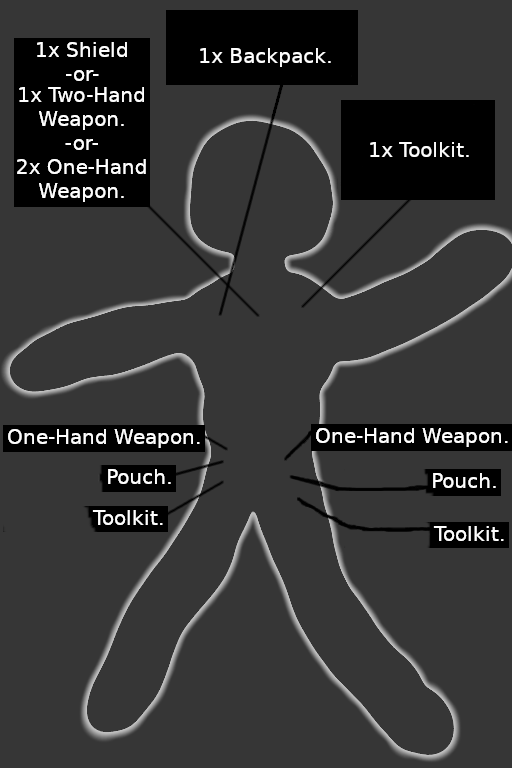
Each character has several available slots for carrying items:
• Right hip [1h-weapon], Right hip [Toolkit], & Right hip [misc or ammo]
• Left hip [1h-weapon], Left hip [Toolkit], & Left hip [misc or ammo]
• Back [2h-weapon -or- 1h-weapon x2 -or- shield], Back [Toolkit], & Back [misc or ammo]Each character may have 1 item assigned to each slot listed. Only items listed in weapon slots may be drawn in combat & may be swapped between at any time. Only ammunition stored in a “[Item specific] container” worn in a carry slot may be retrieved without an action penalty (or add 1 additional non-contested action to retrieve it). Each weapon’s Tier value worn in these slots must be at a level that is equippable by the character (you cannot carry a T12 1h-melee with only Body: 6).
For example: a character may have a sword, a toolkit, & arrow quiver (as [Item Specific] Pouch) on their right hip -and- a 1h-crossbow, a toolkit, & a bolt pouch (as [Item Specific] Pouch) on their left hip -and- a bow, toolkit, & misc-pack (as Backpack) on their back.
*Characters may also be allowed to travel with items carried (or equipped) in their hands in addition to their carry slots if allowed by GM, on a case by case basis.
*Characters cannot wield weapons or shields while actively working on any task(skill) that requires tools.
Weapons can be stored as loose inventory in backpacks or carts (their size categories are listed right below), but cannot be quickly equipped from anywhere other than their designated worn quick-draw slot. Since weapons being stored this way is not strictly bound to any specific size (only rough categories), & because weapons can vary greatly in size in real life, work with your GM to determine the exact size of your stored weapons or use the highest amount of spaces listed for it’s category.
Item Size Categories
Items will be generally categorized as follows:
• Extra-Small (XS): up to 10 may be stacked in 1 inventory space
• Small (S): takes up 1 inventory space
• Medium (M): takes up to 10 inventory spaces
• Large (L): takes up to 100 inventory spaces
• Extra-Large (XL): takes up to 1,000 inventory spaces(XS) items include coins, 1hr candles, pens, paper, ores, cloth fragments, gems, jewelry, feathers, seeds, healing baubles, & most other very small objects that a person could hold several of in the palm of their hand.
(S) items include ingots, cloth, 1 day of food, vial of ink, arrows, crossbow bolts, & most small objects that don’t make sense to stack.
(M) items include books, some pouches designed for carrying on a hip, clothing sets, Lamps, torches, tinderboxes, lumber, rope (10ft), cloaks, 1-Handed weapons, & many other objects that generally use about the same space as a human skull.
(L) items include most backpacks, most toolkits, stone blocks, 2-Handed Melee weapons, shields, bows, 2-Handed crossbows, tents, bedrolls, armor sets, & most other objects between the size of a human skull & a human skeleton.
(XL) items include wood beams, Chests, people, & most things larger than a human & smaller than a wagon.
-
General Rules
Daily Activities
Each day a player may assign their character to work on 2 “daily tasks”. Generally these tasks would be a production skill, a gathering skill, or travel. A character may mix & match these. ie: you may use Metalworks & Bowyer -or- Metalworks & travel in a day.
Each task assumes a 5 hours dedicated to it.
The reason these tasks are so short, is because the rest of that time is for a character to eat, sleep, chat, & relax. The large remaining window allows for storytelling and roleplaying, without sacrificing your task economy. You can sell your gear in town, talk to your favorite NPC in the pub, perform combat, & visit the shop without setting yourself back in your next crafting project. Sleeping an average of 8 hours & working 10 hours still leaves you with 6 extra hours each day for your character to get the chance to feel like a person.
Food Expiration
Unpreserved Food Expires After 1 Week.
Only the cooking skill & magic may extend this time window.
All creatures with Mind less than 1 can eat spoiled food for an additional week after it has spoiled. No creatures with Mind less than 1 can gain any skills or create fire. All creatures can improvise shelter where it makes sense — such as a cavern.
it is intended that monster races may hunt for food using either the trapping target number or hunting target number in any zone for food collection (without skills, they only get their presence stat for the modifier).
Water
For the time being: For each day of food, we can assume there is also an equal number of days of water.
Advanced Skill
Advanced Skills may not be taken until a character has all prerequisite skills at the level listed under that adv skill (or higher).
You may not use any adv skill until you have at least 1 level in that adv skill.
The Game-Board Doesn’t Matter
The rules are written with square tiles — like a chess board. The game was tested on square & hexagonal game-boards — both worked equally well. If you & your group wish, it can even be played without any game-board at all. All you really need is a d20, a few pieces of paper, a writing utensil, & imagination. A tile is equal to 5 feet by 5 feet, or roughly 1.5 meter by 1.5 meter.
-
Skills & Progression
Skill Points
Skill points are used as dice modifiers, similar to Reflex or Presence, for many combat & non-combat rolls. Skill points are used to gather resources more efficiently. Skill points are used as thresholds for crafting items into higher tiers. Skill points are just as important for building a character as their stats are.
Skill point distribution can be recalculated each combat level. Juggle them around & make the math work. The math should work the same forward as it does backward for skills. Just try to keep the skills your swapping around have the same total level or higher when you’re done.
Example: If you have “Tailor: 5(time)+2(combat)=7(total)” — You have “Tailor: 7”. If you gain a combat level & you raise your Mind stat from 5 to 6, you may replace a combat skill point with a passive skill point to have “Tailor: 6(time)+1(combat)=7(total)” — You still have “Tailor: 7”. Now you can use that combat skill point somewhere else, or put it back into tailor to raise it to 8.
*No skill may be a negative number.
*Average level skills are 5-6 for a professional.
*Levels 9-10 are usually reserved for the best in their field.
*Levels 11-12 are legendary, & usually reserved for only player characters or “power NPC’s”.
*Levels higher than 12 are restricted to only a few races.Passive Skill Points
For each month that passes, a character gains 1 point (as a time skill point) to add to any skill up to that character’s Mind stat. If all skills are maxed, then these skills points will be able to be used when the character next raises their Mind stat.
Combat Skill Points
For each Combat Level, a character gains bonus skill points (as Cmb skill points) to add to any skill. The amount rewarded is based on their Mind stat. Skill levels should not exceed a total 12 at any time. Only Combat Skill Points may go above your Mind stat.
-
Stats & Progression
Main Stats
The main stats in the game are Body, Mind, Reflexes, Presence, & Aura.
*No stat may be a negative number.
*Average level stats are 5-6 for a professional.
*Levels 9-10 are usually reserved for the best in their field.
*Levels 11-12 are legendary, & usually reserved for only player characters or “power NPC’s”.
*Levels higher than 12 are restricted to only a few races.Body – Determines weight lifted & carried, Tier of gear that can be equipped, Total HP as [HP= (Body x Combat Level)+ 20], Bonus Damage for most combat skills, distance walked/ran, & HP recovery as: [Body stat value] in HP each day.
While on a trail a character may travel a maximum their races “Move” value plus their Body stat in miles per day while walking [Daily Miles= Body + Move]. Generally, traveling off road or off trail will be considered half speed [Daily Miles= (Body+ Move) /2]. This number may be further reduced due to terrain declarations made by GM for any number of reasons.
Mind – Determines the maximum skill level that can be obtained through passive learning (each month, each player character gains 1 time skill point), Total MP as [MP= (Mind x Combat Level)+ 20], & bonus skills gained at combat level as: [Mind stat value] x [Combat Level] in Cmb skill points.
Reflexes – (Commonly Rflx) Determines dice modifiers applied to most combat skills on a 1:1 basis.
Presence – (Commonly Prs) Determines dice modifiers applied to most non-combat contested rolls for skills on a 1:1 basis.
Aura – Not used at this time.
Sub-Stats
Sub-Stats are effected by the relationship between a character’s current combat level & current values in their main stats (Body & Mind).
HP – or Hit Points – Determines the amount of damage that a character can receive from environment or combat before losing consciousness or dying. Unconsciousness occurs whenever a character’s HP becomes 0 or lower. Death occurs when a character reaches their HP total in negative numbers (a character with 20HP total will be out of combat at 0HP & dead at -20HP)
MP – Not used at this time.
Combat Level – (Commonly Cmb or Cmb Level) – A character starts at Combat Level 1, & for every 2,000 exp gained they add another Combat Level. For each Combat Level gained, they will gain 1 bonus Stat point to put into their main stats & extra HP/MP & bonus skill points based on their Mind stat.
Experience – (Commonly Exp) – is a reward given to characters by GM for doing epic things or beating up other things.
Combat Rules
-
Being Attacked & Shields
Each round, there is no limit to the number of times a character enters a combat event initiated by others on the battlefield. Provided that there is space to do so.
Each character takes up one square of a chess board, each square forward facing for the character (forward, left, right, diagonal left, & diagonal right) is the front of that character. Each square behind the character (behind, diagonal left, & diagonal right) is the rear of that character. This is important for some abilities, such as shields, Stealth attacks, etc.
If a character wishes to attack another in melee range (generally 1 square) they need to be next to that character (including diagonal squares touching it). This is not possible if all the squares are filled with other characters. Only 1 character is allowed to take up a square at any time, so long as they are alive & fighting. A space occupied by a fallen character may be occupied by another fighting character.
There is no logical number of unconscious characters that can occupy one space. Literally, the sky is the limit. However, the GM may declare that a space is occupied with enough bodies (or in the case of large races, one body) to have that square designated as terrain. As terrain it may be used as cover & may no longer able to be occupied or traveled through.
The defending character may swap weapons in any way they choose, at any time they choose. Hence, a bowman can defend a melee attack by using unarmed or by simply switching weapons to another melee style. This gives them the opportunity to respond to any incoming attacks declared against them in any way they choose.
Unless the target of a projectile attack is within melee distance, they do not get the opportunity to do damage on a counterattack. If they win their contested-roll they would simply succeed in evading the projectile. Contested projectile attack damage can only occur on the turn of the character declaring it. Bows cannot counterattack even if within their range (including within melee range).
Shield
Equipping a shield has no Skill requirement. Equipping a shield does have a Stat requirement. For each Tier value the shield is, the user must have that value in their Body stat or higher (ie: a T8 Shield requires Body: 8+).
Equipping a shield takes 1 round to complete (2 consecutive non-contested actions). This may be changed to a lower number later. But the buff from shields is too great to allow it to be switched to as a free action like other equipment.
The Shield does not work unless equipped in hand. The rules cannot safely balance wearing shields on the back as armor.
When attacked from anywhere, regardless of orientation, if the defending character wins the roll; that character will automatically turn to defend themselves from their opponent. If they are in melee range & wielding a melee weapon, they will counterattack using the roll difference in their damage calculation. If they are outside melee range, they will simply dodge the attack instead. Then they will return to facing their declared direction (or opponent, object, etc.) after the attacker’s turn concludes.
However… If shield user loses a contested-roll while being attacked from the rear, they get no shield bonus.
#### #### #### #### #### #### DDDD DDDD DDDD #### #### DDDD DDDD DDDD #### #### DDDD DDDD DDDD #### —– DDDD DDDD DDDD —– —– DDDD DDDD DDDD —– —– —– —– —– —– And… If a character is attacked from a Stealth attack from the rear (after losing a contested stealth check), they will not turn to face their opponent & no shield bonus is applied (nor is any stat, skill, or dice).
The front arc that a shield protects for large creatures includes all tiles from it’s center-line forward.
The graph shows “DDDD” to represent a 3×5 draconic creature. The “####” represent where the shield cover functions. The “—–” represent where the shield does not offer protection. That is a 25 foot long creature…
-
Combat Gear Basics
Characters may equip themselves with gear to assist them in combat. Each Quality Level of gear (often denoted as “Tier [value]” or as “T[value]”) will increase the damage or armor rating.
Combat Gear – Armor & Shields
Armor reduces the amount of damage receive against most attacks by it’s Tier value. To equip armor, the character must have a Body stat higher or equal to the armor’s Tier. A character may not stack armor to this limitation (ie: Body:5 would allow up to a single T5 armor to be worn. But not a T2 & a T3. However, Cloaks (see bushcraft) can stack & work in such a way that they may wear a T2 armor & three T1 Cloaks with a Body stat value of 5).
Shields work the same as Armor, & also require a Body stat of that Shield’s Tier or higher to equip, however must be equipped in their hand, reducing available weapon combinations, & only reduces damage when receiving attacks from the front. Shields have no effect when worn(or carried) on the body to armor rating –only when equipped in hand.
Neither Armor nor Shields require any skill to use. They apply static effects while equipped to the character using them.
Yes. You can have a +20 total front armor from equipping a Tier 10 armor & a Tier 10 shield. It is a lot. It is supposed to be.
Combat Gear – Weapons
Weapons will increase the damage that can be dealt whenever a character wins a Contested combat roll. Weapons require a Body stat equal or higher than the Tier of the weapon used, unless stated otherwise in the skill description.
While Weapons don’t technically require any skill level to use them, they benefit greatly from having a skill to apply to them when throwing dice in any contested combat roll. Especially since the roll difference can have a massive weight in the total damage dealt, & that winning the roll is required to even apply damage for most weapons.
The Gist
The relationship between weapons & armor are similar; both require Body stat higher than them to equip, & both give +1 to their effect in combat for each Tier value that they are. Weapons adding to damage, & Armor subtracting damage received.
If a character’s gear exceeds their body stat, they cannot move it. They cannot wield nor sheath weapons or shields that are too heavy. If the armor tier is too high, they cannot move in it. Their move becomes 0. This may be the case when adding cloaks, to survive the cold, to a armor set that is already on the cusp of being overweight.
-
Cover & Terrain
All ranged weapons may be fired from behind cover. 2-Handed Melee, Bows, crossbows, thrown weapons, & firearms are each considered “ranged” weapons.
The intent of the rules for Cover is from the perspective of the shooter. If their target is obscured in any way from terrain, objects, or people, they will not be allowed make the shot.
Be it terrain, a pile of bodies, or another character (regardless if friend or foe). To attack from behind cover;
• the character must be occupying a tile next to the object used as cover
• the cover must be between them & their opponent
• they must be at one of the objects edges (you cannot shoot through walls, only around them)While behind cover;
• a character cannot receive any projectile attacks
• A projectile weapon may not be used through a wall of allies or enemies
• 2-Handed Melee users may “snipe” enemies from behind a wall of their allies or enemies, & from any terrain or object edge.
• Nothing can attack through solid walls.Because a character cannot receive projectile attacks from behind cover; If you have two bow users, each on either side of a tree – Neither may attack each other without moving first. However, they may still be attacked with any 2-Handed Melee weapons within range if they are near an edge.
No character may move through occupied squares (& terrain).
Each character may only move the distance associated with their race each time they declare move action on their turn. The distance can be lower if your GM deems it logical due to terrain or bodies or whatever.
Climbing and Falling
Climbing terrain should be allowed when it makes sense. There is currently no official rule to determine the feasibility in every situation. When in doubt, work with your GM to determine if it would be allowed. It would make sense to require a “non-contested action” as a “move action” to climb terrain in most situations where that action is allowed. Additional move actions may be used to climb higher.
Tiles Fallen Feet Traveled Damage Received 1 5 0 2 10 1 3 15 2 4 20 4 5 25 8 6 30 16 7 35 32 8 40 64 Falling is fairly brutal. Falling 5 feet (1 vertical tile) will deal 0 damage. Falling 10 feet will deal 1 damage. For each consecutive 5 feet, double that damage. This damage ignores armor and shields. Sometimes it makes sense to jump out of a window 15 feet above the ground for a quick escape. Just know that falling too far is a calculated risk before taking that step. Much like real life, the farther you fall, the harder you hit the ground.
-
Critical Rolls
Critical Hits
Whenever a character rolls a natural 20 on a d20 for a contested roll in combat, they may choose to deal damage to their choice of their opponents equipped gear before doing normal damage. This is true whether or not they were the one that initiated the contested roll. Dealing damage to their weapon, armor, or shield will reduce it’s Tier by 1 until it can be repaired after the battle. The damage to the gear happens before the damage to the player is calculated. For long fights this may be a useful tactic to reduce the effectiveness of an opponent.
A player that rolls a natural 20 may still lose the contested roll.
Critical Failure
Whenever a character rolls a natural 1 on a d20 for a contested roll in combat, that player must chose to reduce their equipped Shield or weapon’s Tier by 1 until it can be repaired after the battle.
When dual wielding and using 2d20 & choosing the higher, if you roll a 1 on one of the dice but not the other, you did not have a critical failure (unless you chose the 1 for the roll).
Crits with Natural Armor & Natural Weapons
Crit effects can be applied to natural armor & weapons for the few races & monsters that have it. It would lower the bonus for their natural gear until it is healed. Crit effects cannot reduce the natural armor or weapon bonus below T0 (Tier Zero).
Natural armor may not be the target of a Critical hit if they have worn armor covering it until the worn armor is reduced to T0.
Similarly, damage to natural weapons may only be chosen if all equipped weapons or shields are at T0, absent, or destroyed.
A character rolling a critical hit may still apply damage to a T0 natural weapon to deal additional damage (10 damage) to the character directly, ignoring armor, before normal damage is applied.
Switching weapons (& all other free actions) cannot be done once dice are thrown until all damage has been calculated. Including crit damage to gear.
“Even Split” Crit Rule
For long fights, such as tank vs tank battles where no damage is able to occur, the GM may apply an “even split” rule to expedite the game-play. The “even split” rule applies automatic 1’s & 20’s to both characters involved by a number selected by GM. Then it is ran for a few more rounds to see if the effect changed the game-play. If nothing changes, the GM may call for another “even split”.
No damage is done to either character when the GM invokes a “even split” unless it is declared against an unarmed opponent’s weapons (their hands) or an opponent with T0 Natural weapons. Any character may switch weapons at any point while the process of of an “even split” is being applied.
If the GM calls “even split 5’s”, then both characters get to apply 5 critical hits & 5 critical failures to their own weapons & their opponent’s gear. This would technically have occurred over dozens of rounds & GM story telling should describe it as such. By the end, you may end up with two former “combat turtles” in rags, punching each other to death.
-
Damage Cheatsheet
For melee events:
Both players involved add 1d20 + reflex + skill, then declare totals. The player with the highest total adds the difference between the two totals to their damage. Only the player with the highest roll gets to add damage for each interaction, regardless of who declared the attack.
Melee damage = (roll difference + body + weapon bonus + creature size modifier) – (armor bonus)
The calculated damage is temporarily removed from the total HP of the receiver. The “weapon bonus” is equal to the Tier value of the weapon & “armor bonus” is equal to the Tier value of the armor (& shield if applicable).
If only one player is within range of the other for a melee attack, only the player that is in range can calculate damage. If the player outside of their weapon range wins, no damage is dealt for that event. This is a common mechanic for 2-handed melee weapons & bows.
For projectile events:
Both players involved add 1d20 + reflex + skill (defender may add any weapon skill bonus – even if nothing is equipped), then declare totals. If the projectile player wins, they add the difference between the two totals to their damage. If the other player wins, no damage is dealt for that event (even if both units are using projectile weapons), unless the opponent is within melee distance (& they have a melee weapon equipped).
Bow damage = (roll difference + weapon bonus) – (armor bonus)
Thrown damage = (roll difference + weapon bonus + body + creature size modifier) – (armor bonus)*Note that the bow does not get bonus damage from the body stat directly. It does, however, get more damage from the Tier [level] of the bow used. (see- “[weapon] Bow” for more details)
Crossbow events:
A crossbow is an automatic hit for any target within the character’s crossbow skill level in tiles or less. The use of a crossbow is not a contested roll – as such, may be used as a non-contested action.
If a loaded 1-handed crossbow is used as the projectile weapon; reduce the armor of the target by the weapon’s Tier, then damage is equal to the character’s skill level, minus the opponent’s remaining armor value.
If a loaded 2-handed crossbow is used as the projectile weapon, reduce the armor of the target by twice the weapon’s Tier. Then damage is equal to twice the character’s skill level, minus the opponent’s remaining armor value.
*Armor bonus cannot be reduced below 0 (zero).
1H crossbow damage = (MH/OH Crossbow skill) – (armor bonus – weapon bonus)
2H Crossbow damage = (2H Crossbow skill) – (armor bonus – weapon bonus x2)
*MH: Main-Hand, OH: Off-Hand, 2H: Two-Handed.Firearm Events:
For firearm attacks – if the weapon is already loaded, and is fired within the guaranteed hit zone — the damage is applied and no roll occurs. If fired in the contested zone, both players throw dice as: 1d20 + reflex + skill (defender may add any weapon skill bonus), then declare totals. If the shooter wins, (the shooter) applies only the weapon’s damage without adding roll difference. No armor is applied versus firearm damage. The maximum range is 15 tiles for contested attacks performed this way.
Firearm damage = (weapon bonus x2) + (ammo bonus x2)
For magic attacks:
Unless stated in the spell, no dice are thrown & the damage from the spell caster is immediately removed from the total HP of the receiver, and/or the effect is immediately applied.
Stealth attacks:
If a character succeeds in a contested Stealth roll against an opponent, they get an attack against the defender without their ability to contest the attack. The contested roll for skill is; both players throw dice as: 1d20 + presence + Stealth, then declare totals. If the character initiating the stealth skill check wins, they get a special attack (as a free action) & their opponent cannot roll or add stat/skill bonus in defense. If the character initiating the stealth attack loses the roll, they failed to find an opportunity during that turn to find an opening & essentially waste their contested action that round.
Attacking once with stealth, whether with a bow or with a melee weapon, will automatically reveal the location of the attacker to everyone.
The Stealth skill may be used in combat any time a character is behind their opponent. Regardless if the action is with melee or ranged attacks, or any other kind of action.
The opponent will be aware of their existence after the attack occurs, & may turn toward them on their next turn. However, if they ignore them (perhaps to face other opponents), the sneaking character may again declare a Stealth skill contested roll against them.
Stealth damage with melee = (1d20 + reflex + melee skill + body + weapon tier + creature size modifier) – (armor)
Stealth damage with thrown = (1d20 + reflex + thrown skill + body + weapon tier + creature size modifier) – (armor)
Stealth damage with bow = (1d20 + reflex + bow skill + weapon tier) – (armor) -
Dual Wield Melee
Dual Wielding (& multi-wielding)
When 2 Melee weapons are used, the character may throw 2d20 & select either one of the 2 rolls for the Hit roll vs their opponent in a Contested action. If they have more than 2 weapons, they may throw an additional 1d20 for each weapon wielded & in range during the contested-action. They still only select one d20 rolled this way.
Applicable skills are generally Main-Hand Melee, Off-Hand Melee, & Unarmed Melee.
Unarmed may be used to substitute main-hand, off-hand, or both.
You cannot use Main-Hand Melee or Off-Hand Melee skills unless you have a melee weapon actively equipped in that hand (you must use the unarmed skill for any hands without a weapon equipped).
Any character using multi-wielding mechanics will receive the lowest of the applicable skills being used as their skill bonus for this roll.
Damage for using Dual Wielding is based on the lowest Tier of the weapons used (unarmed is equal to T0).
For Dual wielding (most common):
To hit = Rflx + [Lowest skill being used] + 1d20 thrown twice (selecting 1 roll from among them)
Damage = [Roll Difference] + Body Stat + Tier value (of the lowest weapon equipped)
A character whom is utilizing dual wielding does not get to roll their additional d20 when receiving ranged attacks unless the attack is declared from within their melee distance.
A character whom is utilizing dual wielding does get to roll their additional d20 when receiving attacks declared from within their melee distance if both melee weapons they are wielding are within range.
-
Lighting Conditions
Be Afraid of the Dark
Being in absolute darkness is meant to be chaotic, stressful & dangerous. The intent of these rules are to provide that sense to the party. The longer you’re in pitch black, the more disorientated each character (& player) will become. Unless you have a light source that fills the room, some weird magic, or dark vision as a racial bonus – Darkness should be treated as a threat to the whole party.
When any character is in absolute darkness, they get the Blind status applied to them. When any character is blind:
• They may not do actions or use skills that require sight. Such as reading, setting or detecting traps, tracking, etc. If it seems reasonable to do an action by touch alone, or if you can find a video of a blind person doing it online – It should probably be allowed. Ask your GM.
• They may only make attacks within their normal unarmed melee range. Including attacks with projectile & 2 handed melee weapons.
• If another character comes into their space (any adjacent tile), they will be aware of each others presence there. However, they cannot identify them unless they use senses other than sight to do so. This requires 1 non-contested action. If they do not have any remaining actions, they are left to wonder until their next turn unless the other character uses an action to identify them & somehow let’s them know it. Sound, touch, smell, … hopefully not taste. Performing the action of identifying another may alert others in the area because of sounds being created in the process. (It depends. Your GM will have to decide how to deal with any additional sounds on a case by case basis. & whether or not you sniffing that other person alerts others in the area. I’m simply not making a rule for this. It’s a story driven outcome.)
• They may orient on others using other senses available to them – primarily sound. Such as a pair of other characters fighting across the room, or the guy in full plate tripping & smashing into the wall.
• If it is because of darkness (as opposed to having your eyes jabbed with a cayenne pepper): if there is a light in the distance that does not illuminate the area around them, they may use that light to orient themselves. They can see & identify those within the illuminated area. Characters within the illuminated area may be targeted with range & projectile weapons from characters inside the darkness, but not vice versa.
• If any character is inside an illuminated area, they are still treated as being under the Blind status versus any character or object completely in the darkness.
• When moving, if they cross paths with an obstacle or hit a wall, they take damage equal to the total number of tiles they intended to move with that action & make loud noises that may be heard & oriented on by others. This does not necessarily identify them as friend or foe. This damage does not ignore armor. They forfeit the additional tiles they would have moved with that action.
• All other characters automatically (for free, without rolling, & without using an action – & even if they are also blind) gain the Stealth bonus against them. This means the Blinded character may not track their movements for their end of turn orientation (instead they may declare to turn to 1 of 8 directions based on their current orientation or toward a sound or some other sensory input). More importantly, they all gain the ability to declare a Stealth bonus attack against them; which is a free action. The free Stealth attack gained this way may only be used one time each round. Any subsequent Stealth checks in the same round must be done in a normal fashion — meaning they must both roll a normal stealth skill check against each other of: 1d20 + Stealth + Prs versus the defender’s 1d20 + Stealth + Prs.
Let the Chaos Begin
When darkness falls upon you, your GM will make a small map to track the movements & orientation of all creatures in the area & mark any obstacles. Only the GM & any characters that are not effected by the Blind status effect may see the map.
When a Blind player character moves, they may only declare the intended distance & one of 8 directions as: forward, left, right, backward, diagonally forward left, diagonally forward right, diagonally backward left, & diagonally backward right. They may request that their orientation at the start of their turn be toward some sound (or other queue) from the previous round. (They may also chose not to move at all or do some other action that makes sense to them at that time.)
When a Blind NPC moves, unless they are moving toward a sound or other queue, the GM will roll 1d20 to determine their action. If they move twice on their turn, they roll for each of them.
• 1-2: diagonally forward left
• 3-4: forward
• 5-6: diagonally forward right
• 7-8: right
• 9-10: diagonally backward right
• 11-12: backward (they turn around)
• 13-14: diagonally backward left
• 15-16: left
• 17-18: quietly remain in place
• 19-20: call out! so friends (& foes) may identify them, or make light from a source in their inventory, or load a crossbow – any action other than moving or remaining quiet.As all the Blinded characters move around the room, the GM will mark their start point, their end point (with directional orientation), & a line between them. In each round, each time a line is crossed by another, they will have bumped into each other while moving. After any exchanges occur, they will continue to their previously declared end point on the map (even if they crawl there with their last breath). Then, at the end of the turn, each character involved in a crossing event that turn may declare a new end of turn orientation in response to the new event.
Characters that are not Blind may:
• Move around the room as normal.
• Choose if crossing a path line from a Blind character would cause an event. – However, if the Blinded character ends a movement action on an adjacent tile, attacks may be declared.
• Use a free stealth attack against any Blinded character each round.
• Roll defense normally if a Blind character attacks them or tries to use any stealth attack against them – Even if the Blind character won a stealth roll against them.Low Light Conditions
Low Light is not as scary. Honestly, not even worth mention… but people will ask, & some GM’s may wish to employ it. So here it is…
When a character is effected by low light conditions it falls on a gradient. Generally it will be represented as a scale of 1-100. These numbers reflect how far you can identify a target in tiles. The lower the number, the darker it is. Even “Low Light 1” will at least let you identify your allies before you typically swing on them with a melee weapon.
“Low Light 0” on this scale is treated as total Darkness.
The bonus for characters rolling stealth in low light is: +1 added to their roll for each tile beyond the Low Light value they are versus their target.
You can make range & projectile attacks at twice (2x) the declared Low Light level without penalty. So there is still room for hasty mistakes. But if you’re in “Low Light 20” or higher, generally you’ll know who you’re shooting at. Some races may get Low Light immunity as a bonus. Races that have Dark Vision are immune to Low Light effects.
The penalty for attacking a target greater than 2x the Low Light [Level] will be: The defending character will get a bonus added to their roll of 1 for each tile past the threshold they are.
Example: Environment is Low Light 2. At 2 tiles you can identify other characters. The unpenalized range is 4 tiles. Player A is 15 tiles from Player B. The range of the Bow is 15 tiles. Player A shoots an arrow at Player B. Player B adds (15-4) 11 to their defense roll against the incoming projectile. Player A misses. Player B viciously mocks Player A.
Light Sources
A lit campfire, torch, or candle will project a 5-tile radius of bright light and a secondary 10-tile radius of Low Light 1. A candle without a lamp is susceptible to being put out from wind, or attacks, or many other clever ideas allowed by your GM. The campfire, torch, & candle housed in a hurricane lamp would be much more difficult to put out (possibly taking several rounds).
The graph below shows a typical light spread from a light source. LS = Light Source, BL = Bright Light, L1 = Low Light: 1, AD = Absolute Darkness.
AD AD AD AD AD AD AD AD AD AD AD AD AD AD AD AD AD AD AD AD AD AD AD AD AD AD L1 L1 L1 L1 L1 L1 L1 L1 L1 L1 L1 L1 L1 L1 L1 L1 L1 L1 L1 L1 L1 L1 L1 L1 L1 L1 L1 L1 L1 L1 L1 L1 L1 L1 L1 L1 L1 L1 L1 L1 L1 L1 L1 L1 L1 L1 L1 L1 L1 L1 L1 L1 L1 L1 L1 L1 L1 L1 L1 L1 L1 L1 L1 L1 L1 L1 BL BL BL BL BL BL BL BL BL BL BL L1 L1 BL BL BL BL BL BL BL BL BL BL BL L1 L1 BL BL BL BL BL BL BL BL BL BL BL L1 L1 BL BL BL BL BL BL BL BL BL BL BL L1 L1 BL BL BL BL BL BL BL BL BL BL BL L1 L1 BL BL BL BL BL LS BL BL BL BL BL L1 L1 BL BL BL BL BL BL BL BL BL BL BL L1 L1 BL BL BL BL BL BL BL BL BL BL BL L1 L1 BL BL BL BL BL BL BL BL BL BL BL L1 L1 BL BL BL BL BL BL BL BL BL BL BL L1 L1 BL BL BL BL BL BL BL BL BL BL BL L1 L1 L1 L1 L1 L1 L1 L1 L1 L1 L1 L1 L1 L1 -
Natural Weapons
Rolling a critical failure with a natural weapon will damage that weapon & reduce it’s effective Tier by 1 (one). Rolling a crit failure with T0 natural weapons uses the same rules found in “Skills – [Weapon] Unarmed Melee]”, dealing 10 damage to the character before normal damage occurs.
Natural weapons use the “[Weapon] Unarmed Melee” skill for combat rolls, except they deal damage as: [roll difference] + Body Stat + (natural weapon bonus).
Extended reach natural weapons use the a mix of rules between “[Weapon] 2-Handed Melee” & “[Weapon] Unarmed Melee”. They gain the advantages of the 2-H Melee skill & the disadvantages of unarmed if their natural weapon is reduced to T0. They still only use “[Weapon] Unarmed Melee” skill for combat rolls.
If the natural weapon grants advantages, such as extended reach, they will still function correctly at Tier 0. The same is true for natural weapons that use any other weapon rules, such as; bow, Dual Wielding rules, etc.
-
Rounds, Turns, & Actions
The Combat Round
A combat round starts at the 1st character’s turn and ends at the last character’s turn. The next round begins when the 1st character starts their next turn.
Most of that time is characters measuring & checking their opponent, trading blows that don’t do much. All leading up to the moment when one of those two characters lands a solid blow on their opponent… or time running out as a solid blow is evaded or soaked by their armor.
A round is approximately 5-15 seconds.
There is no defined amount of clock time for each turn taken by a character in a round. It’s loosely defined as simply, “a moment in time”. Many actions from character turns can happen simultaneously within any round.
Turn Order & Initiative
For additional simplicity, the most common way to determine turn order is to simply go around the room clockwise or anti-clockwise starting with players going first, then the enemy NPCs (Non-Player Characters) after combat has initiated. This is true regardless of who initiated combat & after the first attack action has concluded — perhaps because of an ambush or a particularly violent player character prompting the battle by attacking pre-combat.
If it is needed, the GM may instead follow: Once combat has been initiated, the turn order will be determined by 1d20 + reflex bonus rolled by each combatant. With the highest total roll going first and the lowest going last. Any tie will be rerolled to determine turn order placement as a tie-breaker. For instance, if two characters tie for first, then after the tie-breaker, one will be first & the other would be second in turn order. All NPC’s can roll for turn order individually, as multiple groups, or as 1 big group (GM’s choice).
Turns & Actions
At the start of each character’s turn, if any effect is in play attached to that character – apply those effects. If an effect ends at the start of their turn, they may declare an action to extend those effects before they wear off. But only if it’s the first action they declare each turn.
Each turn a character may perform 2 actions in the order of their choosing. During each turn a character may only declare 1 contested action.
They may use either 1 contested action & 1 non-contested action -or- they may use 2 non-contested actions each round. Their contested action may only be used on their turn.
A contested action (aka: contested roll, contested attack, or simply “attack”) is any time a character rolls dice against another. These may be combat (usually as an attack) or non-combat rolls (such as stealth). Often referred to as an “attack” when done as the initiator of the contested roll, & as “counterattack” or “defense” when on the receiving end of the contested-roll.
A non-contested action is any action where characters do not roll against each other. Non-contested actions include: moving, unequipping a shield, grabbing a weapon (or any object) from anywhere other than a worn weapon slot (including from other character’s hands), grabbing ammunition from anywhere other than a ammo pouch, lighting a torch, and reloading (crossbow, firearm, etc). It also may be used in some attacks, such as firing a loaded firearm/crossbow if within guaranteed hit range.
*Equipping a shield takes 1 round to complete (2 consecutive non-contested actions).
*Throwing an object, not as an attack, is a non-contested action. Objects may be thrown any distance up to the character’s Body stat value. If the creature’s race has a +1 or +2 to all weapon range, they also can throw an object that much further than their Body stat. The object must be in an item size category that matches their creature size category, or lower. ie: a Gratchen is a (Sm) race & can throw (XS) & (S) sized items. A Orc is a (XL) race & can throw items equal or less than (XL) size category (almost anything not nailed down). For now, this may not be done to deal damage (whatever was there would move before it lands). But it may be done to toss a torch to light an area, or to pile objects to create impassable terrain or cover.
Free actions can be done at any time simply through declaration. These actions will resolve 1st in, 1st out(meaning 1st to declare is 1st to resolve & any declarations after are in response). Free actions can be used to: equip or switch between worn weapons, sheath or holster a weapon, speak or scream in pain, drop a weapon (or any other object), cast a spell, or use a worn enchanted item. As such, these things can be done at any time, on anyone’s turn, as many times as desired.
Nothing can interrupt damage. Once dice are thrown for any contested action or damage has been declared from some other action, that damage must be concluded before any other actions can take place. The time to clutch attack with your firearm or spell is before dice are thrown.
At the end of each character’s turn, the player may declare the direction their character faces. Or they may choose to maintain facing an opponent, object, or ally until their next turn. This is not a action, not even a free action. It is only decided at end of their turn.
This may seem like a trivial rule. But a player may want their character to focus on keeping their shield facing a group of enemy archers or they may want to continue to turn in place so that nasty rogue-like enemy can’t smack another stealth attack on them.
Tactical Actions
A character may trade their contested action for an additional non-contested action to perform 2 non-contested actions in a round. They may perform the same action twice, like moving twice in a round or firing two loaded 1-handed crossbows. Or they may perform 2 different non-contested actions. A character may not trade a non-contested action for an additional contested action.
A character may choose to hold their non-contested action to be used on another character’s turn. Someone may do this to block a path of an enemy, provide cover for another ally from incoming fire, or utilize any other non-contested action in some clever way. That character still only gets 2 declared actions on each round, & only 1 of them can be a contested roll. They cannot reserve their contested roll this way. If no action is used before the character’s next turn, the reserved action is considered forfeited. All actions are generally “first in / first out”, but this interruption is considered preemptive in nature. The act of reserving an action grants priority to respond to other’s actions with a non-contested action. They may even use this action at odd timings where it makes sense. Such as: “I fire my crossbow on them when they get in range”, may mean you fire when they are in the middle of their movement action before they reach their destination tile.
If an action is reserved and an attack is made against that character. If they interrupt the attack action to move, the attack action did not happen & the attacking creature can change their action. If the character moves to behind cover to interrupt a ranged attack, the attacking creature can change their action or choose new targets. You cannot “waste” their contested action this way. You can block a moving creature this way. If you do, they move up to the tile next to your new position and lose part of their movement distance from that action. They still get to move at least 1 tile before they can be blocked while using a move action.
For example, if you wish to block someone else as they move with a reserved or unused non-contested action – The intended action must be declared as they move. If the enemy moves in a path that would be inside the move range of your hero, your hero may move to any tile that blocks their path. The enemy cannot go through your hero, they may not change directions after they are intercepted, & lose any remaining tiles of movement for that action.
-
Unconsciousness & Death
A character becomes unconscious as soon as their HP becomes 0 (zero) or less. An unconscious character may not use any dice, stats or skills in defense of any attacks against them. They may not declare any actions. They simply lay there… unconscious.
Unconsciousness is not the same as sleeping. When sleeping, you would awaken after receiving an attack. Or, more likely, become awakened from disturbances nearby.
Character death occurs when their current HP falls below their total maximum HP in negative value. A character with 100HP will become unconscious at 0HP & will finally die at -100HP (negative 100 Hit Points).
If for any reason a character has a total maximum HP of 0, they die (Zero is equal to negative zero).
Playable Races
-
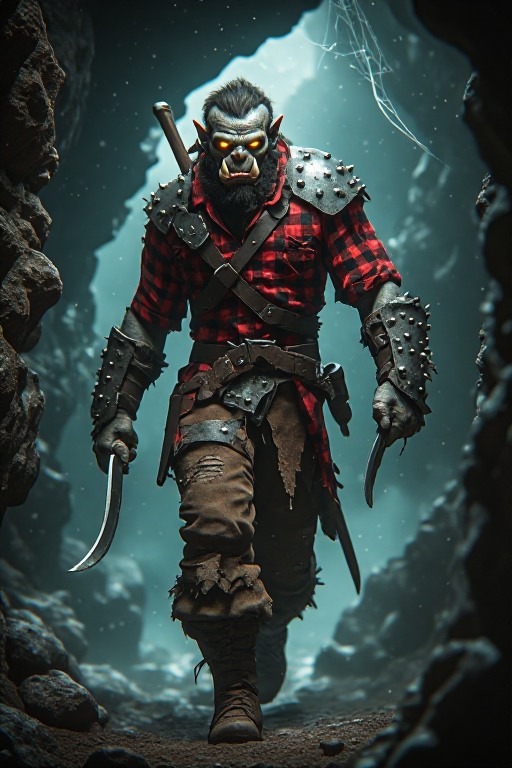
Cave Troll (Lg)
Lives in the dark.
Size: 1×2
Move: 6
Height Range: 7-8ft
Bonus HP & Melee: +6
Natural Armor: +0
Size Category: Large
Food/day: 2
Weight Range: 400-500lbs
All Weapon Range: +1
Life Expectancy: 60 years
-
Daywalker (Med)
Born with daddy issues.
Size: 1×1
Move: 5
Height Range: 5-6ft
Bonus HP & Melee: +0
Natural Armor: +0
Size Category: Medium
Food/day: 1
Weight Range: 100-200lbs
All Weapon Range: +0
Life Expectancy: 1000 years

Special
- Ability: “Exsanguination”: This ability, when used on another living creature, will deal [Aura value] damage to the target, and:
– it uses only 1d20 + Reflex stat value for the contested action.1
– it heals the Daywalker by the same amount of damage they dealt with the ability that turn.
– if it is used as the killing blow on a playable race: will grant the Daywalker all abilities, passives, & effects that is listed as “special” to that race, permanently.2 - “Undeath”: If a Daywalker’s HP drops to 0 or lower (if they’re still alive), after they fall to the ground, The GM takes control of their character.
– They drop all held weapons and shields where they fell.
– While in a trance state, they will lose their skill bonuses for all actions, they will move, they will defend themselves, & they will attempt to use “Exsanguination” on any nearby creatures.3
– They still get to use dice & stats for any rolls (they only lose skill bonus & access to other abilities — such as dual wielding).
– They leave this trance state once they have 1+ HP, or die. - Trait: “Perfect Guise”: A Daywalker is perfectly human to all perceivable senses. They smell, sound, move, & appear human in every way.4
- It is treated as a replacement for an unarmed attack, & must follow all other rules of an unarmed attack – except it cannot be used with any skill bonus or dual wielding rules. It is not a grapple or latching effect, so it must be contested each round to continue it’s effects (It works best on extremely weak or unconscious targets). ↩︎
- Each “special” racial trait may only be received once, & cannot stack. If an effect from one is greater than another gained trait, the Daywalker gains the greater effect. Does not work with shapeshifting abilities or grow extra appendages. ↩︎
- Friend & foe alike. Generally prioritizing the weakest prey in the immediate area 1st as; “lowest armor preferred”. If it struggles to get a bite, it may move to the next weakest creature. ↩︎
- The Perfect Guise works fine for a Daywalker at birth. But, some traits from other playable races would visually alert others of their true race & threat. Seeing a human with the tail of a Neo-Ape, the natural hardened scales of a Neo-Dragon, or the natural retractable claws of a Neo-Tiger will wave red flags unless they are obscured from the eyes of observers. ↩︎
- Ability: “Exsanguination”: This ability, when used on another living creature, will deal [Aura value] damage to the target, and:
-
Dwarf (Med)
Stout, strong & stocky.
Size: 1×1
Move: 3
Height Range: 4.5-5.5ft
Bonus HP & Melee: +0
Natural Armor: +0
Size Category: Medium
Food/day: 1
Weight Range: 200-300lbs
All Weapon Range: +0
Life Expectancy: 300 years
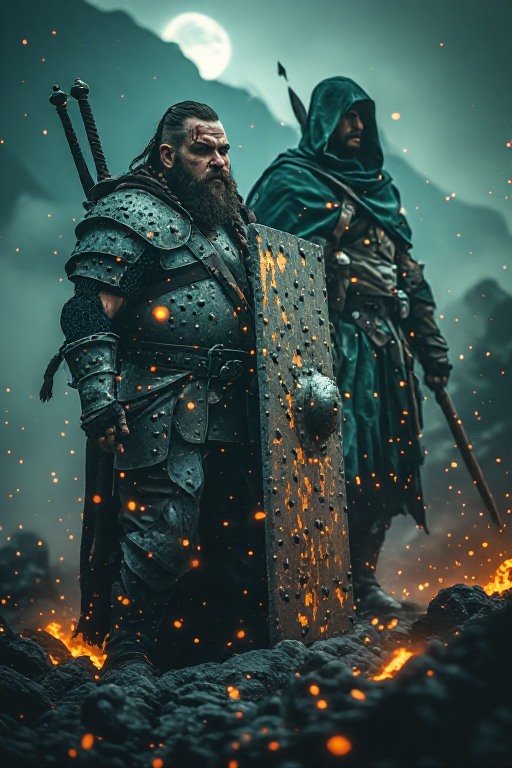
- Dwarves can have two 1-handed weapons on each hip, 2x hip pouches on each hip, 2x toolkits on each hip, 2x backpacks on their back, wear 2 sets of clothing, 2x large toolkits on their back, two 2-handed weapons or shields or four 1-handed weapons on their back, etc. ↩︎
- Dwarves can wear 2 pieces of armor, each up to their Body stat. Or any combination of 1-2 armors & Cloaks (see – Skills – “Bushcraft”) equal to 2x their Body stat. This effect does not change normal Tier restrictions (a Dwarf with Body:2 cannot wear Tier:4 Armor – They may wear two Tier:2 Armor). They still cannot wear or equip Weapons of higher tier than their Body stat value. ↩︎
- Dwaves can wear 2 cloaks for each Body stat assigned to them instead of the normal 1. ↩︎
-
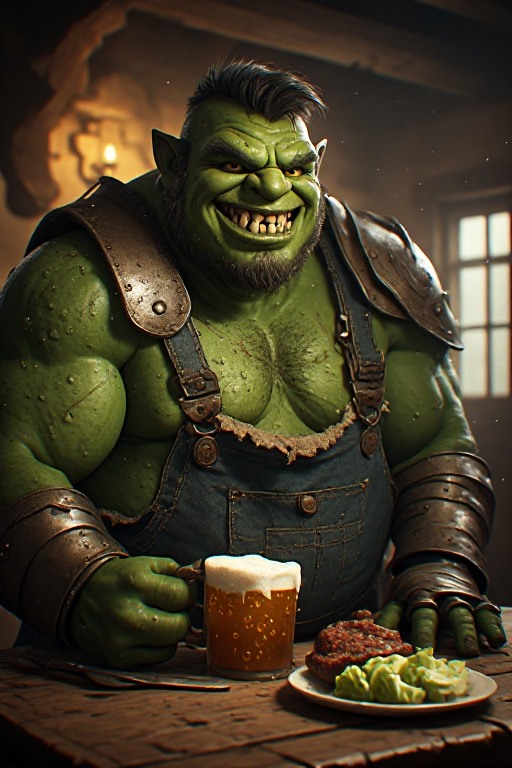
Forest Troll (Lg)
Big, green, & tough as hell.
Size: 2×2
Move: 6
Height Range: 7-8ft
Bonus HP & Melee: +12
Natural Armor: +0
Size Category: Large
Food/day: 4
Weight Range: 600-700lbs
All Weapon Range: +1
Life Expectancy: 70 years
Special
- Forest Trolls regenerate Hit Points (HP) at a rate of [Body value + Combat Level] each round for any combat damage they have received.1
- Regeneration does not effect damage received from non-physical sources. It does not work for elemental damage (such as that from environment or magic). ↩︎
-
Gratchen (Sm)
Short, serious, & surly.
Size: 1/2
Move: 3
Height Range: 2-2.5ft
Bonus HP & Melee: -5
Natural Armor: +0
Size Category: Small
Food/day: 1/2
Weight Range: 20-30lbs
All Weapon Range: +0
Life Expectancy: 50 years
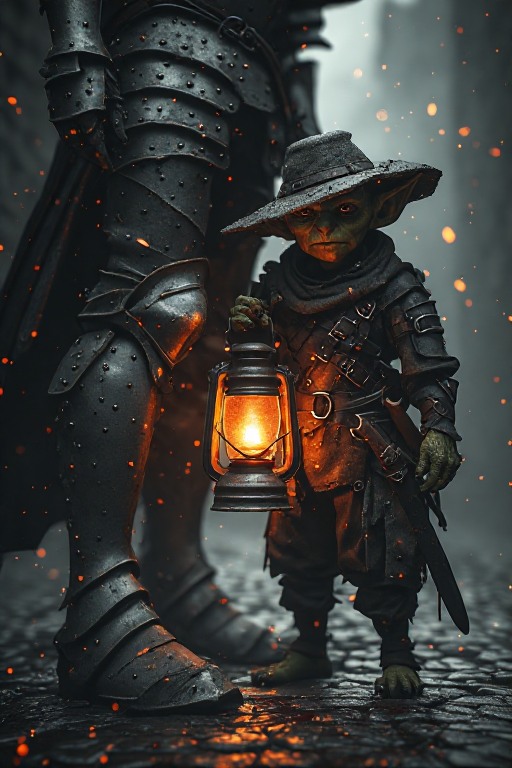
- Gratchen can see in gray scale in absolute darkness. ↩︎
- Gratchen can see heat signatures of others. Characters in Stealth will lose Stealth status against a Gratchen if they cross their line of sight at any time. Shadows will not hide them, but obstacles that fully cover them still will. (Stealth checks & attacks may still be used from behind a Gratchen as normal.) ↩︎
- Before investing any further points into the awarded advanced skills, they must first invest enough points into all prerequisite skills they normally require. Gratchen may use the awarded advanced skills at level 1, even if they don’t have the prerequisite skills. ↩︎
-
Human (Med)
The best race(just ask them).
Size: 1×1
Move: 5
Height Range: 5-6ft
Bonus HP & Melee: +0
Natural Armor: +0
Size Category: Medium
Food/day: 1
Weight Range: 100-200lbs
All Weapon Range: +0
Life Expectancy: 80 years
Special
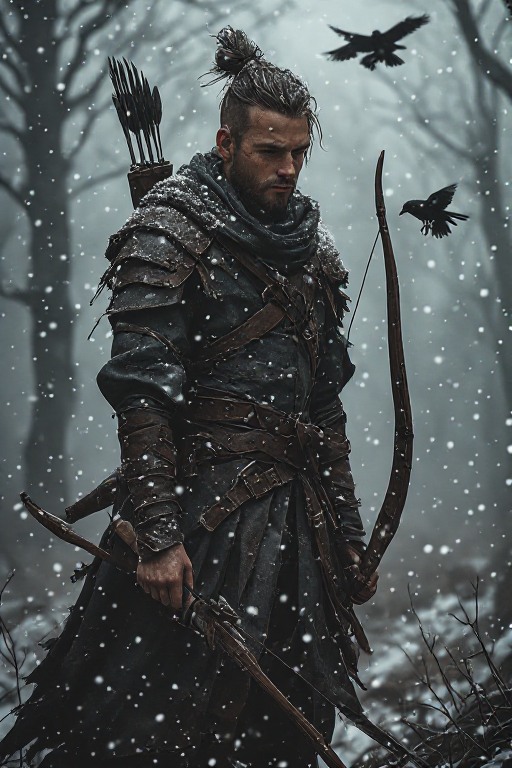
- Humans gain 2 points per month (not the usual 1) to add to their Time awarded skill points (up to their Mind stat).1
- This effect includes the initial 2 years of Time skill points gained at character creation! ↩︎
-
Neo-Ape (Med)
The “combat monkey”.
Size: 1×1
Move: 5
Height Range: 4.5-5.5ft
Bonus HP & Melee: +0
Natural Armor: +0
Size Category: Medium
Food/day: 1
Weight Range: 100-200lbs
All Weapon Range: +0
Life Expectancy: 60 years
Special
- Neo-Apes have a prehensile tail. They my equip 1-handed melee weapons with their tail, or use their tail to aid them in Unarmed melee.1
- When a Neo-Ape is within any Wilderness zone (such as forests, jungles, plains, or mountains), they automatically feeds themselves by harvesting local vegetation, nuts, and insects.
- When a Neo-Ape has a weapon equipped in their tail, they will use “Off-hand melee” skill for that weapon. If they have two total weapons, they use Dual Wielding mechanics found in the combat rules except: if both weapons are off-hand weapons, use only off-hand skill for applied skill bonus for both weapons (instead of the normal “1 on-hand, 1 off-hand – use the lower skill of the two”). If they are using unarmed melee with all 3 appendages or have a melee weapon in each of their 3 equip slots, they may roll three (3) d20 & choose any roll amongst them for their combat roll. (see- Combat Rules-Dual Wielding) ↩︎
-
Neo-Bear (Lg)
Fighting Bear Handed since forever.
Size: 2×2
Move: 5
Height Range: 8-9ft
Bonus HP & Melee: +12
Natural Armor: +0
Size Category: Large
Food/day: 4
Weight Range: 600-700lbs
All Weapon Range: +1
Life Expectancy: 80 years
Special
- Ability: “Trade Blows 2”: Whenever the character with this ability is dealt damage from within their unarmed melee range from another character: they get a free special attack against that character. As a free action:1
– If that character is in the small, medium or large size categories; The effect shoves the target a distance up to to the Neo-Bear’s Body stat in tiles in any direction. If they hit any obstacle, such as terrain or other characters, they take damage equal to the Body stat value of the Neo-Bear.
– If that character that is in the extra large size category; The effect shoves the Neo-Bear up to their Body stat in tiles in any direction. - “Fat Storage”: They can store up to 120 additional units of food within their body as fat storage.2
– The character can consume a maximum of 12 extra units of food each day to build their fat stores.3 - “Overnight Hibernation”: When activated during any rest, the character gains:
– Double Healing: They regenerate HP at double the normal rate.4
– Body Heat: They inherently gain the protective effects of a Fire.5
– If they’re using “Overnight Hibernation”, it takes them 1 additional round of combat to fully awaken if ambushed while sleeping.
- “Trade Blows 2” functions with dual wielding mechanics even if both hands are otherwise occupied, including wearing a shield. The ability uses the “unarmed” skill to hit. The shoving effect does not occur unless the Neo-Bear wins the contested action. No damage occurs from the contested action regardless of who wins it. Any damage dealt from impacting an obstacle ignores armor & shields. If the obstacle was another character, that other character also takes the same amount of damage without armor mitigation. ↩︎
- Food stored as fat inherently never spoils. The character may subtract 1 day worth of units of food from fat storage at anytime instead of eating. ↩︎
- The extra units of food are in addition to the normal amount of food they need daily. This equates to 10 days of excess to store up to 30 days of food for their race. ↩︎
- Recovering [Body Stat x 2] in HP from damage taken from combat or environment. ↩︎
- A Fire source halves damage from cold exposure. ↩︎
- Ability: “Trade Blows 2”: Whenever the character with this ability is dealt damage from within their unarmed melee range from another character: they get a free special attack against that character. As a free action:1
-
Neo-Blackbear (Med)
Bugbear? I see no bug.
Size: 1×1
Move: 5
Height Range: 6-7ft
Bonus HP & Melee: +0
Natural Armor: +0
Size Category: Medium
Food/day: 1
Weight Range: 200-300lbs
All Weapon Range: +0
Life Expectancy: 100 years
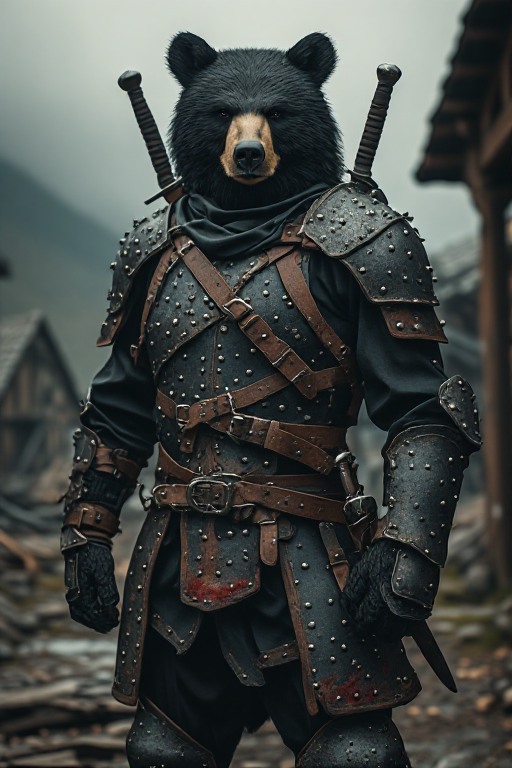
Special
- Ability: “Trade Blows 1”: Whenever the character with this ability is dealt damage from within their unarmed melee range, they get a free unarmed attack against the character that dealt damage to them. As a non-contested strike. As a free action. They may not use dual wielding mechanics with this ability.1
- “Fat Storage”: They can store up to 30 additional units of food within their body as fat storage. 2
– The character can consume a maximum of 3 extra units of food each day to build their fat stores.3 - “Overnight Hibernation”: When activated during any rest, the character gains:
– Double Healing: They regenerate HP at double the normal rate.4
– Body Heat: They inherently gain the protective effects of a Fire.5
– If they’re using “Overnight Hibernation”, it takes them 1 additional round of combat to fully awaken if ambushed while sleeping.
- “Trade Blows 1” damage mechanics function the similar to the stealth attack’s free action. Except the trigger is taking damage instead of contesting a stealth check or applying a blind status some other way. “Trade Blows 1” uses the [Weapon]Unarmed Melee skill and the weapon tier is 0, even if other weapons are in hand. The target of “Trade Blows 1” still gets to apply their shield bonus if they have one equipped. ↩︎
- Food stored as fat inherently never spoils. The character may subtract 1 day worth of units of food from fat storage at anytime instead of eating. ↩︎
- The extra units of food are in addition to the normal amount of food they need daily. This equates to 10 days of excess to store up to 30 days of food for their race. ↩︎
- Recovering [Body Stat x 2] in HP from damage taken from combat or environment. ↩︎
- A Fire source halves damage from cold exposure. ↩︎
-
Neo-Cheetah (Med)
Thin framed & fast as hell.
Size: 1×1
Move: 3
Height Range: 5.5-6.5ft
Bonus HP & Melee: +0
Natural Armor: +0
Size Category: Medium
Food/day: 1
Weight Range: 100-200lbs
All Weapon Range: +0
Life Expectancy: 300 years
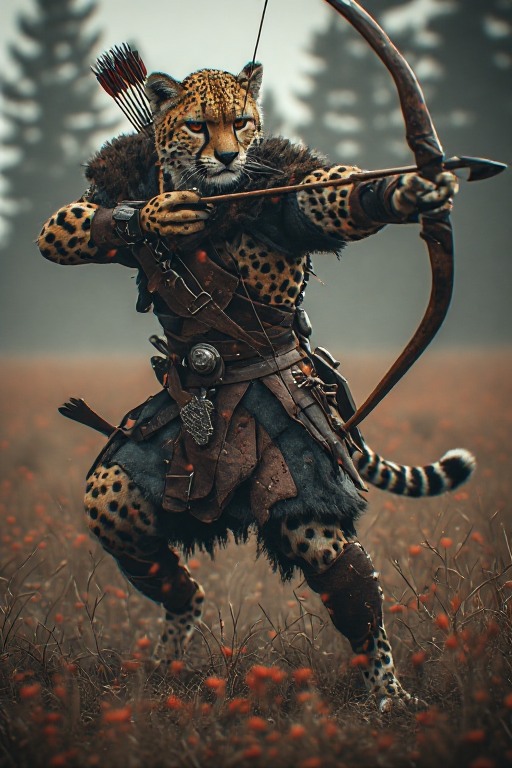
Special
- Neo-Cheetahs gain bonus Move Speed equal to their Body stat minus the Body stat requirement of their equipped armor and cloaks.1
- A cheetah with Body:10 wearing Tier 5 Armor will have +5 additional move speed, or 8 tiles of move in combat – a cheetah with Body:12 & no armor or Cloak (see- Skills – “Bushcraft”) will move 12 additional tiles, which is 15 move! ↩︎
-
Neo-Daemon (XL)
“I think I would know.”
Size: 3×3
Move: 6
Height Range: 10-12ft
Bonus HP & Melee: +27
Natural Armor: +0
Size Category: Extra-Large
Food/day: 9
Weight Range: 1800-2000lbs
All Weapon Range: +2
Life Expectancy: 600 years
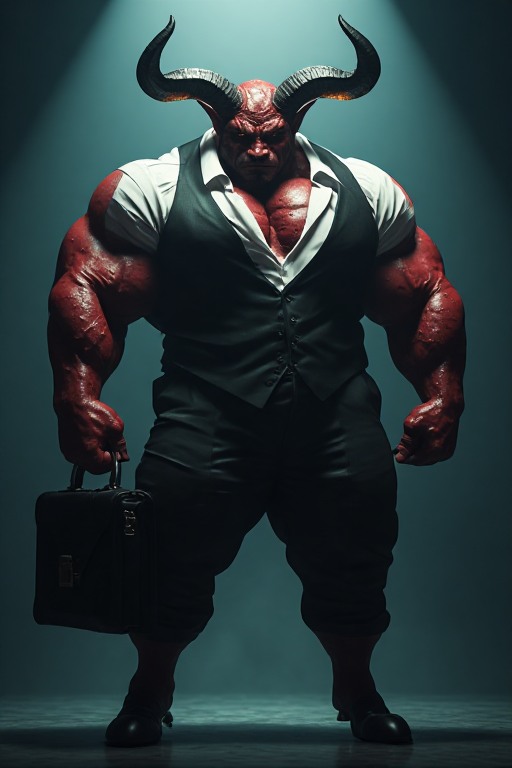
-
Neo-Dragon (XL)
The apex predator of the battlefield.
Size: 3×4
Move: 7
Height Range: 8-10ft
Bonus HP & Melee: +36
Natural Armor: Special
Size Category: Extra-Large
Food/day: 12
Weight Range: 900-1200lbs
All Weapon Range: +2
Life Expectancy: 300 years
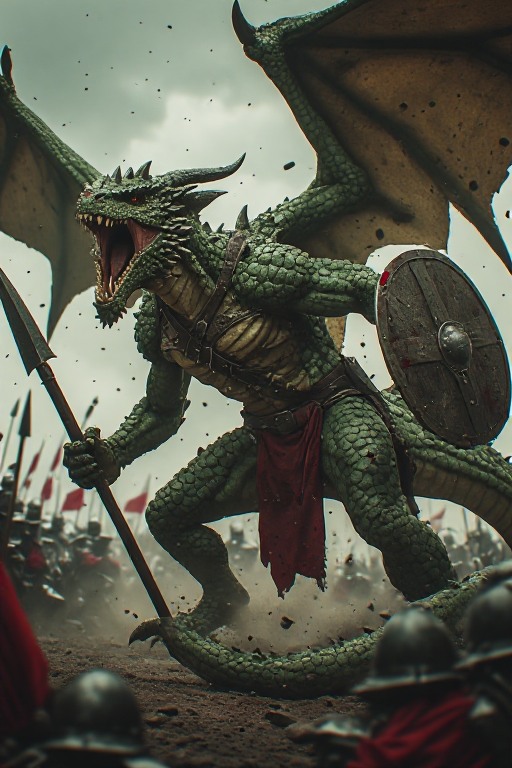
Special
- Neo-Dragons gain “Natural Armor”. Their Natural Armor has a Tier Value equal to their [Body stat value + Combat Level].1
- If damaged through critical rolls, Natural Armor will have its Tier value dropped by 1 until healed. It may not be the target of a crit unless all worn armor is already reduced to Tier 0 or removed. It cannot be the target of a crit after it is reduced to Tier 0 & cannot be lowered any further. Healing with magic (such as with a healing bauble) will immediately restore its full Tier value. Healing with time will restore Natural Armor by 1 Tier value per week until it is fully restored. ↩︎
-
Neo-Hyena (Med)
Gnoll on knoll action…
Size: 1×1
Move: 5
Height Range: 6-7ft
Bonus HP & Melee: +0
Natural Armor: +0
Size Category: Medium
Food/day: 1
Weight Range: 200-300lbs
All Weapon Range: +0
Life Expectancy: 70 years
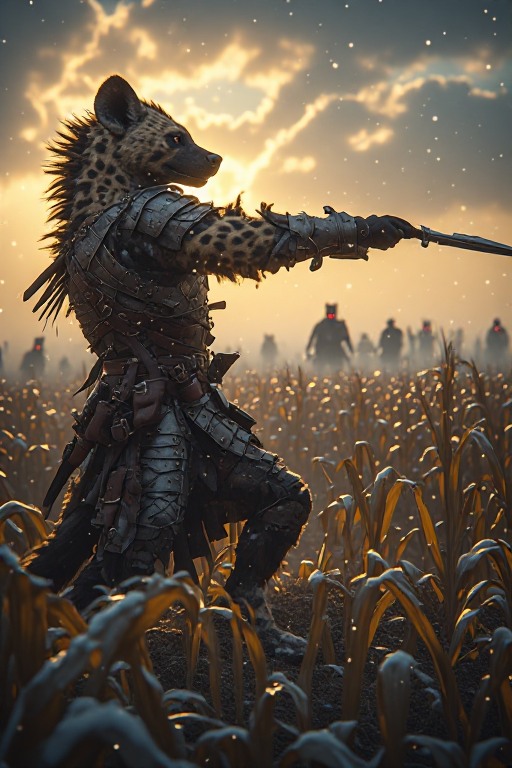
Special
- Neo-Hyenas can use thrown weapons at any time they could perform a Non-Contested action. Normal dice rolls still occur.1
- Neo-Hyenas can throw melee weapons 5 tiles further.2
- Ability: “Heavy Throw”: When used with a Thrown Weapon & used during an enemies declared movement action, Heavy Throw staggers the target halts their movement.3
- “Alarming Laughter”: When Neo-Hyenas sleep they maintain awareness of their surroundings as though they were awake.
– They wake whenever surprised by unusual sounds or smells.
– They get to roll against stealth checks and attacks made against them as though they were awake.
– They enter initiative as though they were awake.
– If they are awoken by any danger, they immediately call out loudly, waking all characters in the area.4
- This effect is only in regard to the timing of when the action can occur. All other rules apply as a normal Contested action. ↩︎
- Thrown range is 5 tiles. This effect doubles it to 10 tiles. ↩︎
- “Heavy Throw” must win the contested dice roll to apply it’s effects, as a “Main-Hand or Off-Hand Thrown” attack. It deals damage as normal. The target must be within their attack range. It follows similar rules and effects as “Rounds, Turns, & Actions > Tactical Actions” regarding blocking an enemies path — meaning the target still gets to move at least 1 tile, & forfeits the rest of their declared movement action, etc. ↩︎
- Even while sleeping, they are always “on watch”. ↩︎
-
Neo-Panther (Med)
Naturally supernatural.
Size: 1
Move: 5
Height Range: 5-6ft
Bonus HP & Melee: +0
Natural Armor: +0
Size Category: Medium
Food/day: 1
Weight Range: 150-200lbs
All Weapon Range: +0
Life Expectancy: 100 years
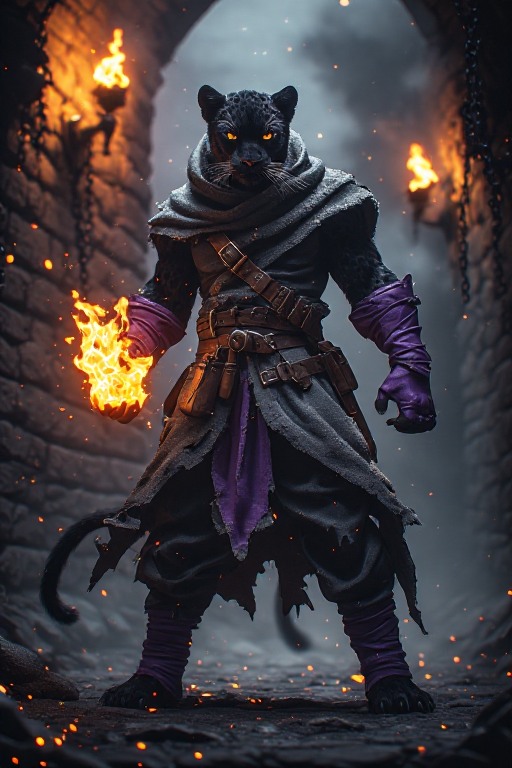
Special
- Neo-Panthers gain +3 to Aura Stat (for free, at game start) & have a maximum Aura of 15.
- “Blend in Shadow”: Neo-Panthers get +5 higher low-light conditions applied in their benefit than the declared low-light. Effectively giving them +5 to all Stealth checks if the GM declared low-light setting is low enough.
- “Pounce”: Neo-Panthers may use “Pounce” to replace a movement action. If they do, they move exactly 5 tiles (no more, no less). They may not be blocked by a movement of another character. They can pass over tiles occupied by other combatants.
-
Neo-Rat (Med)
Opportunistic Vermin.
Size: 1×1
Move: 5
Height Range: 4-5ft
Bonus HP & Melee: 0
Natural Armor: +0
Size Category: Medium
Food/day: 1
Weight Range: 100-150lbs
All Weapon Range: +0
Life Expectancy: 50 years
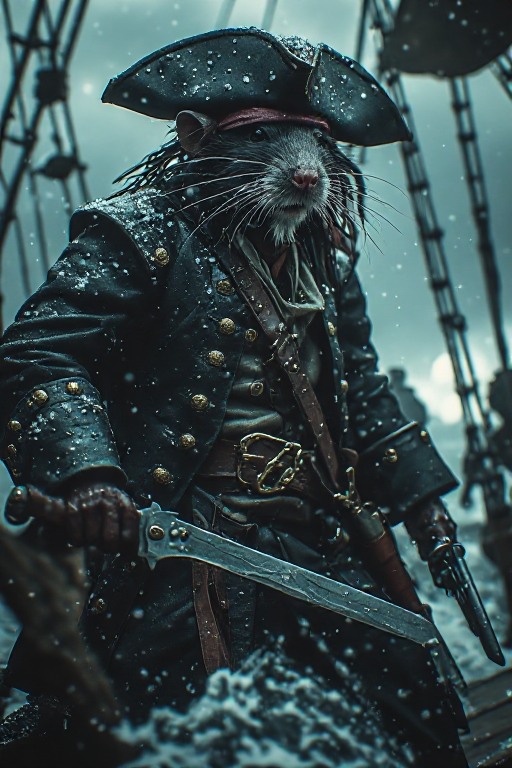
Special
- Neo-Rats gain +3 to Reflex Stat (for free, at game start) & have a maximum Reflex of 15.
- Neo-Rats are immune to all toxins & poisons from any source.
- Neo-Rats can survive on food for an additional week after it has spoiled.
-
Neo-Tabby (Sm)
Small, sneaky & tricky.
Size: 1/2
Move: 4
Height Range: 3-3.5ft
Bonus HP & Melee: -5
Natural Armor: +0
Size Category: Small
Food/day: 1/2
Weight Range: 30-40lbs
All Weapon Range: +0
Life Expectancy: 50 years
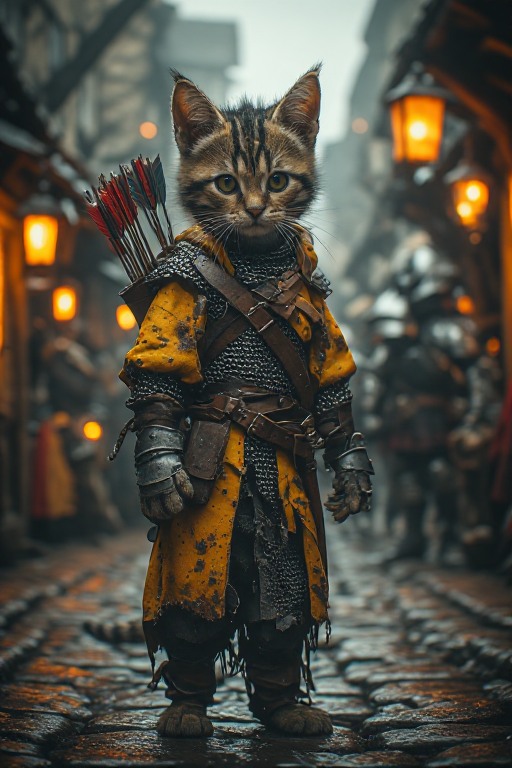
Special
- Neo-Tabbies gain +3 to Presence Stat (for free, at game start) & have a maximum Presence of 15.1
- “Trap Sense”: Neo-Tabbies get +10 on rolls to detect & disarm traps.
- “Vigilance”: Neo-Tabbies get +10 against characters trying to use Stealth against them.
- A Neo-Tabby will have greater chances to success at a large variety of skills when compared to other races. Many of these are stealthy, sneaky, & rogue-like. Some… are not. ↩︎
-
Neo-Tiger (Med)
Can rip you to shreds.
Size: 1×1
Move: 5
Height Range: 6-7ft
Bonus HP & Melee: +0
Natural Armor: +0
Size Category: Medium
Food/day: 1
Weight Range: 200-300lbs
All Weapon Range: +0
Life Expectancy: 80 years
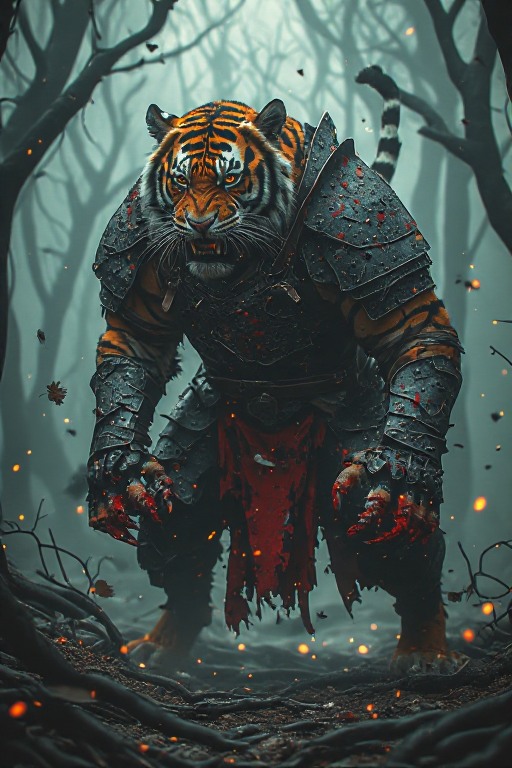
Special
- Neo-Tigers gain “Natural Weapons” as claws. They have a Tier Value equal to their [Body stat value + Combat Level] & otherwise follow the rules of “skill – [Weapon] – Unarmed Melee” when used in combat.1
- If damaged through critical rules, one hand will have its tier value dropped by 1 until healed. At Tier 0 they are still usable & if a crit occurs against them whilst at T0, the character will receive 10 damage. Healing with magic (such as with a healing bauble) will immediately restore their full Tier value. Healing with time will restore both hands by 1 Tier value per week until they are fully restored. ↩︎
-
Neo-Wolf (Med)
A nose like a bloodhound.
Size: 1×1
Move: 5
Height Range: 5.5-6.5ft
Bonus HP & Melee: +0
Natural Armor: +0
Size Category: Medium
Food/day: 1
Weight Range: 150-250lbs
All Weapon Range: +0
Life Expectancy: 80 years
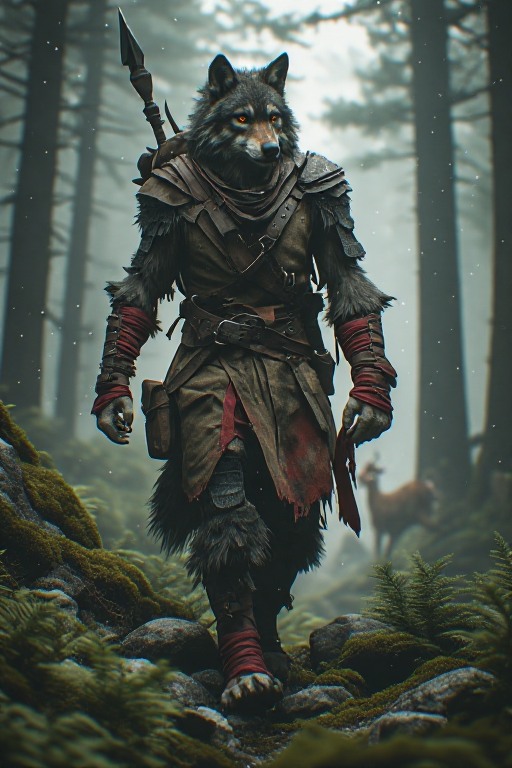
Special
- “Scent Tracking”: Neo-Wolves gain +10 to Hunting skill (for free, at game start) & have a maximum of +22 to the hunting skill. 1
- “Heavy Shooter”: Neo-Wolves may add their Body stat to damage dealt with Bows.
- Neo-Wolves may go up to 10 points over their Mind stat for any passive skill points added to the hunting skill. ↩︎
-
Orc (XL)
“Big! Orc! Run!”
Size: 4×4
Move: 6
Height Range: 12-15ft
Bonus HP & Melee: +48
Natural Armor: 0
Size Category: Extra-Large
Food/day: 16
Weight Range: 1300-1500lbs
All Weapon Range: +2
Life Expectancy: 60 years
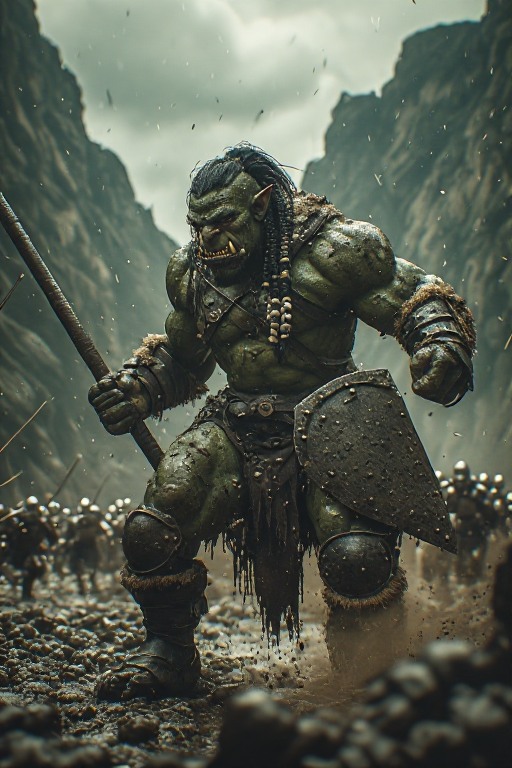
Special
- Orcs can wield a 2-handed melee weapon in their main hand.1
- This ability still uses the 2-Handed Melee skill for rolls when a 2-handed weapon is used. ↩︎
-
Rock Troll (Med)
Cold hearty & tough.
Size: 1×1
Move: 4
Height Range: 5-6ft
Bonus HP & Melee: +0
Natural Armor: +5
Size Category: Medium
Food/day: 1
Weight Range: 150-250lbs
All Weapon Range: +0
Life Expectancy: 60 years
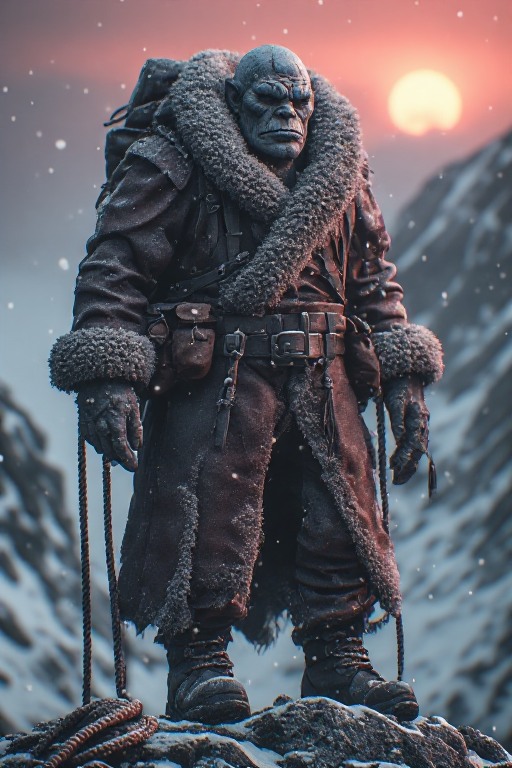
- If damaged through critical rolls, Natural Armor will have its Tier value dropped by 1 until healed. It may not be the target of a crit unless all worn armor is already reduced to Tier 0 or removed. It cannot be the target of a crit after it is reduced to Tier 0 & cannot be lowered any further. Healing with magic (such as with a healing bauble) will immediately restore its full Tier value. Healing with time will restore Natural Armor by 1 Tier value per week until it is fully restored. ↩︎
- Natural Armor vs Environment cannot be a target from critical rolls. It is not fabric or clothing. It only behaves as clothing when reducing damage from the environment (generally as cold) and damage from some Ice spells. ↩︎
-
Shore Troll (XL)
Can feed a coastal village.
Size: 4×4
Move: 6
Height Range: 15-18ft
Bonus HP & Melee: +48
Natural Armor: 0
Size Category: Extra-Large
Food/day: 16
Weight Range: 1500-2000lbs
All Weapon Range: +2
Life Expectancy: 200 years
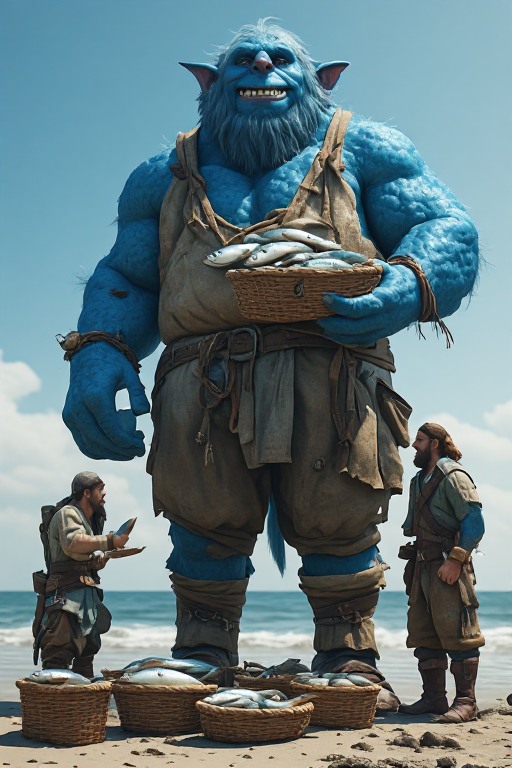
Special
- Shore Trolls get a 2x tool multiplier for Fishing.1
- This is in addition to any other tool buffs they may be using. With a Stone Toolkit they will get x2 (instead of x1). With a Basic Toolkit they will get x4 (instead of x2). With a Workshop they will get x8 (instead of x4). ↩︎
-
Warhog (Lg)
Hogging the spotlight.
Size: 2×2
Move: 6
Height Range: 8-9ft
Bonus HP & Melee: +12
Natural Armor: +0
Size Category: Large
Food/day: 4
Weight Range: 800-900lbs
All Weapon Range: +1
Life Expectancy: 60 years
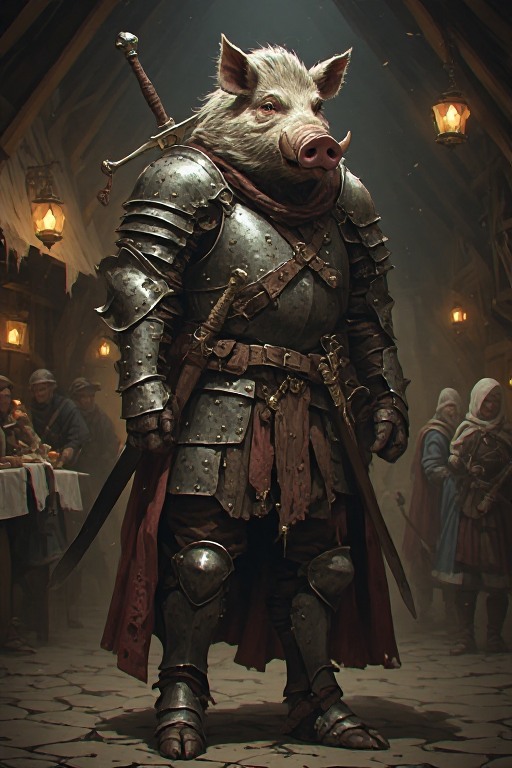
Special
- Warhogs gain +3 to Body Stat (for free, at game start) & have a maximum Body of 15.1
- “Uncatchable”: If a Warhog is immobilized by a trap for any number of rounds, it is reduced to 1 round.
- “Trap Survivor”: If a triggering a trap would cause a Warhog’s HP to go unconscious from their HP being reduced to 0 or lower, it instead drops their HP to 1.
- Warhogs are tough. Fjord tough. They can carry more, lift more, & swing a bigger axe. ↩︎
Combat Skills
-
[Weapon] Bow
Bow is a weapons skill. It requires 2 hands to operate. It requires a Body Stat value equal or greater than the Tier value of the bow to operate it. Additionally, the bow requires arrows as ammunition. Arrows cannot be recovered after firing them.
It can be fired each round with the load & fire actions being combined as the character’s single contested action. Thus freeing up the other non-contested action for the character.
The range of the bow will be within 15 tiles.
Hitting with a bow is a contested action vs opponent where the bowman adds Rflx +[Bow Skill Level] +1d20 vs the opponent’s Rflx +[any weapon skill] +1d20. If the opponent wins the roll: the bowman misses them. If the bowman wins the roll: they add the roll difference to their damage calculation.
Damage with the bow is: [roll difference] + Tier value of the bow.
A character whom is utilizing dual wielding does not get to roll their additional d20 when receiving ranged attacks from a bow unless the bow attack is declared from their normal melee distance.
The bow fired within another character’s melee distance will allow them to deal damage as a counterattack if they win the roll.
The bow skill may be used in defense of a contested action declared by another character, however it cannot deal damage on another character’s turn. If you win the roll with a bow in defense, no damage is dealt that turn. You succeed in dodging the attack.
The bow may be used with the Stealth skill similarly to melee (commonly from behind an enemy). The Stealth skill would replace the contested roll for the bow. A successful Stealth roll versus an enemy would cause the damage to be rolled as a non-contested roll on a successful attack (as a free action), thus removing the enemies bonus’ from Stats, Skills, & dice. Leaving only armor to protect them from the attack.
A bow may not be fired through other characters on the battlefield nor through terrain (such as trees), unless the bow is fired from the edge of that object or objects (see combat rules – cover).
-
[Weapon] Main-Hand Crossbow
The One-Handed Crossbow is a weapon skill. It requires 1 hand to operate. It requires no stats nor skills to operate any Tier of 1-handed crossbow. Additionally, the 1-handed crossbow requires bolts as ammunition. Bolts may not be recovered after firing them.
The 1-handed crossbow requires 1 non-contested action to reload before it can be fired. Essentially meaning it can be fired every round if it’s the only weapon being used & no other action is being used.
The guaranteed hit range of the 1-handed crossbow is the character’s skill level in [Weapon] Main-Hand Crossbow in tiles. Attacking with any crossbow within the character’s skill level in tiles is a guaranteed hit. It requires no roll. Thus, it is NOT a contested action & follows the rules for non-contested actions for when it can be used. (ie: level 5 in this skill would grant a range of up to 5 tiles as a non-contested attack).
Damage with the 1-handed crossbow is the character’s skill level in crossbow (a Main-Hand Crossbow: 1 will deliver 1 damage — a Main-Hand Crossbow: 10 will deliver 10 damage), and the attack will reduce the opponents armor effect by the Tier value of the 1-handed crossbow for that attack (a T1 will reduce armor by 1 — a T10 will reduce armor by 10).
Firing outside the guaranteed hit range with this weapon uses the same rules as the bow (see [Weapon] Bow). However the crossbow gains no additional damage for the roll difference & still requires a separate action to reload. Additionally, this action (attacking outside of guaranteed range) IS a contested action & follows the rules for contested actions for when it can be used.
-
[Weapon] Main-Hand Firearm
Note: There is currently no way to craft firearms, nor the bullets they require for operation. The intended cost of a firearm is planned to be about the same as a crossbow across the various Tiers. The intended cost of each bullet is planned to be about the same as a 1-handed melee weapon of similar Tier value. They are powerful, & powerfully expensive to operate. Getting your hands on these items will likely be at the whim of your illustrious GM until future updates allow for their creation.
The One-Handed Firearm is a weapon skill. It requires 1 hand to operate. It requires no stats nor skills to operate any Tier of 1-handed firearm. Additionally, the 1-handed Firearm requires bullets as ammunition. Bullets may not be recovered after firing them.
The 1-handed firearm requires 1 non-contested action to reload before it can be fired. Essentially meaning it can be fired every round if it’s the only weapon being used & no other action is being used.
The guaranteed hit range of the 1-handed firearm is the character’s skill level in [Weapon] Main-Hand Firearm in tiles. Attacking with any firearm within the character’s skill level in tiles is a guaranteed hit. It requires no roll. Thus, it is NOT a contested action & follows the rules for non-contested actions for when it can be used. (ie: level 5 in this skill would grant a range of up to 5 tiles as a non-contested attack).
Damage = (Firearm Tier x2) + (Bullet Tier x2)
(This damage ignores all armor & shield bonuses.)Damage with the 1-handed firearm is the Tier value of the firearm multiplied by 2, added to the Tier value of the bullets multiplied by 2. A firearm attack will reduce the opponents armor to zero (0) for that attack (a T1 one-handed firearm with T1 bullets will reduce all armor to 0 & deliver [(1×2) + (1×2)] = 4 points of damage — a T10 with T10 bullets will reduce armor to 0 & deliver [(10×2) + (10×2)] = 40 points of damage).
Firearms may use any Tier of bullets equal or less than the firearm’s Tier value. If the Tier value of the weapon is lowered temporarily through critical hits or critical failures, it will still be allowed to fire bullets with a Tier value equal or less than it’s total repaired Tier value. But it’s damage will be lower because of the degradation (since the weapon’s Tier is part of the damage equation).
Don’t do the math each time you use it. Do the math once for your firearm & place note it’s damage value with the ammo you have. Noting the damage for 1 or 2 Tier lower firearm might be useful, in case it somehow takes damage in combat (or just remember that it gets 2 damage per Tier, if the same ammo is used). But since it’s usually fired within the guaranteed hit range & no dice are rolled for that operation, that should be quite rare.
If you are using multiple Tiers of ammo with the same weapon, note the total damage next to each of different Tiers of bullets. If you are using multiple Tiers of firearms… figure out a way to track it & note damage. The point is, don’t do the math at the table unless you have to for weird circumstances.
Arm
vs
AmmoTier 1 Tier 2 Tier 3 Tier 4 Tier 5 Tier 6 Tier 7 Tier 8 Tier 9 Tier 10 Tier 11 Tier 12 Tier 1 4 6 8 10 12 14 16 18 20 22 24 26 Tier 2 6 8 10 12 14 16 18 20 22 24 26 28 Tier 3 8 10 12 14 16 18 20 22 24 26 28 30 Tier 4 10 12 14 16 18 20 22 24 26 28 30 32 Tier 5 12 14 16 18 20 22 24 26 28 30 32 34 Tier 6 14 16 18 20 22 24 26 28 30 32 34 36 Tier 7 16 18 20 22 24 26 28 30 32 34 36 38 Tier 8 18 20 22 24 26 28 30 32 34 36 38 40 Tier 9 20 22 24 26 28 30 32 34 36 38 40 42 Tier 10 22 24 26 28 30 32 34 36 38 40 42 44 Tier 11 24 26 28 30 32 34 36 38 40 42 44 46 Tier 12 26 28 30 32 34 36 38 40 42 44 46 48 Firing outside the guaranteed hit range with this weapon uses the same rules as the bow (see [Weapon] Bow). However the firearm gains no additional damage for the roll difference & still requires a separate action to reload. Additionally, this action (attacking outside of guaranteed range) IS a contested action & follows the rules for contested actions for when it can be used.
-
[Weapon] Main-Hand Melee
The One-Handed Melee is a weapon skill. It requires 1 hand to operate. It requires a Body Stat equal or greater than the Tier value of the weapon to operate.
Melee attacks are contested actions & thus may be used with a non-contested action in each round.
This skill may be used with any combination of Off-Handed weapon skills or a Shield.
The range for One-Handed Melee weapons requires being in a tile next to the opponent either horizontally, vertically, or diagonally.
Hitting with Melee is a contested action vs opponent where each add their Rflx+ [weapon skill] + 1d20 (opponent may technically use any weapon skill in defense – even if it is not equipped). The winner adds the roll difference to their damage calculation.
Damage with One-Handed Melee is: [roll difference] + Body Stat + Tier value of the weapon.
May be used with the Stealth skill (see: Skill – “Stealth”).
-
[Weapon] Main-Hand Thrown
Main-Hand Thrown is a weapon skill. It requires 1 hand to operate. It requires a Body Stat value equal or greater than the Tier value of the 1-Handed Melee Weapon being thrown. Additionally, the weapon requires itself as ammunition. So it will often be single use in combat. Thrown melee weapons may be recovered in most cases.
Thrown weapons may be used as contested actions. Additionally, like the melee weapons, it also gets bonus damage based on the Body Stat. Any One-Handed Melee Weapon may be used as a Thrown Weapon.
The range of Thrown weapons will be within 5 tiles.
Hitting with a Thrown weapon is a contested action vs opponent where the character throwing their weapon adds Rflx + Thrown + 1d20 vs the opponent’s Rflx + [any weapon skill] + 1d20. If the opponent wins the roll — the thrown weapon misses them. If the character throwing the weapon wins the roll — they add the roll difference to their damage calculation.
Damage with the thrown weapon is: [roll difference]+ Body Stat + Tier value of the thrown weapon.
A character whom is utilizing dual wielding does not get to roll their additional d20 when receiving ranged attacks unless the attack is declared from within their melee distance.
A melee weapon thrown within another character’s melee distance will allow them to deal damage as a counterattack if they win the roll.
While technically you could use your Thrown skill in defense of a contested action declared against you. You would only dodge the attack on a successful roll against them. All contested actions using projectile weapons may only deal damage on the turn of the character using the projectile weapon.
May be used with the Stealth skill (see: Skill – “Stealth”).
-
[Weapon] Off-Hand Crossbow
The mechanics of Off-Hand Crossbow is the same as its Main-Hand variant. Same requirements, same reload times, same weapon ranges, etc. A character taking this skill may use a different weapon in their main hand & must still use standard action/round rules. Each weapon functions otherwise independently of each other. The standard actions per round is based on players, not weapons — meaning they still may not do 2 Contested actions in each of their rounds just because they have a 2nd weapon at their disposal. (always 1 contested & 1 non-contested –OR– 2 non-contested actions are allowed to be chosen each round).
If you are using a 1-handed crossbow in your Off-Hand, you will use the Off-Hand Crossbow skill.
Having the Off-Hand variant of the crossbow will allow you to make an additional shot before reloading — however, reload times remain the same for each weapon independently: For 1-handed crossbow, an action is required to reload 1 crossbow. For two 1-handed crossbows, 2 actions are required to reload both of them.
The guaranteed hit range & damage for the Off-Hand Crossbow is based off of the Off-Hand Crossbow skill level (independent of the Main-Hand variant). Shots beyond that range follow the same rules as the bow.
-
[Weapon] Off-Hand Firearm
The mechanics of Off-Hand Firearm is the same as its Main-Hand variant. Same requirements, same reload times, same weapon ranges, etc. A character taking this skill may use a different weapon in their main hand & must still use standard action/round rules. Each weapon functions otherwise independently of each other. The standard actions per round is based on players, not weapons — meaning they still may not do 2 Contested actions in each of their rounds just because they have a 2nd weapon at their disposal. (always 1 contested & 1 non-contested –OR– 2 non-contested actions are allowed to be chosen each round).
If you are using a 1-handed firearm in your Off-Hand, you will use the Off-Hand Firearm skill.
Having the Off-Hand variant of the firearm will allow you to make an additional shot before reloading — however, reload times remain the same for each weapon independently: For 1-handed firearm, an action is required to reload the firearm. For two 1-handed firearms, 2 actions are required to reload both of them.
The guaranteed hit range for the Off-Hand Firearm is based off of the Off-Hand Firearm skill level (independent of the Main-Hand variant). Shots beyond that range follow the same rules as Main-Hand Firearm.
-
[Weapon] Off-Hand Melee
Off-Hand Melee weapons can sometimes work exactly the same as the Main-Hand variants. This is the case when using a non-Melee weapon or a shield in the Main-Hand. It still follows the same action/round rules, etc. If you are using a melee weapon in your Off-Hand, you will use the Off-Hand Melee skill as the modifier for dice rolls.
However! When used in conjunction with another Melee weapon, such as using Main-Hand Melee & Off-Hand Melee at the same time, or when using either skill with Unarmed Melee, the character may use the rules found under: “Combat Rules – Dual Wield Melee”.
-
[Weapon] Off-Hand Thrown
The mechanics of Off-Hand Thrown is the same as their Main-Hand variants. Same requirements, same reload times, same weapon ranges, etc. A character taking this skill may use a different weapon in their main hand & must still use standard action/round rules. The standard actions per round is based on players, not weapons — meaning they still may not do 2 Contested actions in each of their rounds just because they have a 2nd weapon at their disposal. (always 1 contested & 1 non-contested –OR– 2 non-contested actions are allowed to be chosen each round).
If you are throwing a weapon from your Off-Hand, you will use the Off-Hand Thrown skill as the modifier for dice rolls.
-
[Weapon] Siege Weapon(adv)
Prerequisite skills — Scholar:5
The Siege Weapon is a ranged weapon that is typically too large to be wielded. Often they will be attached to or built into a cart, wagon, or ship for easy transport & operation. They may also be built in fixed positions as well — to defend your castle.
It’s size is reflected in it’s Tier value. A T1 siege weapon is likely a small ballista, while a T12 siege weapon is likely a trebuchet.
To operate a Siege Weapon, at least 1 player using the weapon must have a Siege Weapon Skill equal to or greater than the Tier value of the weapon being fired.
Siege Weapons can be used target specific tiles, objects, or enemies. Only one character may apply any relevant skills being used, declare targets & perform any dice rolls related to its operation. Regardless of the number of other characters involved in its operation.
Attacking with a Siege Weapon:
The Hit calculation is: 1d20* vs opponent’s 1d20+ Rflx+ [Weapon skill]
The Damage calculation is: (Tier value of the weapon x10) +Roll Difference*.
*Walls, doors, tiles, or any other stationary objects do not roll nor add any bonuses for Hit Calculations.
The Maximum effective range in tiles is: (Weapon Tier +Scholar Skill) x10
Skill: 5 Skill: 6 Skill: 7 Skill: 8 Skill: 9 Skill: 10 Skill: 11 Skill: 12 Tier 1 60 70 80 90 100 110 120 130 Tier 2 70 80 90 100 110 120 130 140 Tier 3 80 90 100 110 120 130 140 150 Tier 4 90 100 110 120 130 140 150 160 Tier 5 100 110 120 130 140 150 160 170 Tier 6 110 120 130 140 150 160 170 180 Tier 7 120 130 140 150 160 170 180 190 Tier 8 130 140 150 160 170 180 190 200 Tier 9 140 150 160 170 180 190 200 210 Tier 10 150 160 170 180 190 200 210 220 Tier 11 160 170 180 190 200 210 220 230 Tier 12 170 180 190 200 210 220 230 240 The Number of Turns to Reload is: Tier x2
Tier # of Turns Tier # of Turns 1 2 7 14 2 4 8 16 3 6 9 18 4 8 10 20 5 10 11 22 6 12 12 24 The Number of People to Operate is: Tier /2 (Tier divided by 2)
Tier # of People Tier # of People 1 1 7 4 2 1 8 4 3 2 9 5 4 2 10 5 5 3 11 6 6 3 12 6 Total Body Stat Value to Transport a Siege Weapon is: Tier x4
Tier Total Body Tier Total Body 1 4 7 28 2 8 8 32 3 12 9 36 4 16 10 40 5 20 11 44 6 24 12 48 *To move a T4 siege weapon can be done with 1 character with a Body of 10 & another with a Body of 6. Totaling the 16 Body requirement… Or 16 characters with a Body of 1.
-
[Weapon] Two-Handed Crossbow
The Two-Handed Crossbow is a weapon skill. It requires both hand to operate. It requires no stats nor skills to operate any Tier value 2-handed crossbow. Additionally, the 2-handed crossbow requires bolts as ammunition which are larger than the 1-handed variant. Crossbow bolts may not be recovered after firing them.
2-Handed Crossbows require 2 non-contested actions to reload before it can be fired. The 2 actions do not need to be consecutive. At best it can be fired every other round. The 2-handed crossbow will ignore armor on the opponent equal to the Tier value of the crossbow fired multiplied by 2.
The guaranteed hit range of the 2-handed crossbow is the character’s skill level in [Weapon] Two-Handed Crossbow in tiles (ie: level 5 in this skill would a range of up to 5 tiles).
Hitting with any crossbow within the character’s skill level in tiles is a guaranteed hit. It requires no roll. Thus, it is NOT a contested action & follows the rules for non-contested actions for when it can be used.
Damage with the 2-handed crossbow is twice the character’s Two-Handed Crossbow skill (a 2H-Crossbow: 1 will deliver 2 point of damage — a 2H-Crossbow: 10 will deliver 20 points of damage). Additionally, it will reduce the armor of the opponent by the twice the Tier value of the Two-Handed Crossbow for that attack (a T1 will reduce their armor by 2 — a T10 will reduce their armor by 20!).
Firing outside the guaranteed hit range with this weapon uses the same rules as the bow (see [Weapon] Bow). However the crossbow gains no additional damage for the roll difference & still requires 2 actions to reload. Additionally, declaring this action IS a contested action & follows the rules for contested actions for when it can be used.
-
[Weapon] Two-Handed Firearm
Note: There is currently no way to craft firearms, nor the bullets they require for operation. The intended cost of a firearm is planned to be about the same as a crossbow across the various Tiers. The intended cost of each bullet is planned to be about the same as a 1-handed melee weapon of similar Tier value. They are powerful, & powerfully expensive to operate. Getting your hands on these items will likely be at the whim of your illustrious GM until future updates allow for their creation.
The Two-Handed Firearm is a weapon skill. It requires both hand to operate. It requires no stats nor skills to operate any Tier value 2-handed firearm. Additionally, the 2-handed firearm requires bullets as ammunition which are larger than the 1-handed variant. Bullets may not be recovered after firing them.
2-Handed Firearms require 2 non-contested actions to reload before it can be fired. The 2 actions do not need to be consecutive. At best it can be fired every other round. The 2-handed firearm will ignore armor on the opponent.
The guaranteed hit range of the 2-handed firearm is the character’s skill level in [Weapon] Two-Handed Firearm multiplied by 2, in tiles (ie: level 5 in this skill would a range of up to 10 tiles).
Guaranteed Attack Range = (2-handed firearm skill) x 2
Hitting with any firearm within the character’s skill level in tiles is a guaranteed hit. It requires no roll. Thus, it is NOT a contested action & follows the rules for non-contested actions for when it can be used.
Damage = (Firearm Tier x2) + (Bullet Tier x2)
(This damage ignores all armor & shield bonuses.)Damage with the 2-handed firearm is the Tier value of the firearm multiplied by 2, added to the Tier value of the bullets multiplied by 2. A firearm attack will reduce the opponents armor to zero (0) for that attack (a T1 two-handed firearm with T1 bullets will reduce all armor to 0 & deliver [(1×2) + (1×2)] = 4 points of damage — a T10 with T10 bullets will reduce armor to 0 & deliver [(10×2) + (10×2)] = 40 points of damage).
Arm
vs
AmmoTier 1 Tier 2 Tier 3 Tier 4 Tier 5 Tier 6 Tier 7 Tier 8 Tier 9 Tier 10 Tier 11 Tier 12 Tier 1 4 6 8 10 12 14 16 18 20 22 24 26 Tier 2 6 8 10 12 14 16 18 20 22 24 26 28 Tier 3 8 10 12 14 16 18 20 22 24 26 28 30 Tier 4 10 12 14 16 18 20 22 24 26 28 30 32 Tier 5 12 14 16 18 20 22 24 26 28 30 32 34 Tier 6 14 16 18 20 22 24 26 28 30 32 34 36 Tier 7 16 18 20 22 24 26 28 30 32 34 36 38 Tier 8 18 20 22 24 26 28 30 32 34 36 38 40 Tier 9 20 22 24 26 28 30 32 34 36 38 40 42 Tier 10 22 24 26 28 30 32 34 36 38 40 42 44 Tier 11 24 26 28 30 32 34 36 38 40 42 44 46 Tier 12 26 28 30 32 34 36 38 40 42 44 46 48 Firing outside the guaranteed hit range with this weapon uses the same rules as the bow (see [Weapon] Bow). Which means it becomes a maximum range of 15 tiles & becomes a Contested action. However the firearm gains no additional damage for the roll difference & still requires 2 actions to reload.
-
[Weapon] Two-Handed Melee
The 2-handed melee is a weapon skill. It requires 2 hands to operate. It requires a Body Stat equal or greater than the Tier value of the weapon to operate.
Melee attacks are contested actions. However, with the 2-handed melee weapons a character may make a Contested action against an opponent without the possibility of the opponent dealing damage back to them. The opponent may still move in to make a Contested action against that character on their next turn. But for this action, you are safe!
The range for a 2-handed melee weapon will be within 2 tiles (1 & 2 tile range) of their opponent. Which means they can make their attack without the risk of a counterattack. Meanwhile, the character with the 2-handed weapon will still retain the ability to deal damage on the other character’s turn if they choose to move into range & make a contested action against them. In essence, a 2-handed melee weapon can also be used as a 1-handed melee weapon.
Unlike other range-type weapons, 2-handed melee weapons may be used even if one of the tiles between attacker & his opponent is occupied by another character or at the edges of any other obstacle (see “Combat Rules – Cover”). It doesn’t matter if that character between them & their target is friend or foe.
Hitting with Melee is a contested action vs opponent where each add their Rflx+ [weapon skill]+ 1d20. The winner adds the roll difference to their damage calculation IF they are within range to do so with their equipped weapon.
Damage with Two-Handed Melee is: [roll difference] + Body Stat + Tier value of weapon.
The 2-handed weapon used within the opponent’s melee distance will allow them to deal damage as a counterattack if the opponent wins the roll.
May be used with the Stealth skill (see: Skill – “Stealth”).
-
[Weapon] Unarmed Melee
Unarmed Melee is technically a weapon skill. It has no requirements to use assuming your character is awake & not stunned or tied down or somesuch.
Melee attacks are contested actions & thus may be used with a non-contested action in each round. Furthermore, this skill may be used with any combination of main-hand or Off-Handed weapon skills, or a Shield (you must still use the standard action/round rules with this skill in combination with any skills).
The range for Unarmed Melee typically requires being in a tile touching the opponent either horizontally, vertically, or diagonally (generally 1 tile).
Hitting with Melee is a contested action vs opponent where each add their Rflx+ [weapon skill] + 1d20. The winner adds the roll difference to their damage calculation.
Damage with Unarmed Melee is: [roll difference] + Body Stat.
Unarmed Melee can be used with Dual Wielding rules without any other skill requirements. It is automatically main & off hand variants of itself.
Rolling a critical failure (natural 1) will damage your weapon (you!)
by lowering your Tier value by 1 until you get you repaired… It does 10 damage to you. Good job! You likely broke your hand. This damage ignores armor.An opponent rolling a 20 & declaring the weapon (your body) as the target will have the same effect as you rolling a 1. Damage occurs to your body, ignoring armor.
When using 2d20 & choosing the higher, if you roll a 1 & choose the other roll, you did not have a critical failure — however, if you roll both 1’s on the 2d20, you must select one of them. In theory, this should be very rare as you risk using your body as your weapons in this way… in practice however…
May be used with the Stealth skill (see: Skill – “Stealth”).
-
Stealth
Stealth may be used in or out of combat. To initiate stealth a character needs to be obscured from the vision of their target or targets in some way. Most commonly this will be by using shadows, cover or distraction.
In & out of combat, the character may move the distance associated with their race without leaving stealth each round (approximately 10 seconds of time). A stealth check vs their opponents would occur as the first action of each turn for the stealthed character to remain in stealth unless they are fully behind cover. If they move for their first action, they risk being seen for that action unless terrain blocks vision.
If a character attempts a Stealth check & fails against their opponent; they used their contested action for that turn. They do not get to attempt another attack (or Stealth check) or any other contested action that turn. If there is terrain (or any other thing that would reasonably block vision) between them, the opponent will have seen or heard something suspicious in that direction. If no obstacles to vision are present, they will see that character acting “shady af”.
Stealth For Positioning
If you approach a person or group of people: if you do try to use stealth, you must roll against everyone once you are 30 tiles to them or closer. Before your character moves from behind cover, they must perform a stealth check against all opponents (unless your opponent is blind from another effect).
The roll is a skill check versus opponents using: [Stealth + Presence + 1d20] vs [Stealth + Presence + 1d20]. This skill check considered a contested action. If grouping the defense roll for multiple opponents, the GM may roll once for the group, then apply any stat & skill modifiers to each of them to that one roll.
If you remain still, behind cover, you do not need to roll a stealth check to remain in position. If the cover is wide enough, you can move while behind cover without a stealth check as long as you do not cross any opponent’s line of sight (regardless of the direction they are looking).
Being behind cover does not automatically grant you Stealth. While you are functionally unseen, you would still need to peek out to perform any attack from behind cover. Thus, positioning to attack from behind cover for this skill still requires a Stealth check to get the bonus “Stealth attack”.
Stealth In Combat
You may attempt a Stealth roll any time you are behind an opponent. Even in combat. Even if they are aware of you.
The roll is a skill check versus opponents using: [Stealth + Presence + 1d20] vs [Stealth + Presence + 1d20]. This skill check considered a contested action. If grouping the defense roll for multiple opponents, the GM may roll once for the group, then apply any stat & skill modifiers to each of them to that one roll.
Each character that rolls under the total rolled by the initiator will have a stealth flag attached to them until the start of the stealthed character’s next turn. Characters with a stealth flag are treated as having the Blind status to the stealthed character while they move around. Meaning they will be aware someone is there if they occupy an adjacent tile, but won’t know who they are until they make an action to identify them. If an effected character with a stealth flag wishes, they may attempt to use a contested action to try to locate the stealthed character on their turn. Additionally, this also means that the stealthed character may choose to initiate their Stealth attack by crossing a line path left by their victim in that same round (see- Darkness & Blind Status).
Dealing Damage with Stealth
When any character has a Stealth flag, the owner of that flag gains a “Stealth attack” as a free action against them for the duration. Once this attack is used; all opponents whose vision is not blocked by terrain, or darkness, will lose their Stealth flag attached by that character. The bonus Stealth attack may be claimed any time an opponent with a Stealth flag occupies or passes through any tile within range of the Stealthed character. With any weapon, including unarmed, dual wielding, & projectile weapons.
Stealth attack: Until their next turn – The Stealthed character may make an attack, as a free action, to anyone with a stealth flag that is in range. The defender may not use any stat, skill or dice to reduce damage received. Armor still reduces damage received normally.
While stealth attacks may be made with any weapon. Common damage dealt with a Stealth attack is:
• 1-Handed melee damage is:
1d20 + [1h melee skill level] + Reflex = Roll difference.
Roll difference + Body + [Tier of weapon used] + Creature Size Modifier = Damage dealt.
Damage dealt – Armor = Damage received.• Bow damage is:
1d20 = [Bow skill] + Reflex = Roll difference
Roll difference + [Tier of weapon used] = Damage dealt
Damage dealt – Armor = Damage received.• 2-Handed Crossbow damage is:
[Two-Handed Crossbow skill x2] = Damage dealt
Damage dealt – (Armor – [Tier of weapon used x 2]) = Damage received.*Note that crossbows do not gain extra damage from Stealth. However, if an enemy has a stealth flag attached from your character; you are granted a guaranteed hit from a crossbow for up to 15 tiles with the gained stealth free attack (strangely, that’s how the math & mechanics work). Any other weapons (other than crossbows & firearms) apply damage similar to each other: ignoring stat, skill & roll. Each using their own rules found under their respective skills.
*Essentially, you may add the “to hit” to the “bonus damage” for any Stealth attack.
-
Traps
Traps have two distinct mechanics. One of which is for gathering food, hides, & feathers. The other is for use versus an opponent. An opponent is any sentient race or animal. Traps requires a minimum Crude tools to perform.
Trapping used for gathering
Each Traps roll is vs environment & each roll is 1 daily task for trapping.
The roll for Traps is: [Trap + Presence + 1d20] vs [that Zone’s target number]. For each number rolled over the target number, the trapper will gain 1 unit of food, 5 feathers (see “Bowyer”), & 1 cloth fragment (see “Tailor”).
When trapping within a city or on any tile that has a road or trail on it; the Environmental Roll will be 20 & will not change unless GM specified.
For each Zone traveled away from a city or road; the difficulty will lower by 1, to a minimum of 1. A Zone is a [1000 tile x 1000 tile area] & is commonly referred to as “1 square mile”.
Out in the wilderness zones, for each successful day using the Traps skill the difficulty will increase by 1 for that Zone. Regeneration of small game caught with Trapping occurs each month – all Zones will reduce their difficulty by 1 each month until they have returned to baseline.
While the rolls remain the same, when this skill is used with Basic tools; double the amount of food & cloth fragments obtained on any successful roll. Traps do not get a workshop bonus.
Trapping versus Opponents
When setting traps for an opponent, for each trap roll: [Traps + Presence + 1d20]. That number is the difficulty value of that trap for as long as it remains active. Whenever a person (or thing) travels near that trap later, they will roll [Traps + Presence + 1d20] to contest the trap. A character may set a number of traps this way equal to their Traps skill in traps set each day. This is not considered a Daily Task. They must note difficulty value & location of each.
If the opponent wins, they discover the trap or did not get close enough to it for it to be discovered nor triggered (GM choice). If they discovered the trap, they may disarm it as a non-contested action.
If the trapper wins the contested roll, the trap triggers dealing damage to the opponent equal to the roll difference (unless the trapper set it to not deal damage – yes! That is an option.) & immobilizing them for the Trapper’s level in their Trapping skill in combat rounds. This damage ignores armor & shield bonuses.
The damage and immobilization from an opponent triggering a trap constructed with the use of Basic tools is doubled.
Immobilizing a character only keeps them from moving off of the tile they currently occupy. They may still attack & defend as normal.
To break out of the immobilizing effect of a trap, a character may perform a contested action by rolling: [Any Stat + Traps skill + 1d20] vs [that Trap’s assigned difficulty value]. This means you can outsmart it (Mind), force it apart (Body), slip out (Reflex), or dismantle it (Presence).
Traps may be used in combat only if you cannot be seen setting them, usually by terrain that blocks vision (but not simply with the Stealth skill – as to remain in Stealth requires a contested action). Each trap set up in combat requires 3 (three) actions. The first action is “get gear ready to set up trap” (non-contested). The second action is “setting & hiding the trap” (contested). The third action is “put gear away & hide unwanted evidence” (non-contested). Any person that sees you during any step of setting up the trap, they will be aware of it. The daily limit of Traps vs opponents must be respected for any Traps set during combat.
NonCombat Skills
-
Architect(adv)
Prerequisite skills — Scholar: 5
With the Architect skill a character may design, build and direct the building of fortifications and complex structures over 1,000 square feet in size (200 tiles or larger). The Architect skill requires a Crude Toolkit, or better, to perform.
A character may create a structure of Tier up to their skill level in Architect. This requires stone, lumber, beams, metal, and a whole myriad of other materials. But the primary material for most structures with this skill will be stone.
Tier Value Crude Tools Basic Tools Workshop Tier 1 1 day 0.5 days 0.25 days Tier 2 4 days 2 days 1 day Tier 3 9 days 4.5 days 2.25 days Tier 4 16 days 8 days 4 days Tier 5 25 days 12.5 days 6.25 days Tier 6 36 days 18 days 9 days Tier 7 49 days 24.5 days 12.25 days Tier 8 64 days 32 days 16 days Tier 9 81 days 40.5 days 20.25 days Tier 10 100 days 50 days 25 days Tier 11 121 days 60.5 days 30.25 days Tier 12 144 days 72 days 36 days For every 360 stones used, the architect may create a structure (building, bridge, wall, dam, etc. but especially fortification) of roughly 100 square feet. For every additional 100 square feet, the time to build the structure is extended. All times listed are based on 100 square feet, or 20 tiles.
Recruitment of other characters for every 100 square feet of the structure will eliminate this time extension as the architect takes on more and more of a supervisory role for up to 10 additional characters.
Basic tools will double output & a Workshop will quadruple output from baseline.
For each decade any structure built with this skill remains standing, it will reduce it’s Tier by 1. If Stone is used for building material; for each century the structure will lose a Tier value of 1.
If the Tier ever reaches T0, the structure is destroyed beyond repair & must be created again from scratch. With Architect:1+ any structures may be repaired to return them to their original Tier at a rate of 1/100th the original creation time.
Fortification
The Architect skill is the skill used for building walls, castles, heavy doors, & basically anything meant to keep people out. These structures are unique in that they have Hit Points & Armor assigned to them based on their Tier(and not a small amount either!).
An architect can design & build (or have others build under their supervision) a wall with an assigned Tier of their skill level in Architect or lower. For each Tier value that the wall is, it will have HP & Armor equal to 10 times it’s Tier.
For construction times it can be assumed that these structures are 1 foot thick for each Tier value (they are actually much thinner). This would make creating a T10 wall 10 feet long require 100 square feet of material (360 stones) & a T1 wall 100 feet long also 100 square feet of material (360 stones). Construction times are the same as building any other structure with the Architect skill, in increments of 100 square feet.
Use Fortified Structure Hit Point & Armor Values on the table for walls, castles, or other structures that are built to withstand a beating.
Tier Value HP Armor Tier Value HP Armor Tier 1 10 10 Tier 7 70 70 Tier 2 20 20 Tier 8 80 80 Tier 3 30 30 Tier 9 90 90 Tier 4 40 40 Tier 10 100 100 Tier 5 50 50 Tier 11 110 110 Tier 6 90 60 Tier 12 120 120 Fortified Structures can lose Tier value from time or from critical hits, with both effectively reducing its Armor value & Total HP to match it’s new Tier value. The total damage received (if any) is removed from its new Total HP value of the lower Tier each time it is reduced.
GM may use the “Even Split” Crit Rule to expedite destruction of a section of the wall if characters are given enough time to dedicate to it, & have the time to repair their weapons of choice.
Damage is dealt in a single tile wide area. The entire Great Wall of Odel will not collapse from a group of adventurers slamming their fists on it for a day or 2.
The most effective way to damage a Fortified Structure built with this skill is to use Siege Weapons of equal or greater Tier against them.
-
Armorsmith(adv)
Prerequisite skills — Metalworks: 5, & Tailor: 5
With the Armorsmith skill, a character may create armor & shields rated in Tier value up to their Armorsmith level (ie: Armorsmith: 8 can make up to T8 armor).
The time it takes to create armor is: the desired Tier value multiplied by itself: [Tier value x Tier value]. This skill requires a minimum of Crude tools & all required materials on hand.
Basic tools will double output & a Workshop will quadruple output from baseline.
Tier Value Crude Tools Basic Tools Workshop Tier 1 1 day 0.5 days 0.25 days Tier 2 4 days 2 days 1 day Tier 3 9 days 4.5 days 2.25 days Tier 4 16 days 8 days 4 days Tier 5 25 days 12.5 days 6.25 days Tier 6 36 days 18 days 9 days Tier 7 49 days 24.5 days 12.25 days Tier 8 64 days 32 days 16 days Tier 9 81 days 40.5 days 20.25 days Tier 10 100 days 50 days 25 days Tier 11 121 days 60.5 days 30.25 days Tier 12 144 days 72 days 36 days Required materials for Armor are: clothing material (1 full cloth) with a tier value equal or greater to the desired output, & metal materials (metal ingot) of equal or greater tier value to the desired output. (ie: T5 armor requires T5+ cloth & T5+ metal to create)
Repair of armor requires both Tailor: 1+ & Metalworks: 1+. Armor is not destroyed at T0 (& cannot go lower than T0). Upon repair, requiring 1/100th the creation time, the original Tier value is completely restored.
Creating a Shield does not require cloth. It does still require an ingot of equal or greater tier value to the desired output. (ie: T5 Shield requires T5+ metal ingot to create)
Repair of a shield requires only Metalworks: 1+. A Shield is not destroyed at T0 (& cannot go lower than T0). Upon repair, requiring 1/100th the creation time, the original Tier value is completely restored.
-
Art
The Art skill encompasses all forms of drawing, painting, etc. that involve placing imagery onto any canvas, paper, stone, etc., whether abstract or exact. Art is a prerequisite skill for several advanced skills.
When applied to create original works, this skill may be used to create a product of quality up to a character’s Art skill level. The Art skill requires Crude tools to perform, & can gain benefit from Basic tools. The time to complete a product will be different depending on the desired Tier.
The time it takes to create Art is: the desired Tier value multiplied by itself: [Tier value x Tier value].
Basic tools will double output when compared to Crude tools. Workshop bonus is not available at this time.
Tier Value Crude Tools Basic Tools Tier 1 1 day 0.5 days Tier 2 4 days 2 days Tier 3 9 days 4.5 days Tier 4 16 days 8 days Tier 5 25 days 12.5 days Tier 6 36 days 18 days Tier 7 49 days 24.5 days Tier 8 64 days 32 days Tier 9 81 days 40.5 days Tier 10 100 days 50 days Tier 11 121 days 60.5 days Tier 12 144 days 72 days -
Bowyer(adv)
Prerequisite skills — Woodworks: 5
With the Bowyer skill, a character may create Bows rated in Tier value up to their Bowyer level (ie: Bowyer: 8 can make up to T8 Bow). Additionally, they may create arrows at the rate of 1 per skill point in Bowyer each day. Tool production multiplier effects function with ammunition creation.
This skill requires a minimum of Crude tools & all required materials on hand.
The time it takes to create Bow is: the desired Tier value multiplied by itself.
[Tier value x Tier value] = days to create a Bow with Crude tools.
Basic tools will double output & a Workshop will quadruple output from baseline (even for creating arrows).
Tier Value Crude Tools Basic Tools Workshop Tier 1 1 day 0.5 days 0.25 days Tier 2 4 days 2 days 1 day Tier 3 9 days 4.5 days 2.25 days Tier 4 16 days 8 days 4 days Tier 5 25 days 12.5 days 6.25 days Tier 6 36 days 18 days 9 days Tier 7 49 days 24.5 days 12.25 days Tier 8 64 days 32 days 16 days Tier 9 81 days 40.5 days 20.25 days Tier 10 100 days 50 days 25 days Tier 11 121 days 60.5 days 30.25 days Tier 12 144 days 72 days 36 days Required materials for creating bows are: wood material of either 1 beam or 1 lumber, & 5 feet of cordage.
Required materials for creating arrows are: feathers, wood shaft material of either 1 beam or 1 lumber (each granting 100 arrow shafts), & stone/bone/metal arrowhead material.
-Arrowheads may be created with Metalworks skill, granting 30 per ingot used (there is no bonuses from higher Tier ingots at this time).
-Stone arrowheads may be scavenged in most areas with GM approval.
-Bone arrowheads may be processed by breaking down 1 Bone Shard. This creates 5 Bone arrowheads. This process does not take additional time when creating arrows with this skill.
-Feathers may be collected with Trapping skill anywhere there are birds (or they may be scavenged in some areas with GM approval).
Repair of bows requires Woodworks: 1+. Bows are destroyed at T0 (& cannot go lower than T0) but may be repaired as long as they are still T1 or higher. Upon repair, requiring 1/100th the creation time, the original Tier value is completely restored.
-
Bushcraft
The only requirements to use Bushcraft is having a skill of at least 1 & access to any zone that has living plants & animals within it. This means the skill works basically anywhere except some rare barren zones (like deep oceans deserts, arctic deserts, etc.).
When a character assigns a single “Daily Task” to Bushcraft, they do not perform just one action. Instead, they may execute a number of independent sub-tasks from the list below equal to their current Bushcraft skill level simultaneously.
Example: A character with Bushcraft Level 5 who dedicates 1 Daily Task to Bushcraft may execute up to 5 sub-tasks from the registry below during those 5 hours. They may mix, match, or repeat any sub-task up to that total limit.
• Create a (Tier:1) “Bushcrafter’s Cloak” – When worn will grant the wearer an additional point in armor vs environment (weather). Cloaks worn share armor slot weight restrictions. Thus, it counts towards the worn limitations from the Body stat, resulting in each Cloak requiring an available Body stat point assigned to it after armor Tier value is subtracted from the Body stat value. Multiple Cloaks may be worn, resulting additive bonuses vs environmental damage. (ex: Body:4 with Armor:2 will result in the ability to wear the armor with 2 additional Cloaks — removing the Armor will allow for 2 more Cloaks, but will result in having a combat Armor value of 0)
• Create Cordage – Each time this task is assigned, it generates 5 feet of cordage. This includes time for gathering plant materials & the process of twisting or braiding them together. Several pieces may be combined to make longer lengths.
• Create a Tier 1 Spear – Which may be used as a 1-handed melee weapon & may also be used as a thrown weapon (if this weapon becomes T0 it is destroyed, & cannot be repaired).
• Create a set of Crude tools – these may be used for many gathering & production skills. Every skill that requires tools has it’s own, unique, toolkit associated with it as “(size)[associated skill] Crude Toolkit”. Associated sizes are listed in the “Basic Item Shop”. A tinderbox is considered a “(5)[Bushcraft] Crude Toolkit” (a Tinderbox allows a character to create a fire without the Bushcraft skill). – all items require access to sticks & stones & plants.
• Create & Maintain a Fire – each time this task is assigned, it gathers enough wood for 1 day of fire – thus must be used often to keep the fire going. However extra days of fire may be banked for future use. Fire will cut all damage taken by environment (cold) by half, rounded up.
• Create & maintain a Shelter – each time this task is assigned, it can bolster the structure as a Tier value, up to the character’s Bushcraft level. Each week, the shelter will reduce it’s Tier value by 1. At T0, the structure is broken & loses it’s effect. Shelter will cut all damage taken by environment (cold) by half, rounded up. (fire & shelter used together will reduce all environment damage to 0)
• Create a Raft – it’s small, it’s slow, & it’s prone to following currents. But it will allow travel over water. Each level in Bushcraft determines the maximum size of the craft in persons carried. Resulting in a Bushcraft skill of 5 being able to craft a 5 person Raft. Requires 5 feet of cordage per person in size.
• Create a skid/sled – This vehicle can be pulled by a person or animal & will grant a way to move all your extra valuables during your adventures. It can carry 1 wood Beam, 1 character, 1 Chest, or 1 Barrel – Or it may hold up to 100 inventory slots of loose objects. Requires 5 feet of cordage. May be dragged behind character off roads & trails. Requires Body 2+ to move. A character pulling a Skid cannot take double-movement actions or enter a run state.
• Create Containers – such as earthenware, baskets, etc. to store food, water, or other objects. These may be carried, but not worn. Each container may hold up to 10 slots worth of objects & is 12 slots in overall size when stored (even when empty).
• Gather Food – each time this task is assigned, it gathers 1 unit of food. Generally plants, fungi, insects, clams, etc.
• Create a Torch – enough for a total of 5 hours of light. Each torch takes up 5 inventory slots. — A lit torch will project a 5-tile radius of bright light and a secondary 10-tile radius of Low Light 1.
-
Cooking
Cooking requires a minimum Crude tools to perform. Grilling, baking, frying, butchering, preserving, brewing, wine making, cider & mead making. This skill covers just about anything food related. If this game had a sanity meter, this skill would recharge sanity for your character. Especially after they’ve been on the trail for 3 months eating half burned fish & fists full of clover.
The main mechanics of the skill are preservation of food. Although creating high level dishes & drinks would be a big flex on the other characters around you, & would definitely get you that job as head chef in the local diner. You may even fetch a fair bit of extra coin for the rarity of such a quality beer you made in a barrel while on the trail… if your GM approves it.
Food & drinks go bad. Without applying the Cooking skill, your apple juice, fresh squirrel, & cabbage will go bad in about a week. 1 week is not a lot of time when you have to stockpile for the winter, or travel across the open ocean.
A character must conclude the preservation of food & drink before they spoil at the end of the 7th day from their harvest.
Each time Cooking is assigned as 1 daily task; the player gets 1 point added to their Cooking Point Pool for each level they have in the skill (ex: a level 5 cook gains 5 Cooking Points. A level 10 cook gains 10 Cooking Points in their pool). They may distribute them however the player sees fit:
- Chore Delegation (1 Point): By freeing time for others, a cook may grant 1 non-cooking ally an extra Daily Task for that day. Allowing the ally to perform a 3rd Daily Task. The ally must provide themselves with 5 hours of light to use the 3rd task slot. This buff may not be applied to any character more than once each day, & requires the Cook to feed that character a full day worth of meals to apply.
- Permanent Food Preservation (1 Point): Preserve 1 unit of food permanently. Crude Toolkit x1, Basic Toolkit x2, Workshop x4, & creature size modifiers apply to this sub-task.
- Tallow Candle Crafting (1 Point): The Cook may process 1-hour Candles x5 (XS size) from 1 unit of “Animal Fat” with a Crude Toolkit. The Cook may process 1-hour Candles x10 from 2 units of “Animal Fat” with a Basic Toolkit. The Cook may process 1-hour candles x20 from 4 units of “Animal Fat” with a Workshop. (this sub-task does not gain any bonuses for creature size.)
The Cooking Skill Preservation outputs are also tied to a creatures size category as:
- Small races will half-production (0.5x).
- Medium is normal (1x).
- Large produces four times (4x).
- Extra-large races can cook & preserve nine times (9x).
“Preservation Tier” value is not reflective of the “Taste Tier” value of food. Taste Tier of meals requires assignment of a daily task, & provides meals equal to the tool bonuses for that daily task (Crude Toolkit = up to 25 meals, Basic Toolkit= up to 50 meals, Kitchen = up to 100 meals). This does not have to be all at once. If your party of 5 was to eat 3 meals a day. The Cook can make all 15 of those meals as their “Daily Task” performed throughout the day. If it is not declared as a task for the day, then the Taste Tier of each meal is half of the characters Cooking skill level.
-
Crossbow Smith(adv)
Prerequisite skills — Metalworks: 5, & Woodworks: 5
With the Crossbow Smith skill, a character may create a crossbow rated in Tier value up to their Crossbow Smith level (ie: Crossbow Smith:8 can make up to T8 One-Handed or Two-Handed Crossbow). Additionally, they may create bolts at the rate of 1 per skill point in Crossbow Smith each day. Production multiplier effects from tools apply for ammunition creation.
This skill requires a minimum of Crude tools & all required materials on hand.
The time it takes to create a crossbow is: the desired Tier value multiplied by itself [Tier value x Tier value].
Basic tools will double output & a Workshop will quadruple output from baseline (even for creating bolts).
Tier Value Crude Tools Basic Tools Workshop Tier 1 1 day 0.5 days 0.25 days Tier 2 4 days 2 days 1 day Tier 3 9 days 4.5 days 2.25 days Tier 4 16 days 8 days 4 days Tier 5 25 days 12.5 days 6.25 days Tier 6 36 days 18 days 9 days Tier 7 49 days 24.5 days 12.25 days Tier 8 64 days 32 days 16 days Tier 9 81 days 40.5 days 20.25 days Tier 10 100 days 50 days 25 days Tier 11 121 days 60.5 days 30.25 days Tier 12 144 days 72 days 36 days Required materials for creating Crossbows are: metal materials (1 metal ingot) of equal or greater Tier to the desired output, & wood materials of either 1 beam or lumber, & 5 feet of cordage. (ie: T5 Crossbow requires T5+ metal & lumber/beam & 5ft cordage to create)
Required materials for creating bolts are: metal materials (1 metal ingot). Each ingot can be used to create 10x 1h-c’bow bolts or 5x 2h-c’bow bolts.
Repair of a crossbow requires both Metalworks: 1+ & Woodworks: 1+. Crossbows are not destroyed at T0 (& cannot go lower than T0). Upon repair, requiring 1/100th the creation time, the original Tier value is completely restored.
-
Farming
The Farming skill is used to primarily grow plants & animals for resource outputs. All Farming is performed as a daily task, & requires 1 month of time to harvest. It should be discussed with GM & party members before starting a Farm for time management reasons. Perhaps the plot, party, or environment (you cannot farm in snow) might not want to wait in one location for a full month.
In general, farming will use the resources of the zone the farm is built in. Meaning that a farm setup in a zone will utilize the local plants & wildlife. This means a farmer can grow food, Cloth Fragments, or both.
Note: Food gathered with this skill still expires after 1 week without preservation (see – Skill – “Cooking”).
Farming uses tool modifiers for outputs as:
No tools = x1
Crude tools = x2
Basic tools = x4Farming will grant the character a gross monthly output of:
(Farming level x10) x tool multiplier = total units of food and/or cloth fragments
The player may divide the output in any way they wish.
(gross outputs are before wildlife check)Farming Level No Tools Crude Tools Basic Tools 1 10 20 40 2 20 40 80 3 30 60 120 4 40 80 160 5 50 100 200 6 60 120 240 7 70 140 280 8 80 160 320 9 90 180 360 10 100 200 400 11 110 220 440 12 120 240 480 Losses From Animals
After the player divides the outputs between food & cloth, there is a roll versus hunting & trapping target numbers in that zone.
There are losses to Farms related to the population of Large & Small animals within the zone that the farm is established. Hunting is generally associated with large animals, which will hunt your corralled local wildlife you are farming for Cloth Fragments. Trapping is generally associated with small animals, which will consume the local plant-life you are farming for food.
Before the harvest of any farm (at the end of each month), a check is rolled for losses due to local wildlife consuming your product. Either the GM or the player must roll versus Large & Small animals.
These rolls are “roll under” checks with unmodified 1d20 rolls.
-For each number rolled over the Hunting target number for that zone, the farmer will lose that many Fragments of cloth.
-For each number rolled over the Trapping target number for that zone, the Farmer will lose that many days of food.Gross Cloth frags – [(1d20 – Hunting Target number) = Net Cloth frags
Gross days of food – (1d20 – Trapping Target number)] = Net Food
*Ignore any negative numbers when rolling under these target numbers, as rolling under the target number is simply treated as a “success”.Ready Your Bow
Whenever a Farm loses any outputs from animals;
a character may Hunt (if there are lost cloth fragments) or
Trap (if there is lost food) against a target number of 0(zero) within that zone once
(If both occur, they may Hunt & Trap, once for each).This buff only changes the target number to zero. All other effects, requirements, increases to target numbers, etc remain the same (see – Skill – “Hunting” & Skill – “Trapping”). The Farmer may do it themselves, or he may employ others to do this for them. Both the Hunting & the Trapping rolls still count as 1 daily task.
This buff extends for 2 days, then disappears. Giving the average Farmer time to solo both if desired while still maintaining their farming daily tasks.
Cloth Fragment(seed)
Cloth Fragment(seed) requires no roll against animals, & only requires 5 days to plant & 5 days to harvest, leaving the middle 20 days open for other tasks. However, Farms using this crop type cannot be grown with food outputs. Meaning, for that month, you will only get that amount (see “Gross Outputs” chart found in the Farming write up) of Cloth fragments. The seeds may be reclaimed after harvest for future farming or to be used in trade. You will always create more seeds than are needed to continue farming this way.
Cloth seeds are sometimes traded. But seeds are rare. For many Farmers who own them, they are treasured. Sometimes cloth seeds may be found in ruins, from a time that has long since passed.
-
Fishing
Fishing is a gathering skill. It requires a minimum of Crude tools to perform. Each fishing roll is versus environment, & each roll is 1 daily task for fishing.
The Baseline difficulty for Fishing is 15. While fishing in an area doesn’t change that value by default, GM may adjust that number based on any number of factors. But the main advantage of Fishing is intended to be that the target number generally should remain the same, even after years of fishing in any location.
The Legendary Mercury Lake, poison swamps, deep oceans, overcrowded city shores, etc. probably have higher (or even impossible) target numbers.
Fishing is performed as a roll of: Fishing skill+ Presence + 1d20 vs 15.
For each number rolled over the target number the fisherman gains 1 unit of food.
While the rolls remain the same, when this skill is used with a Basic toolkit; double the amount of food obtained on any successful roll. Also, with a Workshop; quadruple the amount of food obtained on a successful roll.
-
Hunting
Hunting has two distinct mechanics. It can be used as a gathering skill, or it can be used for tracking others. While the mechanics are different, they are fundamentally tied — meaning, you cannot do one without the other.
Hunting as gathering
Hunting as a gathering skill requires a weapon of T1 or greater to perform. Each hunting roll is versus environment, & each roll is 1 daily task for hunting.
The Baseline difficulty for hunting is 30 in and around any town. For every 5 miles outside that town, the difficulty will lower by 5, to a minimum of 5. Spending a few days to travel with an empty cart can bring in large hauls of food & cloth fragments. You’ll likely run out of space before you run out of animals to hunt.
- 5 miles outside a town, you have TN: 25.
- 10 miles out is TN: 20.
- 15 miles out is TN: 15
- 20 miles out is TN: 10
- 25+ miles out is TN: 5.
These are baseline numbers, & GM may adjust that number based on any number of factors, including other hunters that went through that area previously (hunting near roads will often have higher difficulty from previous travelers).
Each day there is a successful hunt, for each “Zone” (1000 tiles by 1000 tiles), the difficulty within that Zone increases by 1. “Zone” is also referred to as a “square mile”.
Each year (at spring) the difficulty of every zone reduces by 1, until they return to baseline. This means that hunting a zone too much will cause it to take many years for that zone to regenerate.
Hunting is performed as a roll of: Hunting skill + Presence + 1d20 vs [that Zone’s difficulty value].
For each number rolled over the target number the hunter gains 5 days of food for 1 person, 1 unit of “Animal Fat” (see “Cooking”), 1 “Bone Shard” (see “Bowyer”), & 4 cloth fragments (see “Tailor”).
If a hunting roll exceeds 30 (regardless of that Zone’s difficulty value), it may become an encounter (at GM’s discretion). This may allow for food, cloth fragments, experience, or other possible loot for the hunter & his party.
Toolkit & workshop bonuses are not available for this skill at this time.
Hunting as tracking
When used to track (no gear requirements): it is a contested roll of: [Hunting skill+ Presence + 1d20 vs the opponent’s Hunting skill + Presence + 1d20] for each day you follow the target (character or animal). It is a simple “Pass or Fail” roll. For every day the target is ahead, the hunter will roll to follow behind. If they lose the target, they may attempt to spend another Daily Task to try to find the trail of their target again.
Narrative effects may effect tracking. For example, the GM may pad a bonus to your target to make it harder to track them if it’s raining. Or the GM may give a +2 to the defender for each day the trail goes cold setting soft time limits to encourage realism. As all terrains of a world can be wildly dynamic, there is no reasonable way for a hard rule to be in place for this skill. But if your target got away yesterday, unless they are a skilled hunter themself, the number should be pretty close to the normal contested skill check with no narrative bonuses in most situations.
Tracking usually ends after the target remains in 1 location long enough to catch up. But for fast moving groups, such as those that forfeit their 2nd Daily Task to travel twice each day, they may catch up sooner than later. It greatly depends on the pace set by the target trying to escape, & when they feel like they’ve gone far enough to be safe. GM may force their NPC to camp for a while to resupply if they are traveling with low food supplies, or have them forage each day slowing their own escape. They cannot spend both tasks to travel indefinitely unless they have infinite food.
-
Lockpicking
Lockpicking requires Basic tools, created by the Metalworks skill.
Lockpicking is a contested skill vs an object. The object’s roll is predetermined at it’s creation by the craftsman generally using: [Locksmithing skill + 20], & remains as the difficulty to pick that lock for the life of the lock.
Picking a lock is: [Lockpicking skill + Presence + 1d20 vs the difficulty of the lock].
Each attempt requires an hour. Every 5 hours that character loses the ability to do a Daily Task for that day. They may not attempt greater than 10 times each day.
On a successful roll against a lock, for each number rolled over the difficulty of the lock, remove 5 mins. If a roll difference of over 12 is achieved, the lock opens only a few seconds (with most of that character’s time spent just pulling out the tools). If the roll fails to beat the target number, the hour is wasted & the attempt fails.
-
Locksmith(adv)
Prerequisite skills — Lockpicking: 5, & Metalworks: 5
This skill requires a minimum of Basic tools & all required materials on hand.
With the Locksmithing skill, a character may create a lock rated in Tier value up to their Locksmithing level (ie: Locksmith:3 can make up to a T3 Lock).
The time it takes to create a Lock is: the desired Tier value multiplied by itself, divided by 2 [(Tier value x Tier value) /2]. Utilizing a Workshop would double the production rate with this skill.
Tier Value Basic Tools Workshop Tier 1 0.5 days 0.25 days Tier 2 2 days 1 day Tier 3 4.5 days 2.25 days Tier 4 8 days 4 days Tier 5 12.5 days 6.25 days Tier 6 18 days 9 days Tier 7 24.5 days 12.25 days Tier 8 32 days 16 days Tier 9 40.5 days 20.25 days Tier 10 50 days 25 days Tier 11 60.5 days 30.25 days Tier 12 72 days 36 days Required materials are: metal materials (1 metal ingot) of equal or greater Tier to the desired output. (ie: a T5 Lock requires T5+ metal to create)
Once a Lock is created, it has a static difficulty rating based on its Tier value. The target number to unlock it remains assigned for the life of the Lock as: [Tier value +20]. (ie: a T7 Lock has a target number of 27 to unlock it)
An alternative for those that feel extraordinarily lucky (or willing to waste time & materials) would be [Tier value + presence + 1d20]. (ie: a T7 Lock, made by a craftsman with 5 Prs, who rolled a 18 at completion would be a target number of 30). GM must be witness to the 1d20 roll for this method. The results will be wild, & perhaps the perfect lock does not exist. But it does allow for much, much higher difficulty assigned to the lock.
Destroying a lock with combat rules instead of picking the lock can be attempted. It will be loud, & it could take a while depending on the lock & the character’s combat abilities. The Lock will have an Armor rating & HP equal to it’s target number. (ie: a lock with target number of 44 would soak the first 44 points of damage dealt to it on each attack.) The combat roll is a normal uncontested attack vs the lock. Rolling a 20 will reduce it’s Tier value (& thus; armor, target number to unlock & HP) by 1. Rolling a 1 will damage your weapon, reducing it’s Tier value until repaired. If the lock has it’s Tier value reduced & has already lost HP. That HP is deducted from the new HP value.
Locks cannot be repaired.
-
Logging
Level Crude Tools Basic Tools Workshop 0 1 2 4 1 2 4 8 2 3 6 12 3 4 8 16 4 5 10 20 5 6 12 24 6 7 14 28 7 8 16 32 8 9 18 36 9 10 20 40 10 11 22 44 11 12 24 48 12 13 26 52 Logging is a gathering skill requiring, at minimum, Crude tools to perform. The output is a beam of 1’x1’x8′, which may be further processed by applying the Woodworking skill.
When collecting wood with this skill, the character will receive 1 beam, plus an additional beam for each level in the Logging skill.
If the character wishes to use a beam for firewood, each beam will last 7 days.
The number of beams available (as trees) within a zone is to be determined by GM (it should not be infinite unless some magic is involved).
Basic tools double output & a Workshop quadruples output.
-
Map Making(adv)
Prerequisite skills — Art: 5, & Navigation: 5
A Map requires Crude tools or Basic tools to create. With Crude tools being Medium sized, & Basic tools being Small sized.
Map Making is an art form. To complete a Map, it requires the tools of both Art & Navigation (& something to draw it on), along with traveling to locations all around the area that the character wishes to chart (as a Map).
Because Map Making is done at several locations, no time table is used for it’s creation. It’s more like an ongoing process of adding more content & adding more detail to the product.
The Tier value associated with a Map is directly tied to the last hand to update it, assuming that person had been to & previously charted all of the areas on that map in their lifetime. If that person’s Map Making skill is a 5, they will make a T5 Map. The time associated with making a Map from memory would take a day (as 1 daily task) for each Tier of the desired product (a T7 Map will take 7 days to complete).
Copying maps can be done in a day or two, depending on the expansiveness & detail of the map being copied. The resulting Map would retain its original Tier value. This may only be done if a character has at least Level 1 Map Making.
Adding to an existing Map; any additional areas or details from another Map will result in a product (Map) with a Tier value equal to the lowest Tier value of each map being assembled this way. This would make creating a high level, expansive map quite difficult to achieve for any person.
-
Medicine
Medicine requires Crude tools to perform. Using a Basic toolkit will double the effects when applying this skill.
A character may assist the natural healing of another with this skill as a Daily Task. For each level in Medicine it will heal them 1HP. (Medicine: 5 with Crude tools will heal an additional 5HP when applied).
Any number of people may apply this buff on a single person. Thus, allowing for massive amounts of HP regeneration. However, it may not be done while in combat, as this skill requires “rest” for the buff to apply. “Rest” means they may not perform any Daily Tasks. They may travel only if carried or transported.
Without this skill, the natural HP regeneration is the character’s Body stat in HP per day.
-
Metalworks
Metalworks requires a minimum of Crude tools to perform.
With the Metalworks skill, a character may work lesser quality ingots into a higher quality ingots to be used by advanced skills. The time to perfect these ingots is the [Tier value x Tier value]. Upgrading an ingot to the next Tier value only requires the difference in days — ie: upgrading a T9 ingot to a T10 ingot with Basic tools only requires (50 days- 40.5 days) 9.5 days.
Basic tools will double output & a Workshop will quadruple output from baseline.
Tier Value Crude Tools Basic Tools Workshop Tier 1 1 day 0.5 days 0.25 days Tier 2 4 days 2 days 1 day Tier 3 9 days 4.5 days 2.25 days Tier 4 16 days 8 days 4 days Tier 5 25 days 12.5 days 6.25 days Tier 6 36 days 18 days 9 days Tier 7 49 days 24.5 days 12.25 days Tier 8 64 days 32 days 16 days Tier 9 81 days 40.5 days 20.25 days Tier 10 100 days 50 days 25 days Tier 11 121 days 60.5 days 30.25 days Tier 12 144 days 72 days 36 days This skill may also be used to make general items, parts, wood stoves, frying pans, etc. that are made from metal. The quantity & Tier should be discussed with GM for such items. But the general rule is that for non-gear items, T1 or T2 ingots are good enough, & they will degrade by 1 Tier value per year of use unless maintained or repaired.
At T0 metal objects are considered broken & cannot be used. However, metal objects are not considered destroyed, & they can still be repaired to their full original Tier. Repairs are performed in 1/100th the time of creating the item.
This skill may also create “Basic Tools” for a variety of skills. These tools are T2, thus requiring Level 2 Metalworks to complete, & require T2 ingots x2 to create. They will double production for many skills that may use them.
Additionally, at Metalworks: 6+, a character may create a workshop. The workshop requires T6 ingots x20 & is considered a T6 product. The workshops take up loads of space & are stationary. However, they will quadruple the production of any skill that may use them.
-
Mining
Mining Crude tools, or better, to perform. The main purpose of this skill is to gather metal ores & the creation of T1 ingots from those ores with any metal. These ingots may be later upgraded by other skills, such as Metalworks & Jewelry.
Each T1 ingot weighs approximately 2lbs after processing for common metals (such as those used for gear) & 1oz after processing for rare metals (such as those used for Jewelry).
Level Crude Tools Basic Tools Workshop 0 1 2 4 1 2 4 8 2 3 6 12 3 4 8 16 4 5 10 20 5 6 12 24 6 7 14 28 7 8 16 32 8 9 18 36 9 10 20 40 10 11 22 44 11 12 24 48 12 13 26 52 10 Metal Ore = One Tier: 1 Ingot
The act of creating an ingot from mining requires no additional time when done with this skill. It is assumed that it is done as part of the Daily Task whenever the total ores exceed 10. It does, however, require the use of a fire (see- Skill – “Bushcraft”).
When collecting metal ores with this skill, the character will receive 1 ore, plus an additional ore for each level in the Mining skill. (see chart)
Gathering ores gains the benefit of Basic tools (2x production) & Workshop (4x production).
A mine becomes depleted after 1,000 ore are removed. Rich mining zones in the world will have scores of mines available in tight clusters.
Quarrying
Level Stone Gathered
(Crude Toolkit)Stone Gathered
(Basic Toolkit)1 2 4 2 4 8 3 6 12 4 8 16 5 10 20 6 12 24 7 14 28 8 16 32 9 18 36 10 20 40 11 22 44 12 24 48 If stone is being mined for building materials, multiply Mining Level by 2.
The multipliers for Basic tools(2x) or Workshop(4x) function normally with Quarrying. Each stone shaped roughly into a block shape & weighs 30-50lbs.
Stone Quarries, or Stone Mines, become depleted after 10,000 stones are removed. Rich Stone Quarry zones in the world will have scores of mines available in tight clusters.
Some Castles made with the Architect skill may deplete a stone mine completely in their construction. The scar left for future inhabitants.
-
Navigation
The Navigation skill allows your character to read maps & use them effectively. It allows you to pinpoint your location on the map more easily. It allows you to more quickly assess the cardinal directions. While each of these things may seem trivial, with a skill of 0 (zero) you cannot do any of these.
As Navigation pertains to travel, it can greatly influence your time from one location to another directly. But only when not on a road… Because while on a road, you are… just following the road — with all its twists & turns.
Navigation requires special tools & a Map. Without the complete toolkit & a Map, the Navigation bonus will be completely negated while traveling. The Crude tools are Medium sized. The Basic tools are Small sized.
If the character with navigation had physically been to a location previously (assuming the area hasn’t changed dramatically since they last visited), they may be treated as though they own a Map in that area at their current navigation level. The Map is in their head, even if they cannot draw it. This would allow them to navigate familiar cities, counties, & seas more quickly than those without the Navigation skill & deep familiarity of those zones, even without a Map at their disposal.
When applying the Navigation Bonus to traveling, the Tier value of the map being used & the skill level of the navigator is averaged.
Navigation Bonus = [(Map Tier + Navigation skill) /2] (rounded up).
Effects of Navigation While on Land
Travel on a road is [Body+ Move] in miles each day (at the rate of an adventuring group’s slowest member).
Generally, traveling off road without any Navigation is [(Body+ Move) /2] in miles. Or, half the normal rate.
Traveling off road with Navigation is [(Body+ Move+ Navigation Bonus) /2] in miles each day for the navigator. But the group may still only move at the rate of the adventuring party’s lowest [Body+ Move] if it is lower than the navigators off-road travel rate.
Travel on Rivers
Travel on rivers is the same as travel on roads. The Navigation skill & it’s associated bonus is completely mute.
Each watercraft will have a Move stat associated with it. However when going up or down a river, the travel speed is effected by the direction of the currents.
-For most watercraft traveling down river the speed is 25 miles per day
-For most watercraft traveling up river the speed is 5 miles per day
-For Rafts traveling down river the speed is 15
-For Rafts traveling upstream up river the speed is 3Any speeds that differ from those listed above will be assigned to each individual craft at their creation. If none is assigned, these values will be used.
Effects of Navigation While on Open Water
Each watercraft will have a Move stat associated with it. When moving on open water, such as lakes, oceans & seas, the speed these watercraft travel per day is [Move x Navigation bonus].
Rafts on open water will travel [1 x Navigation Bonus] miles per day. Where a raft has a Move of 1 & Navigation Bonus is the highest amongst characters piloting the craft. If no character has Navigation skills and there is no map, the Navigation Bonus is 0 — They cannot travel on open water.
-Raft – Move: 1
-Rowboat – Move: 2
-Small Sailboat – Move: 3
-Medium Sailboat – Move: 4
-Large Sailboat – Move: 5These are examples. Each craft is unique & has it’s own pros & cons associated with it (including it’s travel speed). The generic craft listed above should get you started on your journey (at least until I have time to do a write up on Shipwright).
-
Scholar
The Scholar skill encompasses reading, writing, mathematics, & basic sciences. This skill is important for written communication, finding the arc of a projectile, & so much more. Additionally, this skill is required to be at level 5 or higher to begin learning several advanced skills.
When applied to create original works, this skill may be used to create a higher quality product (as Tier value) up to the writer’s Scholar skill level. Creating works of lower quality than skill level does not effect time to complete. The rate to write a book would be 1 page per Scholar level, per day. This would require a minimum of Crude tools for writing utensils. Crude tools are Medium sized & Basic tools are Small sized for this skill. Any pages or books written this way should be stored in a space that can protect them from the elements (wind, water, earth & fire!).
Since a Daily Task assumes 5 hours, the rate of reading a book would be [25 pages x Scholar level] each time it is assigned. This would mean at Scholar: 1, you could read 25 pages per day -or- at Scholar: 12, you could read 300 pages per day. With no Scholar skill, a character cannot read.
GM may allow the reading of books to be completed without the use of a daily task with the extra hours available each day. Usually this time is set aside for eating, resting, sleeping, maintenance of bodily functions, etc. Generally, reading cannot be done while performing any other daily task. So completion of a book when assigned this way becomes a “work with your GM” situation for the time to complete it. This time method may be used similarly for writing books.
-
Tailor
Tailor is a skill which has a primary purpose of creating armor vs environment, & creating containers such as pouches. It requires a minimum of Crude tools to perform this skill. It also requires materials to create, which may be gathered from either the, Hunting, Trapping, or Gardening skills as “Cloth Fragments”.
Tier Value # of Cloth Fragments 1 5 2 10 3 15 4 20 5 25 6 30 7 35 8 40 9 45 10 50 11 55 12 60 The Tailor skill allows a character to create a full cloth from cloth fragments, to be used by this & several other skills. They may create 1 full cloth for each assigned “Daily Task” with a Tier Value lower or equal to their Tailor level (Tailor: 5 can craft Tier 1, 2, 3, 4, or 5 Cloth. Basic tools & Workshop multipliers allow for 2x & 4x that baseline output, respectively.
The number of Cloth Fragments needed to create a cloth of any tier is: [Tier Value x 5]. Example: To craft Tier 1 Cloth, you would need 5 Cloth Fragments. To craft Tier 10 Cloth, you would need 50 Cloth Fragments. (see – Tier vs # of Frags chart)
The Tailor skill may recycle a cloth back into Cloth Fragments with 100% returns. This requires a Crude toolkit or greater to perform.
For each level in Tailor, a character may create up to that Tier value of a Clothing set (Taylor:4 may create Clothing set T1, T2, T3, or T4). For each Tier value that Clothing set has, it will reduce environment (such as cold weather) damage received by 1 (a T4 clothing set will reduce damage received by cold by up to 4 points).
Creating all items with this skill takes [Tier x Tier] days with Crude tools. Basic tools will double output & a Workshop will quadruple output from baseline.
Tier Value Crude Tools Basic Tools Workshop Tier 1 1 day 0.5 days 0.25 days Tier 2 4 days 2 days 1 day Tier 3 9 days 4.5 days 2.25 days Tier 4 16 days 8 days 4 days Tier 5 25 days 12.5 days 6.25 days Tier 6 36 days 18 days 9 days Tier 7 49 days 24.5 days 12.25 days Tier 8 64 days 32 days 16 days Tier 9 81 days 40.5 days 20.25 days Tier 10 100 days 50 days 25 days Tier 11 121 days 60.5 days 30.25 days Tier 12 144 days 72 days 36 days There is no requirements for a user to equip any Tier of clothing created by this skill (including no body stat requirements).
Each character may only equip 1 set of clothing at a time.
Clothing can be worn with or without “Coverings” & may be worn with or without armor (& does not count against the equip body stat limitations).
A Clothing set requires starting materials of 1 full cloth of the Tier or higher for the desired output (meaning a T8 Clothing set must use T8+ materials, etc). If multiple Tier materials are used: use the lowest Tier among them.
Additionally, while there is no mechanic at the moment for it, GM may have NPC’s react differently to a character who has higher Tier Clothing than another. Higher Tier Clothing sets can be perceived as having higher value than lower Tier Clothing sets (& they do cost much more to obtain).
Containers
Hip Pouch Slots Hip Pouch Slots T1 Hip Pouch 2 slots T7 Hip Pouch 14 slots T2 Hip Pouch 4 slots T8 Hip Pouch 16 slots T3 Hip Pouch 6 slots T9 Hip Pouch 18 slots T4 Hip Pouch 8 slots T10 Hip Pouch 20 slots T5 Hip Pouch 10 slots T11 Hip Pouch 22 slots T6 Hip Pouch 12 slots T12 Hip Pouch 24 slots (All listed examples are for medium sized creatures)
A Hip Pouch has carry slots equal to 2x it’s tier value. It requires a Body stat of its tier value or higher to wear.
[Item] Pouch Slots [Item] Pouch Slots T1 [Item] Pouch 3 slots T7 [Item] Pouch 21 slots T2 [Item] Pouch 6 slots T8 [Item] Pouch 24 slots T3 [Item] Pouch 9 slots T9 [Item] Pouch 27 slots T4 [Item] Pouch 12 slots T10 [Item] Pouch 30 slots T5 [Item] Pouch 15 slots T11 [Item] Pouch 33 slots T6 [Item] Pouch 18 slots T12 [Item] Pouch 36 slots A [item specific] Pouch has carry slots equal to 3x it’s tier value. It can only hold that item type. It also requires a Body stat equal or greater to the Pouch’s Tier value. Common specific items are: food, coin, bolts, & arrows. Any other specified items may be discussed with your GM. For small creatures, round up after halving the capacity.
Backpack Slots Backpack Slots T1 Backpack 4 slots T7 Backpack 28 slots T2 Backpack 8 slots T8 Backpack 32 slots T3 Backpack 12 slots T9 Backpack 36 slots T4 Backpack 16 slots T10 Backpack 40 slots T5 Backpack 20 slots T11 Backpack 44 slots T6 Backpack 24 slots T12 Backpack 48 slots A Backpack has carry slots equal to 4x it’s tier value. They follow the same rules as Pouches.
[Item] Backpack Slots [Item] Backpack Slots T1 [Item] Backpack 5 slots T7 [Item] Backpack 35 slots T2 [Item] Backpack 10 slots T8 [Item] Backpack 40 slots T3 [Item] Backpack 15 slots T9 [Item] Backpack 45 slots T4 [Item] Backpack 20 slots T10 [Item] Backpack 50 slots T5 [Item] Backpack 25 slots T11 [Item] Backpack 55 slots T6 [Item] Backpack 30 slots T12 [Item] Backpack 60 slots A [item specific] Backpack has carry slots equal to 5x it’s tier value. They follow the same rules as [item specific] Pouches.
Other Common Items
Bedroll Cold Armor Bedroll Cold Armor T1 Bedroll +2 T7 Bedroll +14 T2 Bedroll +4 T8 Bedroll +16 T3 Bedroll +6 T9 Bedroll +18 T4 Bedroll +8 T10 Bedroll +20 T5 Bedroll +10 T11 Bedroll +22 T6 Bedroll +12 T12 Bedroll +24 Other common items may be created as well. As they are not worn or equipped, they do not require any Body stat to use.
Bedrolls require 2 cloth to create. They have the same effect against cold as wearing two sets of clothing of the same tier. They cannot be worn as clothing, but their effects stack with worn clothing additively. They may be used while not actively walking, fighting, crafting, etc. – They are extremely helpful for blizzards & cold nights.
Tents require 2 cloth (of Tier 2 or higher) to create for each creature it can house. Tents at all Tier levels count as “Shelter” (see- “Environment”). Higher Tier tents have no further benefit than those created at Tier 2 aside from it’s durability rating. Each month a tent is in use, it will lose 1 Tier value until it is repaired. If a tent reaches a Tier value of 0, it is destroyed & cannot be repaired.
# of Med-Sized Creatures Housed # of Cloth to Create # of Slots in Inventory when Folded # of Med-Sized Creatures Housed # of Cloth to Create # of Slots in Inventory when Folded 1-Person 2 10 7-Person 14 70 2-Person 4 20 8-Person 16 80 3-Person 6 30 9-Person 18 90 4-Person 8 40 10-Person 20 100 5-Person 10 50 11-Person 22 110 6-Person 12 60 12-Person 24 120 “slots” is the number of inventory slots required to store the folded tent inside a container.
Cordage such as rope, bowstrings, & crossbow strings can be made with cloth fragments. When assigned as a Daily Task, a Tailor may create up to 100 feet of cordage at a rate of 10 feet per 1 cloth fragment.
-
Weaponsmith(adv)
Prerequisite skills — Metalworks: 5
With the Weaponsmith skill, a character may create a weapon rated in the Tier value up to their Weaponsmith level (ie: Weaponsmith: 3 can make up to a T3 Weapon).
The time it takes to create a weapon is: the desired Tier value multiplied by itself [Tier value x Tier value]. This skill requires a minimum of Crude tools & all required materials on hand.
Basic tools will double output & a Workshop will quadruple output from baseline.
Tier Value Crude Tools Basic Tools Workshop Tier 1 1 day 0.5 days 0.25 days Tier 2 4 days 2 days 1 day Tier 3 9 days 4.5 days 2.25 days Tier 4 16 days 8 days 4 days Tier 5 25 days 12.5 days 6.25 days Tier 6 36 days 18 days 9 days Tier 7 49 days 24.5 days 12.25 days Tier 8 64 days 32 days 16 days Tier 9 81 days 40.5 days 20.25 days Tier 10 100 days 50 days 25 days Tier 11 121 days 60.5 days 30.25 days Tier 12 144 days 72 days 36 days Required materials are: metal materials (1 metal ingot) of equal or greater Tier value to the desired output. (ie: a T5 weapon requires T5+ metal to create)
Repair of weapons requires Metalworks: 1+. Metal weapons are not destroyed at T0 (& cannot go lower than T0), however they cannot be used in combat below T1. Upon repair, requiring 1/100th the creation time, the original Tier value is completely restored.
-
Woodworks
With the woodworks skill a character may divide the beams from the logging skill to smaller pieces for use in other skills or to build their own products & simple structures up to 1,000 square feet in size (200 tiles or less). The woodworks skill requires Crude tools to perform.
Splitting Beams into Lumber requires 1 day for each beam. Only Crude tools and 1 rank in the woodworks skill is required for this task. Further levels in this skill do not effect rates. However, Basic tool & Workshop bonuses can be applied to splitting beams to increase production. For each beam processed this way, create 10 Lumber.
A character may create a structure with a Tier value of their skill level in Woodworks or lower. This requires Lumber or beams. For every 1,000 beams or lumber used, the woodworker may create a structure (building, bridge, wall, dam, etc) of roughly 1,000 square feet (much larger than is needed for an adventuring party, plus all their gear). 100 beams/lumber is enough for 100 square feet (enough for about 4-5 people & a small stove for fire) & 20 beams/lumber is enough for 20 square feet (enough for a single person to sleep).
This equates to 5 lumber needed to create a structure for each tile in size it is. The examples above would be 200 tiles, 20 tiles & 4 tiles — needing 1000, 100, & 20 lumber. This number represents the internal size of the structure. It may have a slightly larger footprint overall.
Tier Value Crude Tools Basic Tools Workshop Tier 1 1 day 0.5 days 0.25 days Tier 2 4 days 2 days 1 day Tier 3 9 days 4.5 days 2.25 days Tier 4 16 days 8 days 4 days Tier 5 25 days 12.5 days 6.25 days Tier 6 36 days 18 days 9 days Tier 7 49 days 24.5 days 12.25 days Tier 8 64 days 32 days 16 days Tier 9 81 days 40.5 days 20.25 days Tier 10 100 days 50 days 25 days Tier 11 121 days 60.5 days 30.25 days Tier 12 144 days 72 days 36 days For each year any structure built with this skill remains standing, it will reduce it’s Tier value by 1. If the Tier value ever reaches T0, the structure is destroyed beyond repair & must be created again from scratch. With Woodworks: 1+, any structures (or any wood product for that matter) may be repaired to return them to their original Tier value with the time investment of 1/100th the original creation time.
Beyond that, a character may also create other works with the Woodworks skill alone. Such as furniture, instruments, chests, etc. Use the chart for build times of all creations, including structures, from Lumber & Beams. Build time in the chart does not include the process time for splitting Beams into Lumber.
Basic tools will double output & a Workshop will quadruple output from baseline.
Common Item Creation
All common items are Tier 2. They require Woodworks: 2 or higher skill. They require 10 Lumber each, & cannot be created with Beams.
Misc Chest – Has 200 carry slots.
Food Chest – Holds up to 300 units of food.
Water Barrel – Holds up to 50 gallons of liquid.
Blank Book – 100 pages for each 10 Lumber used in it’s creation.
T2 Wood Shield – Cannot be repaired.